Ever wonder what’s really inside those coins you use every day? It’s not just a single piece of metal. Most of the coins in your pocket are made using a technique called cladding. This involves layering different metals together to create a coin that’s both tough and cost-effective. Let’s break down what is clad coinage composition and how it all works.
Key Takeaways
- Clad coins are made of multiple metal layers, typically a copper core with outer layers of a copper-nickel alloy.
- This layered structure replaced older coins made mostly of silver, offering better durability and lower production costs.
- The manufacturing process involves carefully bonding these metal layers together, often through rolling or more advanced methods like explosive bonding.
- While clad coins look silvery, they usually contain no actual silver, unlike older silver coinage.
- Identifying clad coins often involves looking at the edge, where the copper core might be visible, and noticing they feel lighter than older silver coins.
Understanding Clad Coinage Composition
What Constitutes Clad Coinage?
Ever wonder what makes up those dimes, quarters, and half dollars jingling in your pocket? They aren’t just solid chunks of one metal. Most modern coins, especially those used in the U.S., are what we call ‘clad’ coins. This means they’re built like a sandwich, with different metal layers fused together. The idea is to get the best of multiple metals without the high cost of using precious ones. It’s a clever way to make coins that are tough enough for everyday use, look good, and don’t break the bank to produce.
The Multi-Layered Metal Structure
So, what’s inside this metal sandwich? Typically, you’ve got a core made of one metal, and then outer layers, or ‘cladding,’ made of something else. For most U.S. circulating coins, this structure involves a core of pure copper. This copper heart is then encased by outer layers of a nickel-copper alloy. This combination gives the coin its familiar silvery appearance and its durability.
Historical Shift to Base Metals
This clad construction wasn’t always the norm. For a long time, coins were made from precious metals like silver and gold. But as the cost of these metals went up, especially in the mid-20th century, mints started looking for alternatives. They needed something that could still be used for coinage but was much cheaper. This led to a big change, moving away from silver and gold towards these layered, base-metal coins. It was a practical solution to keep coins affordable and available for everyone.
The Core And Cladding Layers
The Inner Copper Core
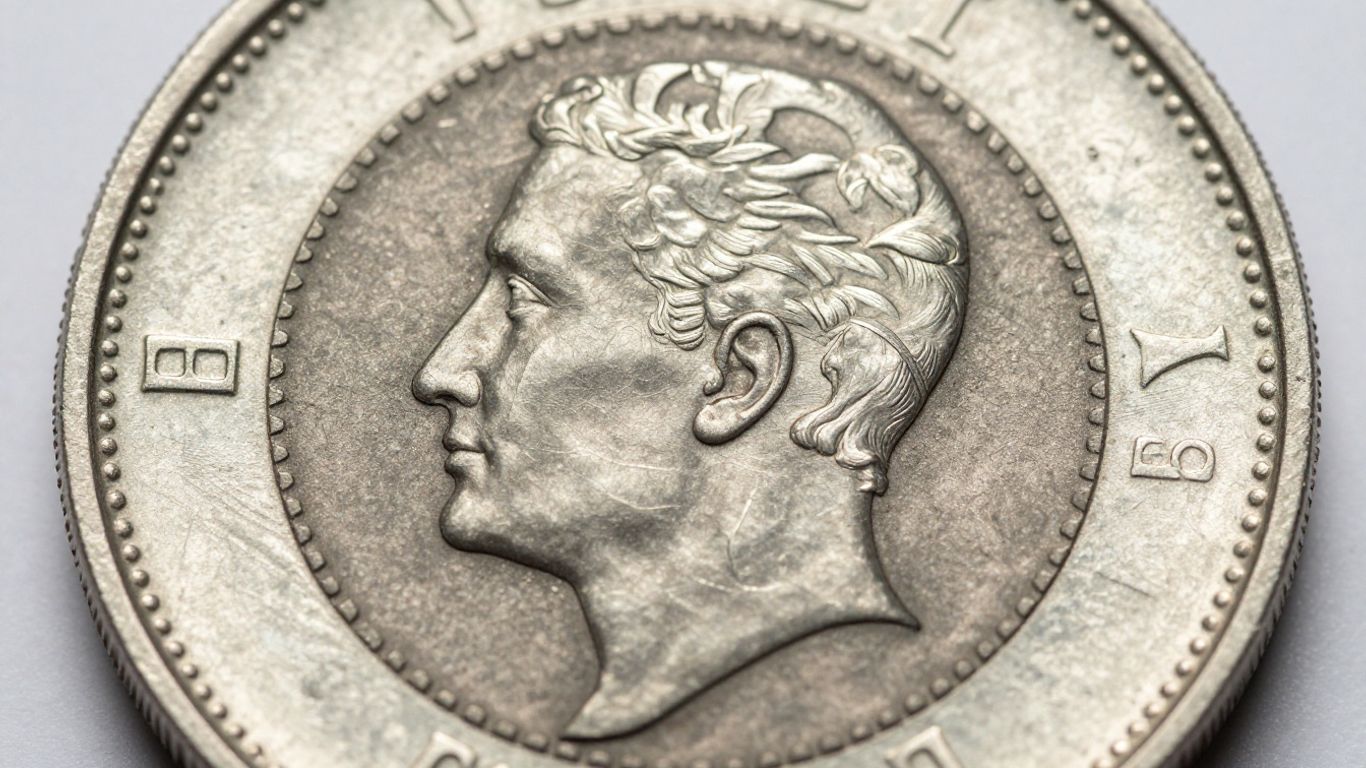
At the heart of most clad coins lies a core made primarily of copper. This isn’t just any copper; it’s typically pure copper, chosen for its malleability and its contribution to the coin’s overall weight and conductivity. Think of it as the sturdy foundation upon which the rest of the coin is built. This copper layer is usually quite thick, making up a significant portion of the coin’s total mass. Its softness is a key characteristic, allowing it to be easily shaped and formed during the minting process without fracturing.
Outer Nickel-Copper Alloy
Surrounding this copper core are the outer layers, which give the coin its distinctive silvery appearance and its resistance to wear. For many common coins, this outer shell is a specific alloy of nickel and copper, often referred to as cupronickel. The exact ratio can vary, but a common mix is 75% copper and 25% nickel. This alloy is harder and more durable than pure copper, providing a tough exterior that can withstand the rigors of circulation. It’s this outer layer that you see and feel when you handle a coin like a U.S. quarter or dime.
Bonding The Layers Together
Now, how do you get that copper core and the cupronickel cladding to stick together so well? It’s not as simple as just pressing them together. Historically, and even with modern techniques, creating a strong, permanent bond between these different metals has been a significant manufacturing challenge. Early methods sometimes struggled with weak connections, leading to coins that could separate over time. The success of clad coinage relies heavily on achieving a true metallurgical bond, where the atoms of the core and cladding metals intermingle at the interface, creating a single, unified material. This bond needs to be strong enough to withstand the immense pressures of coining and the constant wear and tear of everyday use.
The process of joining dissimilar metals like copper and nickel-copper alloy requires precise control. It’s not just about making them touch; it’s about forcing them together under conditions that allow their atomic structures to merge. This creates a composite material that benefits from the properties of both its components – the workability of the copper core and the durability of the nickel-copper cladding.
Manufacturing Clad Coinage
Making clad coins isn’t quite as simple as just slapping two different metals together. It involves some pretty specific industrial processes to get it right. Think of it like making a really fancy sandwich, but with metal and a lot more heat and pressure.
The Rolling Process
This is where the magic really starts. The basic idea is to take a thick piece of copper for the core and sandwich it between two thinner pieces of the nickel-copper alloy. Then, these three layers are sent through massive rollers. These rollers are designed to squeeze the metal down, reducing its thickness significantly in just one pass. It’s not just about making it thinner, though; the intense pressure actually helps to bond the layers together.
- Heating the Core: Usually, only the inner copper core is heated to a specific temperature. The outer layers are kept cooler.
- Angled Entry: The outer cladding layers are fed into the rollers at a slight angle, while the heated core stays horizontal. This helps initiate the bonding process.
- High Speed and Pressure: The rolling happens at a pretty good speed, and the pressure is immense, forcing the metals to meld.
Challenges in Early Production
When this whole clad coin idea was new, it wasn’t exactly smooth sailing. Getting a strong, reliable bond between the copper core and the nickel-copper outer layers was a real headache. If the bond wasn’t perfect, the coins could literally fall apart after being struck or even just from regular use. Early attempts using simple cold rolling often resulted in weak connections that just couldn’t hold up.
The main issue was creating a bond that was strong enough to withstand the stresses of minting and circulation. Sometimes, the metals would oxidize during heating, creating a barrier that prevented a good fusion. Other times, the different ways the metals expanded and contracted with temperature changes caused problems.
Innovations in Bonding Techniques
To overcome these early production hurdles, engineers had to get creative. They experimented with different heating methods and rolling techniques. One significant development involved carefully controlling the temperature and the angle at which the metal strips entered the rollers. This helped create a more uniform and robust bond. Later on, even more advanced methods like explosive bonding were explored, which used controlled explosions to fuse the metal layers together with incredible force, creating a virtually inseparable bond.
Key Metals In Clad Coins
The Role Of Copper
Copper is the backbone of most clad coins, forming the inner core. It’s chosen for its affordability, malleability, and conductivity. In U.S. dimes, quarters, and half dollars, this core is pure copper. It makes up a significant portion of the coin’s weight and volume, providing the bulk and a good base for the outer layers. This inner copper core is what gives clad coins their distinctive reddish hue when viewed from the edge. It’s a workhorse metal, able to withstand the pressures of minting and everyday circulation.
The Function Of Nickel
Nickel is typically used for the outer layers of clad coinage, often in an alloy with copper (cupronickel). This nickel-copper alloy gives the coin its silvery appearance, making it look more like traditional silver coins. It’s chosen because it’s durable, resistant to corrosion, and can be struck cleanly by the dies to create sharp designs. The cupronickel layer also provides a smooth surface that wears well over time. The specific ratio, often around 75% copper and 25% nickel, is carefully controlled to achieve the desired properties for coinage. You can see this in coins like the American Silver Eagle, though that’s a bullion coin and not clad.
Absence Of Precious Metals
Unlike older coins that were made from silver or gold, modern clad coinage deliberately avoids precious metals. This shift was driven by the rising cost of silver and gold, making it impractical and too expensive to mint coins for everyday circulation. The goal was to create coins that looked and felt substantial but were made from much cheaper, more abundant base metals. This makes them more cost-effective to produce and less attractive to melt down for their metal value. The composition is designed for utility and circulation, not as a store of value in itself.
Evolution Of Coinage Materials
From Silver To Base Metals
For a long time, coins were made with precious metals like silver. Think about it, back in the day, your pocket change wasn’t just for buying things; it was actually valuable in itself because of the silver content. This was the norm for decades, with coins typically being a mix of about 90% silver and 10% copper. But, as the years went by, especially around the mid-20th century, things started to change. The price of silver kept going up, and it became more expensive to make coins out of it than what they were actually worth. People even started holding onto their silver coins instead of spending them, hoping they’d be worth more later. It got to a point where it just wasn’t practical for the government to keep using so much silver.
The Need For Durable Coins
Beyond just the cost of materials, there’s also the practical side of things. Coins get handled a lot, right? They’re passed from person to person, tossed in pockets, and sometimes even dropped. Over time, softer metals, especially precious ones, can wear down pretty quickly. This means designs get blurry, and the coins lose their shape. To keep coins looking good and usable for a long time, the metal needs to be tough. It has to hold up to all that wear and tear without getting too damaged. This is where switching to different kinds of metals, like those used in clad coinage, really made a difference. They needed something that could last.
Cost-Effectiveness In Minting
So, you’ve got silver getting pricey, and coins that need to be tough. What’s the solution? Well, the government looked into using less expensive metals. This is where the idea of clad coinage really took off. Instead of a solid piece of silver, they started making coins with a core of one metal, usually copper, and then covering it with a thin layer of another metal, like a copper-nickel mix. This way, the coin still looked like a silver-colored coin, but it used way less of the expensive stuff. It was a smart move to keep the cost of making coins down while still producing something that looked and felt like a proper coin. It made minting coins much more affordable in the long run.
Here’s a quick look at the shift:
- Pre-1965 US Dimes & Quarters: 90% Silver, 10% Copper
- Post-1965 US Dimes & Quarters: Copper core with Copper-Nickel outer layers
The move away from silver wasn’t just about saving money; it was about making sure there were enough coins for everyone to use. When silver prices spiked, people started hoarding, which meant fewer coins were actually circulating. Switching to clad materials helped solve that problem by making coins less attractive to hoarders and more available for everyday transactions.
Identifying Clad Coinage
So, you’ve got a coin in your hand, and you’re wondering if it’s one of those newer clad ones or an older silver coin. It’s not always obvious at first glance, especially since they often look pretty similar. But there are a few tell-tale signs you can look for. The edge of the coin is usually your best clue.
Visual Clues On The Edge
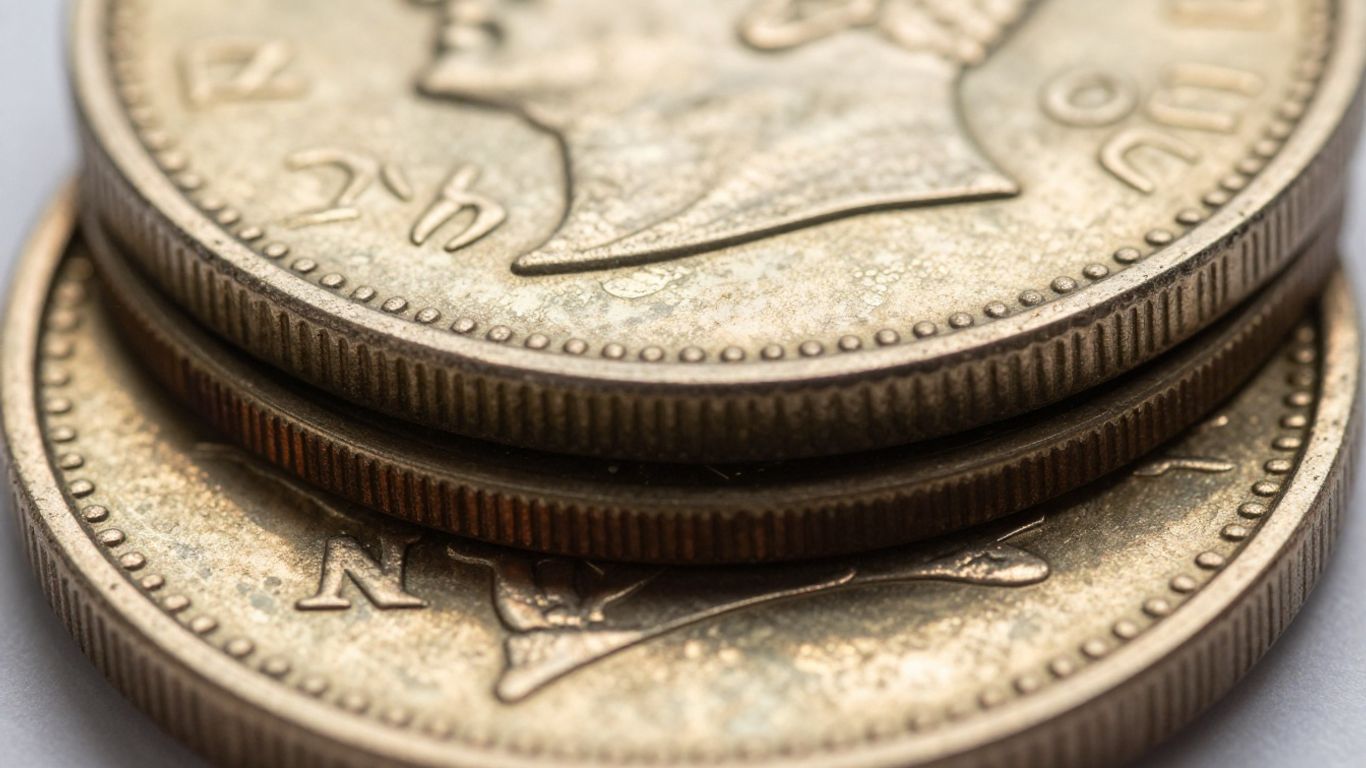
When you look at the side of a clad coin, you’ll notice something different compared to older, solid silver coins. Instead of a uniform color all the way around, you can often see a distinct line where the outer layers meet the inner core. This is because the copper core peeks through the nickel-copper alloy cladding. It’s like looking at a sandwich – you can see the different layers.
- Solid Silver Coins: These will have a consistent color all around the edge, reflecting their single metal composition.
- Clad Coins: You’ll typically see a copper-colored band sandwiched between the outer silver-colored layers. This is the most common visual indicator.
- Older Clad Coins (pre-1982): Some earlier clad coins might show a slightly different hue on the edge due to variations in the bonding process or alloy composition.
Weight Differences Compared To Silver
Even though they look similar, clad coins and their silver predecessors don’t weigh the same. Silver is a denser metal than the copper and nickel used in clad coins. This means that if you were to hold a silver dime from before 1965 and a modern clad dime, the silver one would feel noticeably heavier. It’s a subtle difference, but one that collectors and numismatists often rely on.
| Coin Type | Pre-1965 Silver (approx. weight) | Post-1965 Clad (approx. weight) | Difference (approx.) |
|---|---|---|---|
| Dime (10¢) | 2.5 grams | 2.268 grams | -0.232 grams |
| Quarter (25¢) | 6.25 grams | 5.670 grams | -0.580 grams |
| Half Dollar (50¢) | 12.5 grams | 11.340 grams | -1.160 grams |
Tarnishing And Appearance Over Time
How a coin ages can also give you a hint about its composition. Pure silver coins, when exposed to the air and elements over many years, tend to develop a dark, sometimes almost black, tarnish. This is a natural chemical reaction. Clad coins, on the other hand, don’t tarnish in quite the same way. While they can get dirty or develop a patina, you’re more likely to see a coppery discoloration appear over time, especially if the outer layers get worn down. It’s not as dramatic as silver tarnish, but it’s a different kind of aging.
The shift to clad coinage in the mid-1960s was a big deal. It wasn’t just about saving money; it was about making coins that could handle the rough and tumble of everyday use without disappearing into people’s collections or being melted down for their metal value. The layered structure was designed for durability and to make counterfeiting harder, though it did change the feel and look of the money in our pockets.
So next time you’re looking at a coin, take a moment to check its edge. It’s a simple trick that can tell you a lot about what’s really inside.
Advanced Bonding Methods
Explosive Bonding Techniques
So, how do they get those layers of metal to stick together so well? While rolling is the main method, sometimes you need something a bit more… energetic. That’s where explosive bonding comes in. It sounds wild, right? Basically, you stack your metal layers, add a carefully chosen explosive on top, and then detonate it. The explosion creates a shockwave that forces the metals together with such intensity that their surfaces essentially liquefy for a split second, creating a solid, metallurgical bond. It’s a pretty intense way to make sure the layers don’t separate later on.
The Detaclad Process
DuPont actually developed a specific version of this called Detaclad. They were pioneers in making this work on a larger scale, suitable for things like coin metal. Imagine laying out big sheets of copper and nickel, then carefully placing an explosive charge. When it goes off, boom, you get a strong bond. They figured out how to do this in long strips that could then be coiled up, making it more practical for mass production. It wasn’t always easy, though; getting the explosive just right so it bonded the metals without destroying them was a big challenge. This process was a big deal for creating the clad material needed for coins, especially when traditional methods weren’t quite cutting it for the new requirements.
Ensuring A Metallurgical Bond
What makes this bonding method so effective is the creation of a true metallurgical bond. It’s not just glue holding things together; the atoms of the different metals actually intermingle at the interface. This happens because the extreme pressure from the explosion causes the surfaces to deform and flow, pushing out any contaminants and allowing the metal atoms to connect. This results in a bond that’s incredibly strong and durable, which is exactly what you need for something that gets handled and used like a coin. It’s a fascinating bit of materials science that makes our everyday change possible.
Specific Clad Coin Examples
When you look at the coins in your pocket, you’re probably holding examples of clad coinage. It’s pretty much the standard for circulating U.S. currency these days.
Dimes and Quarters
These are probably the most common clad coins you’ll encounter. Since 1965, both dimes and quarters have been made with a pure copper core sandwiched between two layers of a copper-nickel alloy. This gives them that familiar silvery look without any actual silver.
- Dime: 91.67% copper, 8.33% nickel (outer layers); 100% copper (core).
- Quarter: Same composition as the dime: 91.67% copper, 8.33% nickel (outer layers); 100% copper (core).
Half Dollars
Half dollars also joined the clad club around the same time. Like dimes and quarters, they feature that same copper core with copper-nickel alloy on the outside. The composition is identical, but the size is, of course, larger.
Dollar Coins
Even dollar coins, both the older large-sized ones and the newer smaller ones, are typically clad. The composition is generally the same as the dimes and quarters – a copper core with copper-nickel outer layers. This standardization makes manufacturing simpler and more cost-effective.
The shift to clad coinage was a big deal back in the day. It meant coins could be made more affordably and were durable enough for everyday use, which is exactly what you want when you’re just trying to buy a coffee or pay for the bus.
Material Properties For Coinage
Uniformity and Pliability
When you’re making coins, especially clad ones, the metal really needs to behave. Think about it: you’re taking sheets of metal and squishing them together, then rolling them out super thin. For that to work, the metals have to be pretty much the same all the way through. No weird pockets or inconsistencies allowed.
This uniformity is key to getting a consistent bond between the layers. If one spot is different, the whole thing could fall apart later. Plus, the metal needs to be flexible enough to be rolled down without cracking. It’s like trying to flatten out a piece of dough – if it’s too stiff, it just breaks. For clad coins, this means the copper core and the outer layers have to have just the right amount of give.
Resistance to Brittleness
Coins get tossed around a lot, right? They go into vending machines, get dropped, and are generally handled pretty roughly. The metal needs to be tough enough to handle all that without just shattering. Early attempts at making clad coins sometimes ran into trouble here. If the bond between the copper core and the nickel-copper outer layers wasn’t quite right, or if certain compounds formed, the metal could become brittle. Imagine a coin that cracks just from being bent slightly – not ideal for everyday use.
Impression Quality From Dies
This is where the design gets stamped onto the coin. The metal has to be soft enough to take a really clear impression from the dies, but not so soft that the design gets all mashed up or the edges split. It’s a balancing act. You want sharp details, like the lines in a portrait or the lettering around the rim, to come through perfectly. If the metal is too hard, the dies might not be able to press the design in properly. If it’s too soft or has weak spots, the design might not last very long or could even split the coin.
Here’s a quick look at what makes metal suitable for coins:
- Consistent Composition: No surprises within the metal itself.
- Workability: Can be rolled thin and shaped without breaking.
- Durability: Withstands bending, impact, and wear.
- Detail Retention: Takes and holds a sharp impression from minting dies.
The goal is to create a material that’s not only cost-effective to produce in large quantities but also robust enough for daily transactions. It needs to withstand the rigors of minting and circulation while maintaining its integrity and appearance over time. This balance of properties is what makes modern coinage possible.
Challenges In Clad Metal Fabrication
Making clad metal for coins wasn’t exactly a walk in the park, especially back in the day. You’ve got these different metals, like copper and nickel-copper alloys, that need to stick together perfectly, and sometimes, they just don’t want to cooperate. It’s a bit like trying to get two stubborn kids to hold hands – it takes the right approach.
One of the main headaches was getting a solid bond between the layers. Using standard cold rolling, the kind you do at room temperature, often resulted in a weak connection. This meant the layers could separate if the metal was bent or heated, which is a big no-no for something that gets hammered into shape like a coin. Hot rolling didn’t really solve this and brought its own set of issues, like how the metals expand differently when heated.
Weak Bonds From Cold Rolling
When you try to roll clad metals at room temperature, the bond between the core and the outer layers can be pretty flimsy. This lack of a strong metallurgical connection means the material isn’t robust enough for the stresses of coin production. Imagine trying to make a coin out of something that might just fall apart in the press – not ideal.
Oxidation Issues With Copper
Copper, a common core material, has a tendency to oxidize, especially when you heat it up. This creates a layer of copper oxide right where you want the metals to bond. This oxide layer acts like a barrier, preventing a good, solid connection between the copper core and the outer nickel-copper alloy. It’s like trying to glue two pieces of metal together after one has gotten all rusty.
Formation Of Brittle Compounds
Sometimes, when copper and the outer alloy meet, especially under certain manufacturing conditions, they can form brittle intermetallic compounds. These compounds are like glass – they’re hard but easily shattered. If your coin material has these brittle spots, it can crack or split when it’s struck by the dies, ruining the coin. This is a significant hurdle in additive manufacturing of bimetallic materials too, where similar issues arise.
The goal was always to create a composite material that was uniform, pliable, and had a bond strong enough to withstand the intense pressure of coining dies without delaminating or cracking. Achieving this consistently was a major manufacturing hurdle.
Here’s a quick rundown of some of the problems:
- Weak Adhesion: Layers separating after bending or heating.
- Surface Contamination: Oxides or other impurities preventing a good bond.
- Material Brittleness: Formation of compounds that make the metal prone to cracking.
- Inconsistent Bonding: Some areas sticking well, others not so much, leading to unpredictable results.
So, What's the Takeaway?
Alright, so we’ve talked about how coins aren’t just simple metal discs. Most of the money jingling in your pocket, like dimes and quarters, is actually a sandwich of metals. It’s got a copper middle with nickel on the outside. This whole ‘clad’ thing started back in the 1960s to make coins that last longer and cost less to produce. It wasn’t exactly a walk in the park to figure out how to stick these metals together reliably, involving some pretty interesting science and engineering. So next time you hand over some change, remember there’s a bit more to that coin than meets the eye – a little piece of history and ingenuity right there in your hand.
Frequently Asked Questions
What exactly is a clad coin?
A clad coin is like a sandwich made of metal! It has layers. Most U.S. coins you use every day, like dimes and quarters, have a middle layer of pure copper. This copper core is then covered on both sides by a different metal, usually a mix of copper and nickel.
Why did the U.S. stop making coins out of silver?
Back in the day, coins were made with real silver. But silver became too valuable, and it was cheaper to use metals like copper and nickel. So, around the mid-1960s, the U.S. switched to making coins with these more affordable base metals.
How can I tell if a coin is clad or made of solid silver?
Look closely at the edge of the coin! Clad coins have a visible copper-colored strip running around the edge because you can see the inner copper core. Solid silver coins, on the other hand, will look the same color all the way around.
What are the outer layers of a clad coin made of?
The outside layers are typically a mix of about 75% copper and 25% nickel. This gives the coin its familiar silvery look, even though it doesn’t contain any actual silver.
Is the copper core bonded to the outer layers?
Yes, the layers are strongly bonded together. Special manufacturing processes, sometimes involving heat and immense pressure, or even controlled explosions in some advanced methods, ensure the copper core and the outer metal layers stick together tightly.
Do clad coins weigh less than old silver coins?
Generally, yes. Because they are made from less dense metals and don’t contain precious silver, clad coins tend to feel lighter than older coins that were made with a higher silver content.
Why is copper used for the inside layer?
Copper is a good choice for the core because it’s relatively inexpensive, it’s easy to work with, and it provides a solid base. It also helps make the coin durable enough for everyday use.
Can clad coins be valuable to collectors?
While clad coins aren’t made of precious metals, some can still be valuable to collectors. This might be due to their rarity, specific minting errors, historical significance, or if they are part of a special collection. However, their value usually comes from factors other than their metal content.