Ever wondered what makes a coin tick, beyond just its face value? We’re talking about business strike coins here, the kind you’d typically find in your change. They’re the workhorses of the currency world, minted in huge numbers to keep things moving. But sometimes, these everyday coins can turn into something more, especially if they’re a bit rare or in tip-top shape. Let’s break down what business strike coins are, how they’re made, and why some of them are worth more than you might think.
Key Takeaways
- Business strike coins are the standard coins made for everyday spending, unlike special collector coins like proofs.
- They are produced quickly using high-speed machines, focusing on making lots of them efficiently rather than perfect detail.
- While most business strikes are common, some become valuable due to their metal content, how rare they are, or if they’re in really good condition (uncirculated).
- These coins have a long history, evolving from ancient times to become the main way we trade goods and services today.
- Understanding the difference between business strikes and proof coins helps collectors and investors know what they’re looking at and what might be a good find.
Understanding Business Strike Coins
Definition of Business Strike Coins
When you think about coins, you’re probably picturing a business strike coin. These are the coins minted for everyday use, the ones you find in your pocket or purse. They’re made in huge numbers, designed to handle the wear and tear of daily transactions. Unlike special collector coins, the main goal here is to get them out into the world efficiently. They are the workhorses of the monetary system.
Purpose of Business Strikes
The primary reason business strikes exist is to serve as currency. They facilitate commerce, making it easy to buy and sell goods and services. While some might end up in a collector’s album, their intended journey is through the hands of the public. Their production is all about making a lot of coins, quickly and affordably, so everyone has access to money.
Distinguishing Features from Proof Coins
So, how do you tell a business strike from, say, a proof coin? It mostly comes down to how they’re made and what they look like. Business strikes are usually struck just once, and the planchets (the blank metal discs) aren’t specially prepared. This means they might have minor imperfections, like bag marks or slight variations in finish. Proof coins, on the other hand, are made with extra care. They’re struck multiple times with polished dies, resulting in a sharp, detailed appearance with a mirror-like background and frosted design elements. It’s a difference between a coin made for spending and one made for admiring.
Here’s a quick rundown:
- Production Volume: Business strikes are made in the millions, while proof coins are produced in much smaller quantities.
- Surface Finish: Business strikes can have a range of finishes, often showing the effects of mass production. Proof coins typically have a brilliant, reflective surface with frosted details.
- Intended Use: Business strikes are for circulation; proof coins are primarily for collectors.
The minting process for business strikes prioritizes speed and volume. This focus on efficiency means that while the designs are clear, the coins aren’t typically subjected to the meticulous polishing and multiple strikes that give proof coins their distinctive, high-quality appearance. Minor surface marks or slight inconsistencies are common and expected.
The Production Process of Business Strikes
From Metal Strips to Planchets
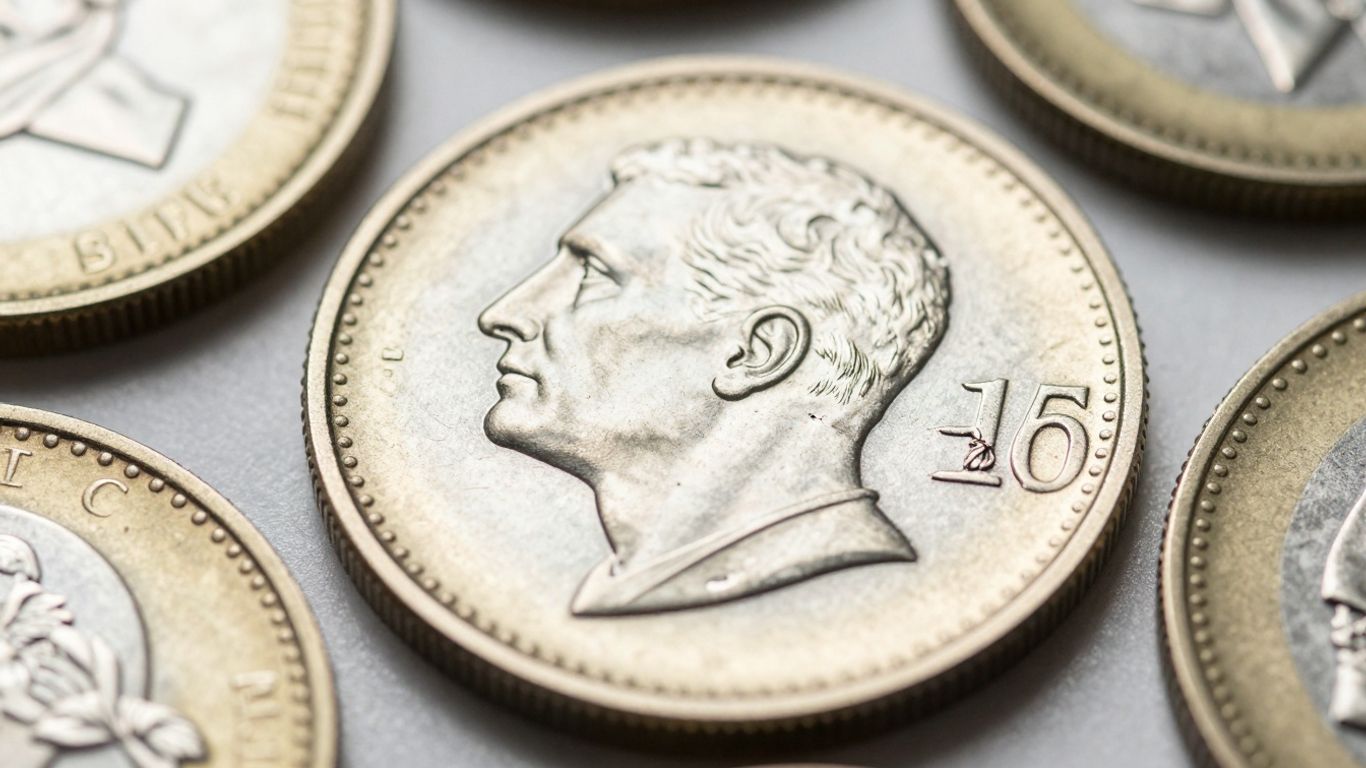
Making business strike coins starts way before the actual striking. Think of it like baking – you need the right ingredients and preparation. First off, large rolls of sheet metal, often copper and nickel alloys for circulating coins, are unwound. These metal strips are then flattened out. After that, they’re fed into a blanking press. This machine punches out perfectly round discs, called planchets, from the metal strip. It’s a high-volume operation, designed to churn out thousands of these discs quickly.
High-Speed Minting Techniques
Once the planchets are ready, they go through a few more steps before they meet their dies. They’re often heated in an annealing furnace to soften the metal, making it more receptive to the striking process. Then, they’re fed into massive, high-speed coining presses. These presses slam down with incredible force, impressing the coin’s design onto both sides of the planchet in a single, rapid motion. This is where the magic happens, transforming a plain metal disc into a recognizable coin. The whole setup is built for speed and efficiency, aiming to produce millions of coins without breaking a sweat.
Balancing Efficiency and Quality
It’s a constant balancing act in minting business strikes. The goal is to make a ton of coins, fast and cheap, so they can get out into the world and be used for everyday transactions. This means the process isn’t as delicate as it is for collector coins like proofs. You’ll often find minor imperfections – little nicks, scratches, or slightly off-center strikes – that just come with the territory of mass production. The mints aim for a good, solid coin that can handle being passed around, not necessarily a flawless work of art.
The focus for business strikes is on getting coins made in huge quantities for circulation. This means the machinery is set up for speed, and while quality is important, it’s balanced against the need for efficiency and lower production costs.
Here’s a quick look at the general flow:
- Metal Preparation: Strips are flattened.
- Planchet Creation: Round discs are punched out.
- Annealing: Discs are softened by heating.
- Striking: High-speed presses imprint the design.
- Counting & Bagging: Coins are tallied and prepared for distribution.
Historical Evolution of Business Strikes
The story of business strike coins is really the story of money itself, stretching way back. Think ancient times, like the 6th century BCE, when coins first started showing up as a way to trade stuff. They were super important for making commerce easier, and they’ve changed a lot as economies have grown and shifted over the centuries.
Ancient Origins of Circulating Coinage
Back in the day, coins were pretty basic. They were made by hand, often just a rough shape with a stamp pressed into it. The goal was simple: create a recognizable piece of metal that people could trust as having a certain value. These early coins were the original business strikes, meant for everyday buying and selling. They weren’t fancy, but they got the job done, helping societies develop and trade expand.
Evolution Through Modern Economies
As time went on, minting got more sophisticated. We moved from hand-striking to using machines, which meant we could make way more coins, faster. This was a big deal for growing economies. Think about how much easier it is to trade when you have reliable, mass-produced coins. The U.S. Mint, for example, has been producing coins for centuries, constantly refining its methods. Even with the recent end of circulating penny production, the history of these coins is a testament to their role in our financial systems. The cost to produce each penny had risen significantly, making its future role a topic of discussion [b7bc].
Role in Facilitating Trade and Commerce
Ultimately, business strikes are all about making life easier. They’re the coins you find in your pocket, the ones used for daily transactions. Their design focuses on being tough enough to handle lots of use and being produced in huge numbers so everyone can have them. While they might not have the shine of collector coins, their real value is in keeping the wheels of commerce turning smoothly. They are the workhorses of the monetary world, and their history shows just how important that job has been.
Characteristics of Business Strike Coins
Business strike coins, the kind you usually find jingling in your pocket, have a set of characteristics all their own. They’re built for the long haul, designed to handle the bumps and tumbles of everyday life. Think of them as the workhorses of the coin world.
Focus on Durability and Mass Circulation
The main goal when minting business strikes is to get a lot of them made, quickly and affordably. This means the process prioritizes getting coins out the door for use in commerce. They aren’t fussed over like collector coins; the priority is that they can withstand being handled, passed around, and generally used without falling apart. This focus on durability means they’re struck with enough force to be solid, but not so much that it slows down production to a crawl.
Potential for Imperfections and Errors
Because these coins are made in such huge numbers, sometimes things go a little sideways during production. It’s not like they’re made in a quiet studio; these are high-speed operations. You might find minor dings, scratches, or even slight off-center strikes. These aren’t necessarily bad things; for some collectors, these little quirks can actually add character and make a coin more interesting. Errors can happen at any stage, from the metal preparation to the actual striking process. For instance, a planchet might not be perfectly centered before it hits the dies, or a bit of debris could get caught in the machinery. These kinds of things are part of the reality of mass production. You can find out more about how coins are made by looking into the basics of coining.
Variations in Mint State Finishes
When a business strike coin comes off the press, it’s considered to be in
Investment Appeal of Business Strikes
Factors Influencing Value
When you think about business strike coins, their investment potential might not be the first thing that comes to mind. Most of us see them as just money, right? Pennies, nickels, dimes – they’re meant for buying stuff, not for sitting in a fancy display case. But here’s the thing: when these coins are made from precious metals like silver or gold, or when they’re old and rare, they can actually become pretty interesting investments. The value isn’t just about what the metal is worth; it’s a mix of things. Think about how many were made, what condition they’re in, and if they have any special historical significance. The real sweet spot for investors is often finding older business strikes that have survived in great shape, especially if the mint didn’t make too many of them to begin with.
Rarity and Condition as Key Drivers
So, how do you spot a business strike coin that might be worth more than its face value? It really boils down to two main things: rarity and condition. A coin that’s super common, even if it’s made of silver, probably won’t fetch a huge price. But if only a small number were ever produced, or if most of them got melted down or worn out over time, then a surviving example can be quite valuable. Condition is just as big a deal. A coin that looks like it just came off the minting press, with no scratches or wear, is going to be worth way more than one that’s been tossed around in pockets for decades. We’re talking about coins that are graded as "Mint State" or "Uncirculated." Even small differences in wear can mean big differences in price.
Here’s a quick look at what makes a coin more desirable:
- Low Mintage: Fewer coins produced means greater scarcity.
- High Grade: Coins in "Mint State" (uncirculated) condition are preferred.
- Historical Significance: Coins tied to important events or eras can gain appeal.
- Metal Content: For coins made of gold or silver, the melt value is a baseline.
Metal Content and Market Dynamics
For many business strike coins, especially those minted in silver or gold, the metal content itself provides a solid floor for their value. If you have a silver dollar that contains a significant amount of silver, its price will naturally move with the price of silver on the global market. This makes these coins a way to invest in precious metals, but with the added bonus of potential numismatic (collector) value. However, it’s not just about the metal. The overall market for coins plays a role. Factors like collector demand, economic conditions, and even trends in what people are collecting can influence prices. Sometimes, a coin might be worth more than its metal content simply because a lot of people want it. Other times, if demand is low, you might find it selling closer to its melt value.
The market for business strike coins is a bit of a balancing act. You’ve got the tangible value of the metal, which provides a stable base, and then you have the collector interest, which can add a premium. Understanding both sides is key to making smart investment choices in this area.
Identifying Valuable Business Strikes
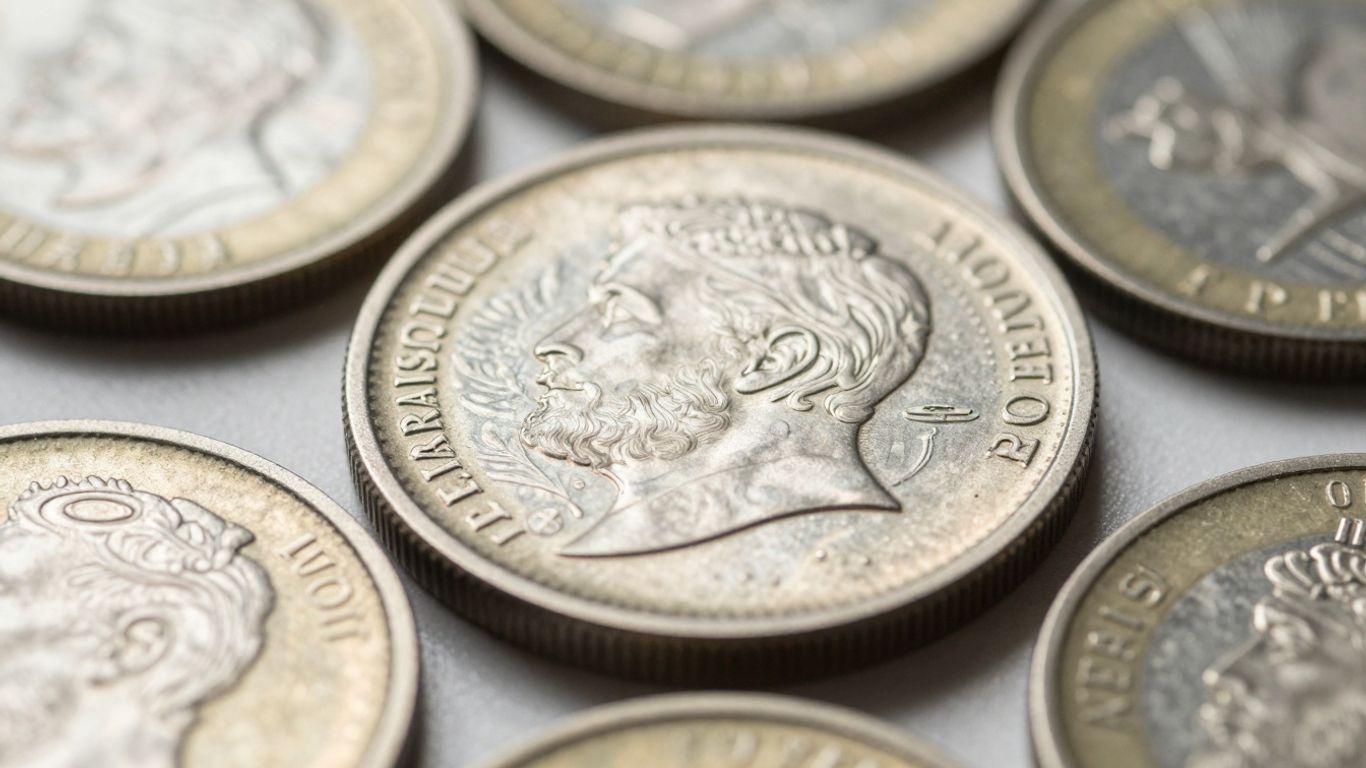
So, you’ve got a pile of coins, and you’re wondering if any of them are actually worth more than just their face value. It’s not always obvious, right? Business strike coins, the kind you usually find in your pocket, aren’t typically made with collectors in mind. They’re built tough for everyday use. But sometimes, a few stand out from the crowd.
Examples of High-Value Business Strikes
While most everyday coins are just that – everyday – certain business strikes can fetch a pretty penny. Think about coins that were made in smaller numbers or those that have survived the years in surprisingly good shape. For instance, some older silver dimes or quarters, especially if they’re in really nice condition, can be worth more than their metal content. Even some modern dollar coins, if they have a special mint mark or were part of a limited run, can become desirable.
The Significance of Limited Mintages
This is a big one. If a mint only produced a certain number of a particular coin, that naturally makes it harder to find. And when something is harder to find, people are often willing to pay more for it. It’s basic supply and demand, really. Coins from discontinued series or those with special commemorative designs often fall into this category.
Seeking Uncirculated Conditions
This is where things get interesting. A coin that looks like it just came off the minting press, with no scratches or wear from being passed around, is called "uncirculated" or "mint state." These coins are way more desirable than ones that have seen a lot of action. The cleaner and sharper the coin looks, the better.
Here’s a quick look at what makes a business strike more appealing:
- Mint Mark: Sometimes, a coin made at a specific mint (like Denver ‘D’ or San Francisco ‘S’) is rarer than one from the main Philadelphia ‘P’ mint.
- Year: Older coins are often scarcer, but not always. Sometimes a specific year had a very low mintage.
- Errors: Believe it or not, mistakes during the minting process can make a coin more valuable to collectors.
- Condition: As mentioned, coins that look brand new are always a plus.
Finding a gem among common coins is like finding a needle in a haystack. It requires a bit of luck and knowing what to look for. Don’t expect every old coin to be a treasure, but keep your eyes open for those that seem a little different or just look remarkably well-preserved.
For example, a 2020-W quarter, which has a special ‘W’ mint mark from the West Point Mint and a unique privy mark, is a great example of a modern business strike that gained value due to its limited production and special designation. These aren’t just pocket change; they’re pieces of history with a story.
Business Strikes vs. Proof Coins
Specialized Minting for Collectors
When you look at coins, you’ll notice they aren’t all made the same way. There are two main types: business strikes and proof coins. Business strikes are what you usually find in your pocket – they’re made for everyday use, and the mint focuses on making a lot of them quickly. Proof coins, on the other hand, are a whole different story. They’re made with collectors in mind, and the mint really takes its time to make them look perfect. Think of it like the difference between a mass-produced car and a custom-built one; both get you around, but one is made with extra care and attention to detail.
Mirror-Like Finishes and Cameo Effects
Proof coins have a look that business strikes just don’t achieve. The mint uses special, polished dies for proof coins, and they strike the planchets multiple times. This process gives the coin a really shiny, mirror-like background. Then, the design elements are often frosted, creating a cool contrast. This effect is called ‘cameo,’ and it makes the coin’s design really pop. It’s this attention to detail and the striking visual contrast that collectors love.
Craftsmanship and Aesthetic Appeal
So, why bother with proof coins? Well, it’s all about the craftsmanship and how they look. They’re not really meant for buying coffee or paying for parking. Instead, they’re made to be admired. The mint often releases them in limited numbers, sometimes in special sets with fancy packaging. This makes them rarer and, for many collectors, more desirable. While business strikes are all about getting money into circulation efficiently, proof coins are a showcase of minting artistry. It’s a trade-off: you get a coin that’s built to last and be used with a business strike, or you get a coin that’s a miniature work of art with a proof strike.
Investment Strategies for Coin Collectors
When you’re looking at coins as an investment, it’s not just about picking up shiny things. You’ve got to think about how you’ll actually make money, or at least not lose it. It’s a bit like picking stocks, but with more history and way cooler designs, usually.
Liquidity of Business Strikes
Business strike coins, especially those made of gold or silver, are pretty straightforward. Their value is tied pretty closely to the metal they’re made from. This means they’re generally easier to sell quickly if you need cash or want to jump on a price increase. Think of them as a more direct way to invest in precious metals. You can often find them at coin shops or online dealers, and there’s usually a steady market for them. The more metal content a coin has, the more liquid it tends to be.
Here’s a quick look at what influences how easy it is to sell:
- Metal Content: Coins with significant gold, silver, or platinum are always in demand.
- Commonality: Widely minted coins are easier to find buyers for.
- Condition: Even for business strikes, a coin in better shape will sell faster and for more.
While business strikes offer a more direct link to metal prices, their numismatic value can still be a factor, especially for older or rarer pieces. It’s a blend of commodity and collectible.
Long-Term Appreciation of Proof Coins
Proof coins are a different beast. They’re made with collectors in mind, so they often cost more upfront. The minting process is more careful, leading to those super-sharp details and mirror-like finishes. Because they’re made in smaller numbers and are so attractive, their value can grow over time based on collector interest, not just the metal.
- Limited Mintage: Proof coins are often produced in limited quantities, making them scarcer.
- Aesthetic Appeal: The high-quality finish and detailed design are major draws for collectors.
- Collector Demand: As more people want these coins, their prices can climb.
These coins are often seen as long-term holds. You’re betting on the coin’s desirability among collectors to increase its value over the years, sometimes far beyond the melt value of the metal.
Diversifying Investment Portfolios
So, what’s the best approach? Most smart collectors don’t put all their eggs in one basket. Mixing business strikes and proof coins can be a solid strategy. You get the stability and liquidity of metal-backed business strikes, and the potential for higher numismatic gains from proof coins. It’s about balancing risk and reward. You might have some silver eagles for easy selling and a few rare proof sets for that long-term growth potential. It makes your collection more interesting and potentially more profitable in the long run.
The Numismatic Significance of Strikes
When we talk about coins, the "strike" is a pretty big deal. It’s not just about how the image gets pressed onto the metal; it’s about the whole story the coin tells. Think of it as the coin’s personality, shaped by the minting process itself. Understanding the strike quality can tell you a lot about a coin’s history, its intended purpose, and even its potential value.
Strike Characters and Eye Appeal
The way a coin is struck directly impacts how it looks and how appealing it is to collectors. A well-executed strike means the design details are sharp, clear, and well-defined. You can see every little line, every texture, just as the engraver intended. This clarity is what numismatists call "eye appeal." A coin with great eye appeal just pops; it draws you in. On the flip side, a weak strike can leave parts of the design looking mushy or indistinct, making the coin less attractive. It’s like looking at a photograph that’s slightly out of focus – you can tell what it is, but it’s not as impressive.
Understanding Mint State Grades
Mint state (MS) grades are all about how worn a coin is, or rather, how not worn it is. A coin graded MS-60 is basically in the same condition as when it left the mint, but it might have some minor imperfections like bag marks or hairlines. As the grade goes up – say, to MS-65 (Gem Uncirculated) or even MS-70 (Perfect Uncirculated) – the coin has fewer and fewer visible flaws. The strike quality plays a role here too. Even a coin that’s technically uncirculated might have a weak strike, which can affect its overall grade and desirability. A coin that’s both perfectly struck and in mint state condition is the ultimate find.
Here’s a quick look at how strike quality can influence the appearance within Mint State grades:
| Mint State Grade | Strike Quality Impact |
|---|---|
| MS-60 to MS-63 | May show some weakness in strike, especially in high-relief areas. |
| MS-64 to MS-66 | Generally well-struck, with good detail definition. |
| MS-67 to MS-70 | Typically exhibit exceptional strike detail and sharpness. |
The Role of Strike Quality in Value
So, how does all this strike talk affect what a coin is worth? Well, it’s a pretty significant factor. A coin that was struck with care, showing all the intended design details with sharpness and clarity, is going to be more desirable than one that looks like it was barely hit by the hammer. This is especially true for coins that are already rare or have historical importance. Collectors are willing to pay a premium for that extra bit of perfection that comes from a superior strike. It’s that attention to detail, that crispness of the design, that really sets a coin apart and can make a big difference in its market value.
The minting process, while automated for mass production, still relies on the precision of dies and the force applied during striking. Even minor variations in these elements can lead to noticeable differences in the final coin’s appearance, affecting everything from the sharpness of a portrait’s hair to the clarity of the smallest lettering. This is why experienced collectors often scrutinize the strike quality as much as the coin’s overall condition.
Special Mint Sets and Hybrid Strikes
The Genesis of Special Mint Sets
Sometimes, the U.S. Mint has had to get a little creative. Back in the mid-1960s, specifically from 1965 to 1967, there was a bit of a hiccup. The demand for proof coins was high, but the supply of proof coin blanks just couldn’t keep up. This was partly due to the rising price of silver, making those specially prepared blanks more valuable on their own. So, what did the Mint do? They came up with a solution that was kind of a middle ground: Special Mint Sets, or SMS coins. These weren’t quite regular business strikes, and they weren’t quite traditional proofs either. They were a special production run designed to offer collectors something a bit more refined than standard circulating coins, without the full mirror finish and intense polishing of proofs.
Characteristics of SMS Coins
These SMS coins have a look all their own. Instead of the bright, mirrored surfaces you see on proofs, SMS coins typically sport a matte-like finish, often called a satin finish. It’s a bit different from the usual business strike, too. The details on SMS coins tend to be sharper, and the designs stand out with a bit more definition. You might notice that the raised parts of the design, the relief, seem more pronounced. It’s like they took a regular coin and gave it a careful polish, but stopped short of the full proof treatment. This unique appearance makes them stand out.
- Satin or matte-like finish: Not mirrored like proofs, but more refined than business strikes.
- Sharper details: Designs and inscriptions are more defined.
- Higher relief: Raised elements appear more prominent.
- Special care in production: Struck with more attention than regular circulating coins.
Collectibility of Hybrid Coinage
When the Mint went back to making regular proof coins in 1968, the production of SMS coins stopped. Because they were only made for a few years and had this distinct look, they’ve become quite popular with collectors. They represent a unique period in U.S. Mint history. People who collect coins often look for these because they’re different. They offer a taste of something special without being as costly or as common as regular business strikes, but they also aren’t as flashy as full proof coins. It’s this in-between status that makes them interesting. Their limited mintage and unique aesthetic appeal have made them a sought-after item for numismatists.
The production of Special Mint Sets was a response to specific market conditions, offering collectors a distinct alternative during a period when traditional proof coin production was challenging. These coins, with their characteristic satin finish and enhanced detail, occupy a unique niche in numismatic history, bridging the gap between circulating coinage and collector-grade proof issues.
Wrapping It Up
So, we’ve looked at business strike coins, the kind you usually find in your pocket. They’re made for everyday use, and while most aren’t worth much more than their face value, some older ones or ones with special marks can be quite interesting to collectors and investors. It’s all about the metal they’re made of, how many were made, and their condition. Unlike those fancy proof coins with their shiny, mirrored look, business strikes are built tough for the long haul. Understanding these differences helps you know what you’re looking at, whether you’re just curious or thinking about adding some coins to your collection or investments.
Frequently Asked Questions
What exactly are business strike coins?
Think of business strike coins as the regular money you use every day, like the quarters in your pocket or the dollars in your wallet. They are made in huge numbers so people can use them for buying things and making change. They’re built to be tough and last through lots of handling.
How are business strike coins different from proof coins?
Proof coins are like the fancy, collector’s edition versions. They are made with extra care, often struck multiple times, and have a super shiny, mirror-like finish with frosted details. Business strikes are made quickly for everyday use, so they don’t have that special shine or detailed finish.
Why are business strike coins usually less valuable than proof coins?
It’s mostly about how many are made and how they’re produced. Mints create millions of business strike coins for everyone to use, so they’re not rare. Proof coins, on the other hand, are made in much smaller amounts with special techniques, making them rarer and more desirable to collectors.
Can business strike coins still be valuable?
Absolutely! Even though they’re made for everyday use, some business strike coins can become quite valuable. This happens if they are old, made of precious metals like silver or gold, are in really good condition (meaning they look brand new), or if only a small number were ever made.
What makes a business strike coin rare or valuable?
Several things can make a business strike coin valuable. If the mint stopped making a certain coin, or if it was only made for a short time, that makes it rare. Also, coins made from gold, silver, or platinum are worth more because of the metal itself. And, of course, if a coin looks like it just came from the mint, with no scratches or wear, it’s worth much more.
What does 'mint state' mean for a business strike coin?
‘Mint state’ is just another way of saying a coin is in perfect, brand-new condition. It means the coin has never been used as money and shows no signs of wear or damage from being handled. It looks just as it did when it left the mint.
How are business strike coins made so quickly?
Mints use big, fast machines that can strike thousands of coins every hour. They start with metal sheets, cut out coin shapes called planchets, soften them, and then hit them with a die that stamps the design. It’s all about efficiency to make lots of coins cheaply.
Are there any common examples of valuable business strike coins?
Yes! For instance, older silver dimes or quarters that are still in great shape can be worth more than their face value. Also, special collector coins made by the mint, like some American Silver Eagles or certain commemorative coins, even if they are meant for circulation, can become valuable if only a limited number were produced.