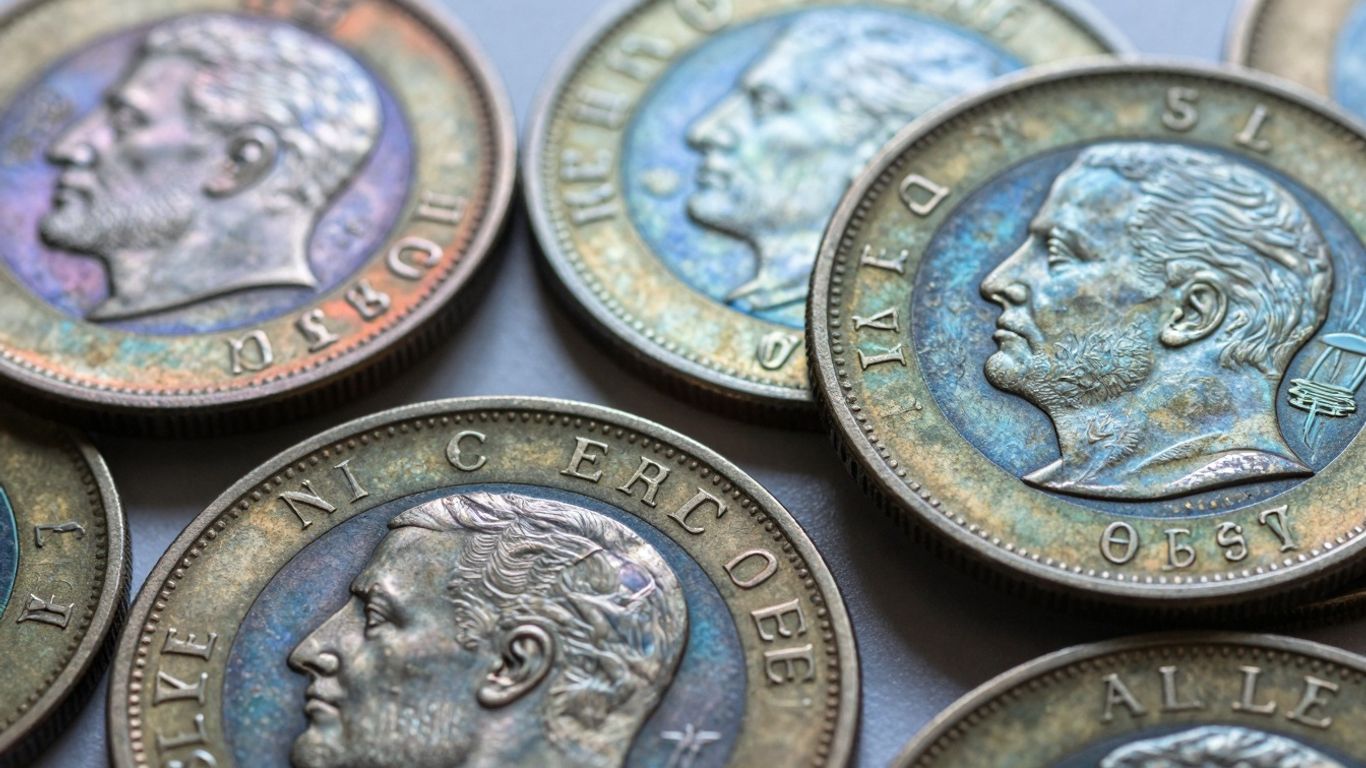
Coins can get these interesting colors over time, and it’s not always a bad thing. This article is all about understanding coin toning colors, looking at why they happen, what they mean, and how to spot the good from the bad. We’ll cover the basics of what toning is, the science behind those shades, and how to tell if a coin’s color is natural or something else. Plus, we’ll touch on how these colors can affect how a coin looks and how much it’s worth.
Key Takeaways
- Coin toning is the natural development of color on a coin’s surface due to chemical reactions with its environment over time.
- Environmental factors like humidity, air quality, and the metal composition of the coin play a big role in the type and intensity of toning.
- Natural toning usually shows smooth color transitions and often retains the coin’s original luster, while artificial toning can look unnatural with abrupt color changes and a lack of shine.
- Understanding color theory, like complementary and analogous colors, helps in appreciating the visual appeal and potential value of different toning patterns.
- Distinguishing between natural toning, artificial toning, and actual damage is important for collectors and investors to accurately assess a coin’s condition and worth.
Understanding Coin Toning Colors: The Basics
So, what exactly is this ‘toning’ we hear so much about when people talk about coins? Basically, it’s the color that develops on a coin’s surface over time. Think of it like a coin’s natural aging process, but instead of wrinkles, it gets a colorful patina. This happens because of the environment the coin has been in. It’s not magic, it’s just chemistry and time doing their thing.
What is Coin Toning?
Coin toning refers to the discoloration that appears on a coin’s surface as it ages. This isn’t usually a sign of damage, but rather a result of chemical reactions between the metal of the coin and its surroundings. These reactions can create a wide range of colors, from subtle golden hues to vibrant blues and purples. The beauty of natural toning lies in its uniqueness; no two toned coins are exactly alike. It’s like a fingerprint for a coin, telling a story of its past.
The Spectrum of Natural Toning
When we talk about natural toning, we’re looking at a whole spectrum of colors. These aren’t just random splotches; they often develop in predictable ways based on the metal and the environment. For example, copper coins might develop a reddish-brown or even a greenish patina over many years, while silver coins can show blues, purples, oranges, and golds. The key here is that these colors usually blend smoothly.
Here’s a quick look at some common color developments:
- Silver Coins: Often show blues, purples, pinks, oranges, and golds. These can appear as rings, spots, or overall coverage.
- Copper Coins: Tend to develop browns, reds, and greens. Think of the Statue of Liberty’s patina, but on a smaller scale.
- Nickel Coins: Can show subtle golden or brownish hues, though they are less prone to dramatic toning than silver or copper.
It’s important to remember that ‘natural’ means it happened on its own, without any human intervention. This slow, organic process is what collectors often seek.
Identifying Artificial Toning
Now, this is where things can get a bit tricky. Because toned coins can be quite valuable, some people try to create fake toning to make a coin look older and more desirable. This is called artificial toning (AT). It’s usually done using chemicals or heat, and it often looks… well, unnatural.
Here are some signs that might point to artificial toning:
- Unusual Color Intensity: Colors that are too bright, too saturated, or look like they were painted on.
- Abrupt Color Changes: Instead of smooth transitions, you might see sharp lines where one color abruptly stops and another begins.
- Lack of Luster: High-grade coins should still have a certain shine or "mint luster." If a coin looks dull and lifeless despite having vibrant colors, it could be a red flag.
- Specific Color Patterns: Certain chemical treatments can create patterns that just don’t occur naturally. Think of "target toning" where colors form concentric circles, or "acetone toning" which can leave a distinct look.
The Science Behind Coin Toning Colors
So, how exactly do coins get those cool, colorful splotches and patterns we call toning? It’s not magic, it’s science! Basically, it’s all about how the metal interacts with its surroundings over time. Think of it like a slow-motion chemical reaction happening right on your coin’s surface.
Environmental Factors Influencing Toning
The environment a coin lives in plays a massive role in how it tones. Things like humidity, air quality, and even what the coin is stored in can make a big difference. For instance, a coin kept in a damp basement might develop different colors than one stored in a dry attic. Exposure to certain gases, like sulfur compounds often found in the air, can also speed up the toning process and influence the colors that appear.
- Humidity: Higher humidity levels can accelerate the chemical reactions that cause toning.
- Air Quality: Pollutants and gases in the air, especially sulfur, react with the metal.
- Storage Materials: Some plastics or paper can off-gas chemicals that affect toning, while others are inert.
- Temperature Fluctuations: While less direct, significant temperature swings can sometimes influence the rate of chemical reactions.
Chemical Reactions and Color Development
Coin toning is essentially a form of oxidation or patination. When the metal on the coin’s surface reacts with elements in its environment, it forms new chemical compounds. These compounds have different colors. For example, copper can oxidize to form green or brown compounds, while silver can develop blues, purples, and yellows. The specific colors you see depend on the metal itself and the exact chemical reactions taking place. It’s a complex interplay of elements.
The Role of Time in Toning
Time is a huge factor. Natural toning doesn’t happen overnight. It’s a gradual process that unfolds over years, sometimes decades. The longer a coin is exposed to the right environmental conditions, the more developed and often more complex its toning will become. This slow development is what usually leads to those smooth, blended color transitions that collectors find so appealing. Rushing this process artificially often results in harsh, unnatural-looking colors.
The slow, patient work of time and environment creates the most sought-after patinas. It’s a natural artwork etched onto metal, a testament to the coin’s journey through history.
Decoding the Color Wheel in Coin Toning
So, we’ve talked about what toning is and how it happens. Now, let’s get into the fun part: the colors themselves. Think of the color wheel you might have seen in art class. It’s not just for painters; it actually helps us understand how coin toning colors interact and what makes them look so appealing (or sometimes, not so appealing).
Complementary Colors and Their Impact
Complementary colors are those that sit directly opposite each other on the color wheel. When you see these colors next to each other on a coin, they really make each other pop. For example, a coin with hints of blue and orange toning can look incredibly vibrant. This contrast is what gives some toned coins that "wow" factor. It’s like a visual handshake between two colors that just work. The interplay of complementary colors is often what collectors find most striking in a beautifully toned coin.
Monochromatic Tones on Coins
On the flip side, you have monochromatic toning. This is when a coin shows different shades and tints of a single color. Think of a coin that’s mostly shades of brown, or perhaps a silver coin with subtle grey and charcoal tones. It’s a more subdued look, but it can be incredibly elegant and sophisticated. These coins often have a very uniform appearance, with gradual shifts in tone rather than sharp contrasts. It’s a quiet beauty, if you will.
Analogous Colors in Coin Patina
Analogous colors are neighbors on the color wheel. They are colors that sit next to each other, like blue, blue-green, and green. When these colors appear on a coin, they create a harmonious and pleasing effect. You’ll often see this in older copper coins that have developed a rich, deep brown patina with hints of red or orange. It’s a smooth, flowing look that feels very natural. It’s like a gentle gradient across the coin’s surface.
Understanding these color relationships helps us appreciate why certain toning patterns are more desirable than others. It’s not just random color spots; there’s a visual logic at play that influences how we perceive the coin’s overall beauty and appeal.
Here’s a quick look at how these color relationships can appear:
- Complementary: High contrast, vibrant, eye-catching (e.g., blue and orange).
- Monochromatic: Subtle, elegant, uniform (e.g., various shades of brown or grey).
- Analogous: Harmonious, smooth, flowing (e.g., reds, oranges, and yellows together).
Visual Characteristics of Natural Toning
Smooth Transitions and Gradual Blending
One of the most telling signs of natural coin toning is how the colors flow into one another. Think of a sunset; the oranges, pinks, and purples don’t just appear in harsh blocks. They blend, creating soft gradients. Natural toning on coins works much the same way. You’ll see colors that shift gradually across the surface, with no sudden, jarring changes. This smooth transition is a hallmark of a coin that has aged gracefully over time, exposed to consistent, gentle environmental influences. It’s a visual cue that the toning developed organically, rather than being applied quickly.
Maintaining Luster Under Toning
It’s a common misconception that toning always dulls a coin’s shine. While some toning can obscure original mint luster, beautifully toned coins often retain a significant portion of it. The toning might appear as a colorful film over the luster, or it might interact with the luster in a way that makes it appear even more vibrant. The key is that the underlying surface retains its reflective quality, even if it’s now colored. You can often see this when you tilt the coin under a light source; the luster will still be there, peeking through the colorful patina. This is a big difference compared to artificial toning, which often suffocates the surface and leaves it looking flat. Understanding mint luster is really important here.
Color Variations Across Different Metals
Different metals react to their environment in unique ways, and this is super evident in coin toning. A copper coin, for instance, will develop a completely different palette than a silver or nickel coin. Copper often goes through stages of reddish-browns, purples, and even blues, sometimes referred to as a "chocolate brown" or "rose gold" appearance. Silver, on the other hand, is famous for its blues, greens, golds, and purples, often developing vibrant "target toning" where concentric rings of color appear. Nickel can show subtle golden or bluish hues. Recognizing these metal-specific color tendencies helps you appreciate the natural process at play.
Here’s a quick look at typical toning colors by metal:
| Metal | Common Toning Colors |
|---|---|
| Copper | Reddish-browns, purples, blues, chocolate brown |
| Silver | Blues, greens, golds, purples, target toning |
| Nickel | Golden hues, subtle blues, sometimes greenish tints |
| Gold | Generally resistant to toning, may show faint |
| golden or brownish patinas over long periods |
The subtle interplay of color and light on a naturally toned coin is what collectors often seek. It speaks to the coin’s history and the journey it has taken since it was minted. It’s not just about the colors themselves, but how they interact with the coin’s surface and its original finish.
Recognizing Red Flags in Artificial Toning
Okay, so you’ve got a coin that looks a little too colorful, maybe even a bit flashy. That’s where we need to put on our detective hats. Artificial toning, or AT, is when someone tries to make a coin look older and more valuable by faking the natural toning process. It’s a bummer, but it happens, and knowing what to look for can save you from a bad deal.
Unnatural Saturation and Color Swatches
One of the biggest giveaways is how the colors look. Natural toning usually happens gradually, like a slow sunset. Artificial toning, on the other hand, can look like someone spilled paint on the coin. Think super bright, almost neon blues, purples, or reds that just don’t seem right. These colors often appear in distinct patches or swatches, rather than blending smoothly.
Abrupt Color Shifts Without Blending
Following up on that color point, pay attention to how the colors transition. With natural toning, you’ll see a smooth fade from one color to another. It’s like a gradient. If you see a coin where a bright blue suddenly turns into a deep orange with no in-between shades, that’s a major red flag. It suggests the color was applied rather than developed over time.
Absence of Luster in High-Grade Coins
This one’s a bit more technical, but important. Most coins, especially those in high grades (like Mint State), have a certain shine or luster. It’s that original mint finish. When a coin has heavy toning, especially artificial toning, that luster can be dulled or completely gone. If you see a coin that’s supposed to be in top condition but looks dull and lifeless under all those bright colors, be suspicious. Genuine, beautiful toning often complements the coin’s original luster, rather than obliterating it.
Here’s a quick rundown of what to watch out for:
- Overly bright or neon colors: Especially blues, purples, and reds.
- Sharp color boundaries: Colors that stop and start abruptly.
- Lack of smooth transitions: No gradual blending between different hues.
- Dull or absent luster: On coins that should otherwise be shiny.
- Color patterns that seem too uniform or geometric.
Sometimes, distinguishing between a coin that’s been artificially toned and one that’s just got some unusual natural toning can be tricky. It takes practice and a good eye. If something feels off, it’s usually best to err on the side of caution. Don’t be afraid to walk away if you’re not sure.
The Nuances of Coin Patina and Blemishes
Distinguishing Toning from Damage
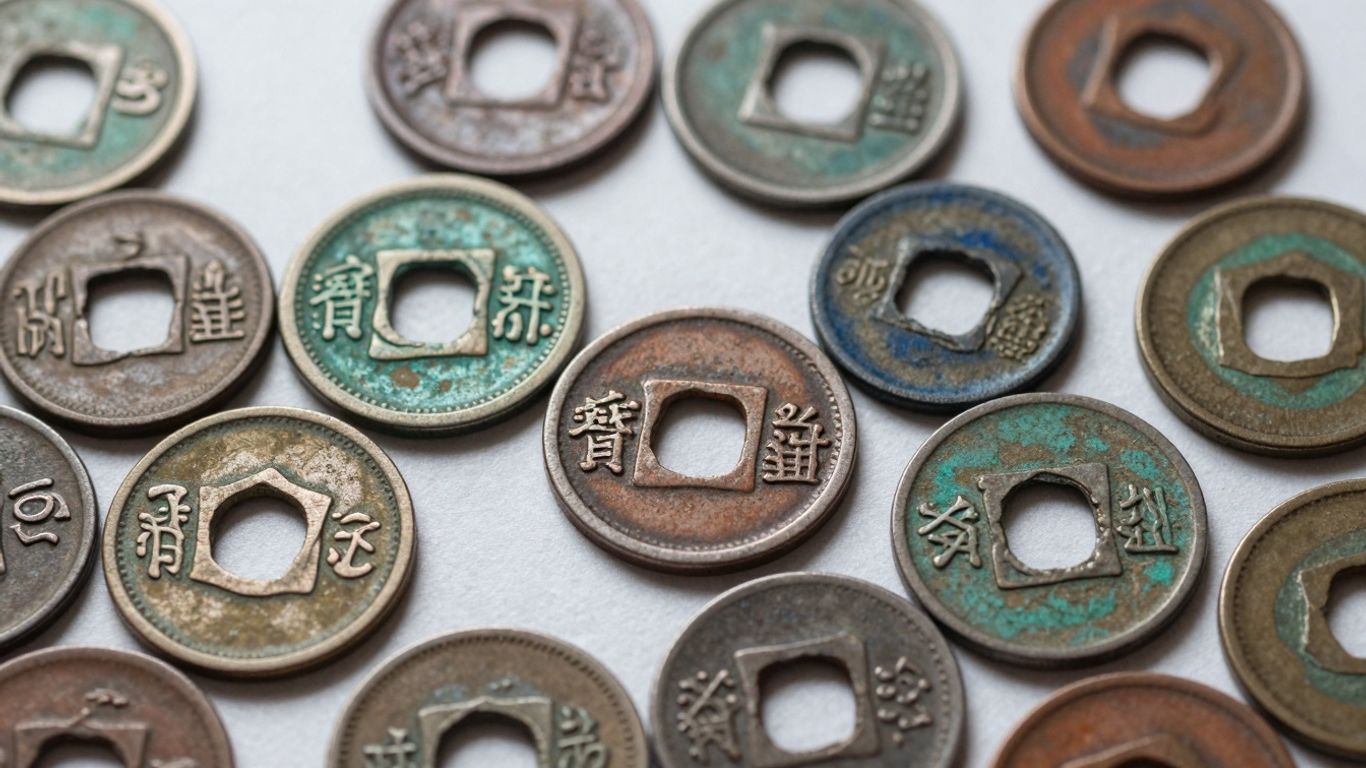
Okay, so we’ve talked about toning, but what happens when things go a bit wrong? Sometimes, what looks like toning might actually be damage, and knowing the difference is pretty important if you don’t want to accidentally ruin a coin’s value. Think of it like this: toning is like a nice tan that develops over time, while damage is more like a bad sunburn or a deep cut. Collectors really want original surfaces, and anything that looks like it’s been messed with can be a big turn-off.
Here are some things to watch out for:
- Scratches: These can be anything from faint lines you can barely see to deep gouges. Often, these show up when someone tries to clean a coin too aggressively or if it’s just been handled roughly.
- Spots: Sometimes you’ll see little spots on a coin. If they’re raised and look like they’re sitting on top of the surface, they might be something called "copper spots" on silver coins, which can be a sign of improper storage or manufacturing. If they look like they’re part of the metal itself, that’s usually okay.
- Cleaning Marks: This is a big one. If a coin looks unnaturally shiny or has a smooth, almost polished appearance where it should have some texture, it’s probably been cleaned. Cleaning strips away that natural patina we talked about, and it’s almost always a bad thing for value.
Ethical Treatment of Coin Surfaces
This is where things get a little tricky. When you’re dealing with old coins, especially ones that have been around for a while, you might find things that aren’t exactly perfect. Maybe there’s a bit of tarnish, or some discoloration that doesn’t look like the really pretty toning you see on some coins. The key thing to remember is that cleaning a coin is almost always a bad idea. Seriously, don’t do it. What might look like dirt to you is often a natural layer that’s built up over years, and collectors actually like that. It shows the coin is original.
So, what’s the right way to handle these situations?
- Leave it alone: If you’re unsure, the best bet is to just leave the coin as it is. Resist the urge to polish it up.
- Research: Try to figure out what the discoloration is. Is it natural toning, or is it something else?
- Consult experts: If it’s a valuable coin and you’re concerned, talk to a professional coin dealer or grader.
The Grey Area Between Processed and Doctored
This is where it gets really interesting, and honestly, a bit confusing. Sometimes, coins have been treated in ways that aren’t exactly natural, but they aren’t completely ruined either. Think of it as a spectrum. On one end, you have a coin that’s been left completely alone, developing its toning naturally over decades. On the other end, you have a coin that’s been artificially toned with chemicals to look a certain way – that’s usually considered "doctored" and is a big no-no.
But then there’s the middle ground. Some coins might have had minor issues, like a few copper spots, that were carefully removed by professionals. Or maybe they were dipped in a solution to remove some harmful residue, but it didn’t completely strip the original surface. These coins are "processed." It’s not ideal, but it’s not as bad as being completely doctored.
The line between a coin that’s been ethically processed to preserve its surface and one that’s been altered to deceive can be blurry. Experience and careful examination are needed to tell the difference. It’s about understanding the intent and the outcome of any treatment applied to the coin’s surface.
It takes a trained eye to spot the difference. You’ll learn to look for signs of unnatural color, harshness in the surface, or a lack of original mint luster. It’s a bit like learning to tell the difference between a real antique and a really good fake – you just get better at it with practice and by looking at a lot of examples.
Color Psychology and Coin Appeal
You know, it’s funny how colors can just change how we feel about something, right? It’s the same with coins. That natural toning, the way it colors the metal, it does more than just make it look old. It actually plays a big part in how people see the coin and, let’s be honest, what they’re willing to pay for it.
Emotional Responses to Toned Coins
Think about it. A coin with a deep, even blue or purple toning might feel calm and sophisticated. Maybe it reminds you of a twilight sky. Then you’ve got those warmer, golden or reddish tones – they can feel more energetic, almost fiery. It’s not just about the metal anymore; it’s about the feeling the colors give you. Some collectors really go for that "rainbow" effect, where you see a whole spectrum of colors shimmering on the surface. That can feel exciting, like finding a hidden treasure.
- Cool Tones (Blues, Greens, Purples): Often associated with calmness, stability, and a sense of history. They can make a coin feel serene and collected.
- Warm Tones (Reds, Oranges, Yellows): Can evoke feelings of energy, warmth, and vibrancy. These might make a coin feel more lively and eye-catching.
- Mixed/Rainbow Toning: Creates a sense of excitement and rarity, often perceived as highly desirable due to the visual complexity.
How Colors Influence Perceived Value
This is where things get interesting for collectors and investors. A coin that’s technically in the same grade as another might be worth significantly more if it has "great eye appeal." And a big part of that eye appeal is the toning. Harmonious, attractive toning can make a coin stand out and justify a higher price. It’s like the difference between a plain white t-shirt and one with a really cool, well-done graphic design.
| Color Characteristic | Perceived Impact on Value |
|---|---|
| Even, pleasing toning | Generally increases value |
| "Rainbow" toning | Can significantly increase value |
| Harsh, splotchy toning | Can decrease value |
| Dull, dark toning | May decrease value |
The Aesthetic Impact of Toning
Ultimately, toning is about aesthetics. It’s the patina that tells a story. While some collectors prefer the bright, shiny look of a brand-new coin, many are drawn to the unique character that toning brings. It’s the visual signature of the coin’s journey through time and its environment. A coin with beautiful, natural toning can be a work of art in its own right, and that artistic quality is what draws many people into the hobby.
The way toning interacts with a coin’s surface can create a visual depth that a plain, un-toned coin simply doesn’t have. It’s this subtle interplay of light and color that transforms a piece of metal into something truly captivating for the discerning eye. It’s not just about the grade; it’s about the overall presentation and the story the coin’s surface tells.
It really comes down to what catches your eye and what you find appealing. Some folks like a coin that looks like it just came from the mint, while others are all about that aged, colorful look. Both are valid, but understanding how these colors affect perception is key to appreciating the full picture of coin collecting.
Advanced Concepts in Coin Grading and Toning
Plus Designations and Eye Appeal
When you’re looking at graded coins, you might see a little plus sign (+) next to the grade, like MS65+. This isn’t just for show; it means the coin is at the top end of its grade. Think of it as the coin being in the best 30% of all coins that got that same numerical grade. It’s a subtle nod to a coin that just looks a bit better, maybe it has a bit more shine or fewer tiny marks than others in its class. NGC even has a star (★) designation for coins with truly outstanding eye appeal. It’s all about what catches your eye and makes a coin stand out from the crowd. A coin with superior eye appeal, even if it has the same numerical grade as another, will often fetch a higher price.
CAC Verification and Premium Quality
Then there’s CAC, or Certified Acceptance Corporation. They don’t assign grades themselves, but they review coins already graded by PCGS or NGC. If CAC agrees the coin is solid for its grade, it gets a green sticker. If they think it’s really nice for its grade, like truly premium quality, it gets a gold sticker. This is a big deal for collectors and investors because it’s like a second opinion from a very respected source, confirming that the coin is a top-notch example. It adds a layer of confidence, especially when you’re talking about significant money.
Strike Characters and Condition Rarity
This is where things get really detailed. Beyond the grade and eye appeal, there’s the ‘strike.’ How well was the coin actually made at the mint? Some coins, especially older ones, might have been struck weakly, meaning the details aren’t fully formed. A coin with a ‘full strike’ designation means it’s a perfect example of how that coin was supposed to look when it left the mint. This is super important because it points to ‘condition rarity.’ It’s not just about how many were made, but how many were made perfectly. A coin that’s technically perfect in its strike, even if it’s not a super rare date, can be much rarer and more valuable than a more common date that was struck poorly.
Here’s a quick look at how these factors build value:
- Technical Grade: The base numerical grade (e.g., MS65).
- Eye Appeal: Luster, toning, and surface cleanliness.
- Strike Quality: How well the coin’s details were impressed.
Focusing only on the numerical grade can be a mistake. The real value often lies in the combination of a solid grade, great eye appeal, and a strong, well-defined strike. These elements together tell the full story of a coin’s quality and rarity.
Case Studies in Coin Toning Excellence
Sometimes, seeing is believing, right? When we talk about coin toning, especially the really good stuff, looking at actual examples makes all the difference. It’s one thing to read about smooth color transitions, but it’s another to see a coin where the blues just melt into the golds like a sunset. These aren’t just pretty coins; they’re often examples of what happens when a coin ages undisturbed for decades, developing a unique character.
Examples of Beautifully Toned Coins
Let’s look at a few types of coins that often show off stunning natural toning. Think about a Morgan Dollar, for instance. These silver dollars, especially those from older mints, can develop these incredible, deep blues and purples on the obverse, with warm, golden or even reddish hues on the reverse. It’s like a little piece of art.
- Morgan Dollars: Often display vibrant blues, purples, and golds, particularly on the obverse and around the devices.
- Peace Dollars: Can show softer, more pastel-like toning, sometimes with a silvery-grey base and hints of rose or green.
- Early Type Coins (e.g., Seated Liberty, Barber series): These can exhibit a wide range of colors, from deep brown and mahogany to vibrant blues and greens, depending on their storage history.
It’s not just silver coins, either. Even copper coins, like certain Lincoln Cents or Indian Head Pennies, can develop a rich, chocolate-brown patina or even hints of red and orange if they’ve been stored properly. The key is that these colors develop gradually, creating a pleasing visual effect.
Learning from Exceptional Examples
When you see a coin with truly exceptional toning, it’s worth taking a moment to appreciate why it looks that way. Often, these coins have spent a long time in an album or a paper envelope, allowing the environment to slowly interact with the metal. You won’t see harsh, artificial-looking splotches of color. Instead, you’ll notice a gentle flow from one shade to another. This smooth blending is a hallmark of natural toning. It’s the opposite of what you see with artificially toned coins, which can look like someone just painted them with bright, unnatural colors. For collectors looking to build a solid 20th-century type set, understanding these visual cues is part of the fun.
The difference between a coin that has developed beautiful, natural toning over many years and one that has been artificially altered is often subtle but significant. It’s about the story the coin tells through its surface, a narrative of time and environment rather than a quick chemical bath.
The Investor's Perspective on Toning
From an investor’s standpoint, naturally toned coins can be quite desirable. They often carry a premium because they stand out. A coin that looks appealing to the eye, with attractive toning, can fetch a higher price than a similar coin with dull or no toning. However, it’s vital for investors to be able to distinguish between natural and artificial toning. The market generally rewards natural toning, while artificial toning can actually detract from a coin’s value, or worse, be a sign of a potentially fraudulent piece. Being able to spot the difference is a skill that comes with experience and careful observation, much like learning to identify the subtle differences in strike quality that can affect a coin’s overall grade and desirability. This careful attention to detail is what separates a casual collector from a savvy investor in the world of numismatics.
Preserving and Appreciating Coin Toning
Proper Handling and Storage
Okay, so you’ve got this awesome toned coin, maybe it’s got these cool blues and oranges, or perhaps a deep, rich brown. The absolute number one rule here? Don’t clean it. Seriously. What looks like dirt or grime to you is probably the natural patina that makes the coin special. Cleaning it, even with a soft cloth, can strip away that history and wreck its value. Think of it like trying to polish an old painting – you’d ruin it.
When you’re actually holding these coins, always use gloves. Your fingers have oils that can leave marks, and over time, those marks can actually damage the surface. It’s best to hold coins by their edges. If a coin is in a protective holder, like a slab from a grading service, leave it there. Taking it out just exposes it to more risk.
Storage is pretty straightforward. Keep your coins in a stable environment. Avoid places with lots of humidity changes or extreme temperatures. A simple coin album or a dedicated display case works well. The goal is to keep things consistent so the toning doesn’t change unexpectedly.
The Long-Term Value of Natural Toning
Natural toning isn’t just pretty; it’s a sign of a coin’s journey through time. These colors develop slowly, influenced by the air, the container it was stored in, and just the general environment over decades, sometimes even centuries. This slow, natural process usually results in smooth color transitions, not harsh, splotchy patches. You’ll often see a nice blend, maybe a soft rainbow effect or a deep, even coloration.
Coins with attractive, original natural toning tend to hold their value better and are often more sought after by collectors. It’s a mark of authenticity and a testament to the coin’s undisturbed history. Artificial toning, on the other hand, often looks, well, artificial. It might have really bright, unnatural colors or sharp lines where the colors change. Plus, a naturally toned coin, especially one in high grade, usually still has a nice underlying luster. If a coin looks heavily toned but has zero shine, that’s a big warning sign.
The surface of a coin tells a story. Natural toning is like a well-written chapter, showing the passage of time and environmental interaction. Artificial toning is more like a poorly edited rewrite, often missing the subtle details and depth.
Building a Collection of Toned Coins
Collecting toned coins can be really rewarding. It’s about finding pieces that have a unique visual appeal. Here’s a quick rundown of what to look for:
- Color Palette: Look for coins with colors that you find appealing. Some people love the vibrant, almost iridescent rainbow tones, while others prefer the deep, dark, chocolatey browns or blues. There’s no right or wrong answer, it’s all about personal taste.
- Color Distribution: How are the colors spread across the coin? Are they evenly distributed, or do they concentrate in certain areas? Sometimes, toning that highlights the coin’s design features can be particularly attractive.
- Luster: As mentioned, check for that underlying mint luster. A coin that retains its original shine beneath the toning is generally more desirable.
- Absence of Damage: Make sure the toning isn’t hiding any problems. Look out for scratches, rim dings, or other forms of damage that could affect the coin’s overall condition and value.
When you’re starting out, it can be helpful to focus on a specific series or denomination. This way, you can learn the typical toning patterns for those coins and get better at spotting what looks original and appealing. It takes practice, but developing an eye for quality toned coins is part of the fun.
Wrapping It Up
So, we’ve looked at a lot of stuff about coin toning, from how it happens naturally to how some folks try to fake it. It’s pretty wild how the environment can change a coin’s look over time, creating these unique colors. Knowing the difference between natural and fake toning is a big deal, especially if you’re thinking about collecting or investing. It’s not always easy to spot, but paying attention to how the colors look and blend can give you a good clue. Keep learning, keep looking, and you’ll get better at spotting those beautiful, naturally toned coins out there.
Frequently Asked Questions
What exactly is coin toning?
Coin toning is like a colorful skin that forms on a coin over time. It’s a natural process that happens when the metal in the coin reacts with the air and other things around it. Think of it like how an apple turns brown when you leave it out, but with coins, it can create beautiful blues, greens, oranges, and purples.
How can I tell if a coin's toning is natural or fake?
Natural toning usually looks smooth and blended, like a sunset. Fake toning, often called ‘artificial toning,’ can look a bit weird. It might have super bright, unnatural colors that seem to appear out of nowhere, or the colors might change too suddenly. Also, real toning often happens without messing up the coin’s shine, while fake toning might make it look dull.
What makes coins change color naturally?
Lots of things! The air around the coin, how much moisture is there, and even what kind of container it’s stored in can all play a part. It’s like leaving a coin in a humid place for a long time – it’s more likely to get toned than one kept in a dry box.
Are certain colors more valuable on a toned coin?
Sometimes, yes! Certain color combinations, especially those that are rare and look really pretty, can make a coin more desirable to collectors. It’s not just about the color itself, but how it looks on the coin and how unique it is. Eye appeal is super important!
Can toning be a bad thing for a coin?
Toning itself isn’t usually bad; in fact, many collectors love it! However, if the toning looks unnatural, like it was added on purpose with chemicals, that’s a problem. Also, sometimes toning can hide damage or other issues on the coin, so it’s important to look closely.
What's the difference between toning and actual damage to a coin?
Toning is a surface color change that happens naturally over time. Damage, on the other hand, is when the coin’s surface is physically altered in a bad way. This could be scratches, dents, nicks, or even cleaning marks. Toning is like a colorful coat, while damage is like a scar.
Does the type of metal affect how a coin tones?
Absolutely! Different metals react differently. For example, copper coins tend to get reddish-brown or green tones, while silver coins can develop blues, purples, and yellows. Each metal has its own unique way of toning.
How does time affect coin toning?
Time is a huge factor! The longer a coin is exposed to its environment, the more likely it is to develop toning, and the deeper and more complex those colors can become. Natural toning is a slow process, and the best examples often come from coins that have aged gracefully over many, many years.