Ever find a coin that looks a little… off? Maybe the design is a bit blurry, or there’s a strange mark on it. Chances are, you’ve stumbled upon what collectors call a mint error. These aren’t just mistakes; they’re little accidents from the coin-making process that can turn ordinary change into something pretty special. Understanding coin errors types is key if you want to spot these unique pieces, figure out if they’re worth anything, and maybe even start your own collection of these fascinating oddities.
Key Takeaways
- Mint errors happen when something goes wrong during the coin production process, creating unique imperfections.
- Major error categories include planchet errors (flaws before striking), striking errors (issues during the strike), and die errors (problems with the molds).
- Valuable mint errors are determined by how rare they are, their condition, and how much people want them.
- Authenticating errors is important; using grading services like PCGS or NGC helps confirm a coin’s legitimacy and value.
- Collecting mint errors can be a rewarding hobby and a smart investment due to their inherent rarity and growing demand.
Understanding Coin Errors Types: An Overview
So, you’ve decided to dive into the fascinating world of coin collecting, specifically focusing on those quirky, imperfect pieces known as mint errors. It’s a hobby that can be both exciting and a little bit baffling at first. These aren’t just damaged coins; they’re accidental artifacts, tiny snapshots of the minting process gone slightly awry. Each error coin tells a unique story about a moment when the machinery or the process didn’t quite go as planned.
Definition and Significance of Mint Errors
Mint errors are essentially mistakes that happen during the production of coins. Think of them as the coin world’s version of a typo or a smudge on a photograph. They can range from minor imperfections that are barely noticeable to dramatic flaws that make a coin look completely alien. The significance of these errors lies in their rarity and the insight they offer into the complex machinery and procedures at a mint. Unlike mass-produced coins that are meant to be identical, an error coin is a one-of-a-kind or very limited-issue item. This scarcity is a huge part of what makes them so appealing to collectors. They’re not just coins; they’re historical curiosities.
The Minting Process: Where Errors Occur
To really appreciate mint errors, it helps to have a basic idea of how coins are made. The U.S. Mint follows a pretty specific sequence:
- Planchet Preparation: Metal sheets are fed into a blanking press, which punches out round metal discs called planchets. These are the blanks that will eventually become coins. Sometimes, these blanks can have issues before they even get to the next stage.
- Die Preparation: The dies, which are essentially the engraved molds for the coin’s design, are prepared. These are incredibly hard steel tools.
- Striking: This is where the magic (or the mistake) happens. A planchet is placed between two dies (one for the obverse, or heads side, and one for the reverse, or tails side) inside a collar, which gives the coin its reeded or smooth edge. A massive press then slams the dies together with immense force, impressing the design onto the planchet.
Errors can pop up at any of these stages. A problem with the metal blank, a flaw on the die itself, or an issue with how the planchet is positioned or struck can all lead to a collectible error.
Why Mint Errors Fascinate Collectors
So, what’s the big draw? For many, it’s the thrill of the hunt. Finding an error coin in circulation is like winning a small lottery. It’s also about owning something truly unique. While millions of perfect coins are minted, only a handful (or sometimes just one!) will have a specific error. This rarity drives demand and, consequently, value. Plus, there’s a certain satisfaction in understanding the intricate process of coin production and spotting where it went wrong. It adds a layer of detective work to the hobby. Many collectors also enjoy the stories behind famous errors, like the legendary 1943 bronze cent, which was mistakenly struck on a copper planchet instead of the intended steel. These stories add historical depth to the collecting pursuit, making each piece more than just metal.
The allure of mint errors isn’t just about the monetary value; it’s about the connection to the manufacturing process itself. Each imperfection is a deviation from the norm, a testament to the fact that even highly automated systems can produce unexpected results. This unpredictability is what keeps collectors engaged, always searching for the next unusual find that might be hiding in plain sight.
Planchet Errors: Flaws Before The Strike
Blank Planchets: Undefined Metal Discs
Sometimes, the minting process hits a snag even before the coin gets its design. This is where blank planchets come into play. A blank planchet is basically a metal disc that was punched out from a sheet of metal but never made it to the striking press. Think of it as a coin that completely dodged the main event. These are pretty rare because usually, the metal is fed right into the machines. Finding one is like finding a blank canvas before the artist even starts painting. They’re smooth, featureless, and a curious little piece of minting history.
Clipped Planchets: Incomplete Metal Blanks
Clipped planchets are a bit more common than blank ones, but still quite interesting. This happens when the machine punching out the round blanks from a metal strip has a bit of overlap. Instead of a perfect circle, you get a blank with a crescent-shaped bite taken out of it. Imagine a cookie cutter that’s a little too close to the edge of the dough – you get a partial cookie. These can range from a small notch to a significant chunk missing. The shape of the clip can tell you a lot about how it happened. They’re a clear sign that something went a little sideways in the metal preparation stage.
Wrong Metal Planchets: Compositional Anomalies
This is where things get really exciting for collectors. A wrong metal planchet error occurs when a blank disc made of one type of metal is accidentally fed into the striking press meant for coins of a different composition. The most famous example is the 1943 Lincoln cent. During World War II, cents were supposed to be made of zinc-coated steel to save copper. However, a few were mistakenly struck on copper planchets left over from the previous year. These "copper cents" are incredibly rare and valuable. It’s a mistake that turned a common penny into a numismatic legend.
Off-Metal Errors: Striking on Incorrect Planchets
Off-metal errors are a fascinating category, often overlapping with wrong metal planchets but sometimes referring to striking a coin denomination on a planchet intended for a different denomination, even if the metal composition is correct for that other coin. For instance, a dime planchet might be struck with the dies for a quarter. The resulting coin would have the size and thickness of a dime but the design of a quarter, or vice-versa. These errors are quite striking visually and can be quite valuable because they represent a significant mix-up in the mint’s production line. They show that even the basic metal discs weren’t always matched correctly with their intended dies.
Here’s a quick look at some common planchet errors:
| Error Type | Description |
|---|---|
| Blank Planchet | Metal disc punched but not struck |
| Clipped Planchet | Incomplete circle with a bite taken out |
| Wrong Metal Planchet | Struck on a planchet of unintended metal |
| Off-Metal Error | Struck on a planchet for a different denomination |
These errors happen before the coin’s design is even applied. They are flaws in the metal blank itself, making them a distinct category from errors that occur during the striking process or issues with the dies.
Striking Errors: Chaos In The Press
Sometimes, even after the metal blank is ready and the dies are prepared, things can go sideways right as the coin is being made. These are what we call striking errors. It’s basically when the coin gets messed up during the actual moment it’s being pressed into existence. Think of it like a photographer whose camera malfunctions right as they snap the perfect shot – the image is there, but it’s not quite right.
Off-Center Strikes: Misaligned Coin Impressions
This is probably one of the more common striking errors you’ll run into. It happens when the planchet (that’s the blank metal disc) isn’t perfectly lined up between the two dies (the metal stamps that put the design on the coin). So, instead of the design being smack in the middle, it’s shifted. Sometimes it’s just a little bit off, maybe 5-10% of the design is missing on one side. Other times, it can be really dramatic, like 50% or more off-center, leaving a huge chunk of the coin blank. These can look pretty wild, almost like a piece of abstract art.
Broadstrikes: Struck Without A Collar
Normally, when a coin is struck, it’s inside a metal ring called a collar. This collar does a couple of things: it keeps the coin perfectly round and it also adds those little reeded edges or lettering you see on the sides of many coins. When a coin is struck without a collar, the metal has nowhere to go but outwards. This results in a coin that’s usually thinner and wider than it should be, with a smooth, unadorned edge. It’s like trying to squeeze toothpaste from a tube without the cap on – it just squishes out everywhere.
Capped Die Strikes: Unique Die Cap Impressions
This one’s a bit more unusual. A capped die error happens when a previously struck coin sticks to the upper die. When the next planchet comes along, the stuck coin is essentially struck again by the lower die, and then the whole mess gets pushed up into the upper die, forming a "die cap." This cap then gets struck repeatedly, creating a unique, often concave, impression on the face of the die cap itself. The coins struck with this die cap can show a "ghost" of the design or even have a sort of "satin" finish. They’re pretty distinctive and can be quite collectible.
Multiple Strikes: Overlapping Coin Designs
This error occurs when a coin is struck more than once by the dies. It’s not just a slight overlap; you’ll see distinct impressions of the design laid on top of each other. Imagine stamping a design on paper, then stamping it again slightly off-center. You’d see the original design and then a fainter, shifted version. On coins, this can create a really cool, layered effect. The strength of the second strike can vary, sometimes making the second design very faint, other times making it quite strong and creating a dramatic, almost ghostly appearance. It’s a clear sign that something went wrong with the timing of the minting press.
These striking errors are fascinating because they show the raw power and sometimes the chaotic nature of the minting process. They’re not just flaws; they’re accidental artworks created by machines under immense pressure. Each one tells a story of a moment when the precise dance of coin production faltered, leaving behind a unique artifact.
Die Errors: When The Mold Goes Wrong
Sometimes, the actual tools used to make the coins mess up. These are called die errors, and they can lead to some really interesting finds. Think of the dies as the stamps that imprint the design onto the metal blanks. If these stamps have issues, the coins they strike will show it. It’s like a sculptor’s chisel having a chip – the final statue will have a mark from it.
Doubled Dies: The Illusion Of Multiple Designs
This is probably one of the most famous types of die errors. A doubled die happens when the die is accidentally struck twice by the hub (the tool that creates the design on the die itself) with a slight misalignment between the strikes. This results in a "ghostly" or doubled image on the coin. You might see the date, letters, or parts of the design appearing to be struck twice, often with one impression slightly offset from the other. The 1955 Lincoln Cent is a classic example, with its doubling so pronounced you can see it without a magnifying glass. These are super popular with collectors because the doubling can be quite dramatic and visually striking.
Die Cracks and Cuds: Imperfections On The Die Surface
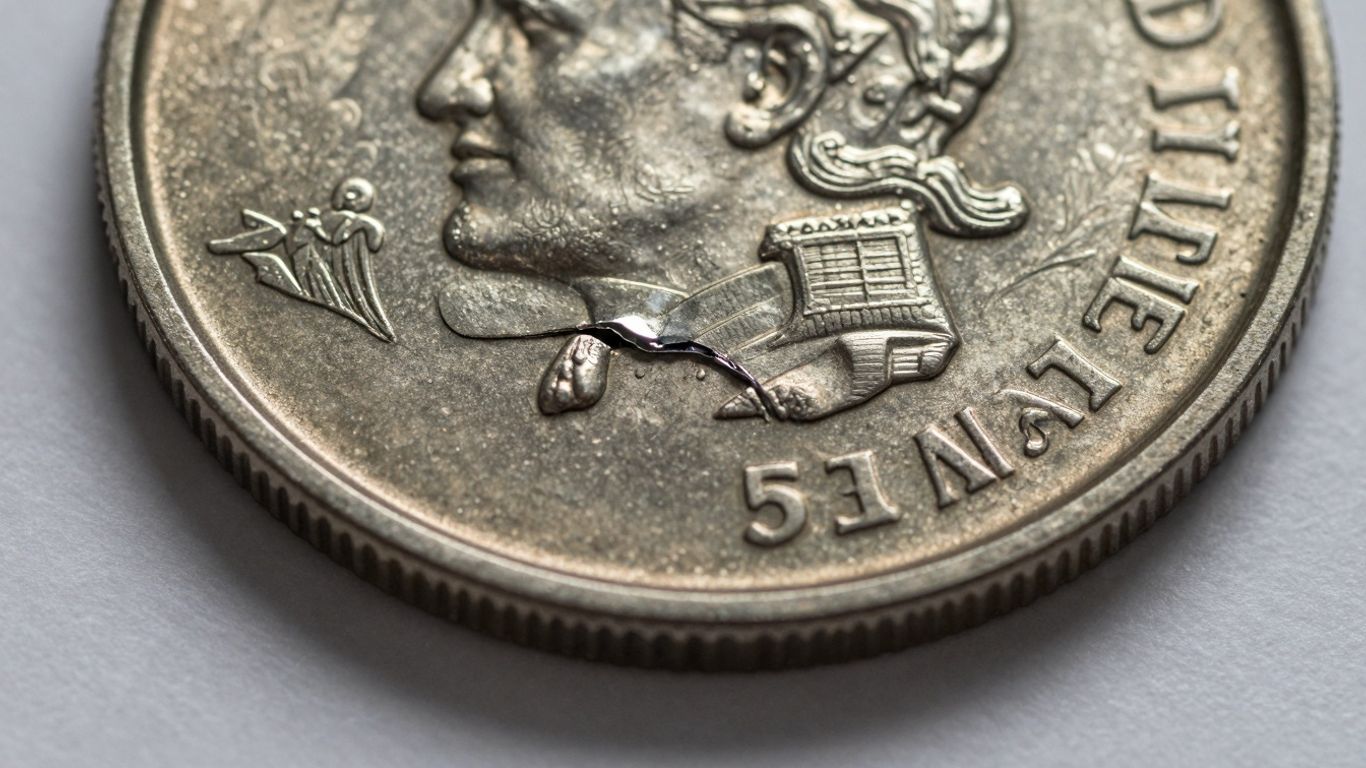
Dies are made of hardened steel, but they aren’t indestructible. Over time, or sometimes due to stress, they can develop cracks. When a coin is struck with a cracked die, a raised line of metal, called a die crack, will appear on the coin’s surface. These can range from tiny hairline cracks to significant fissures. If a piece of the die actually breaks off, creating a larger void, the resulting error is called a "cud." Cuds are usually larger, raised lumps on the edge of the coin where the design is missing or distorted because that part of the die is gone. They’re pretty easy to spot and add a unique character to a coin. Finding a coin with a cud is a neat piece of minting history you can hold. You can see examples of these on coins like the 1969 Washington quarter.
Misaligned Dies: Rotational Inaccuracies During Striking
This error occurs when the obverse (heads) and reverse (tails) dies are not perfectly aligned with each other during the striking process. Instead of being perfectly perpendicular, one die might be slightly rotated relative to the other. This means the design on one side of the coin might appear rotated compared to the design on the other side. While some misalignment is normal and expected, significant rotations are what collectors look for. It’s a subtle error, but sharp-eyed collectors can spot these rotational differences. It’s a reminder that even with precise machinery, tiny shifts can happen. These errors are a fascinating part of understanding coin errors.
The minting process involves immense pressure and precision, but the human element and the sheer force involved mean that imperfections are not just possible, but inevitable. These die errors, from the dramatic doubling of a doubled die to the distinct mark of a cud, are tangible pieces of that history. They represent moments where the machinery faltered, creating unique artifacts that collectors cherish.
Here’s a quick rundown of what to look for:
- Doubled Dies: Look for a "shadow" or doubling effect on letters, numbers, or design elements.
- Die Cracks: Search for thin, raised lines on the coin’s surface.
- Cuds: Identify larger, raised lumps on the coin’s edge where the design is missing.
- Misaligned Dies: Compare the orientation of the obverse and reverse designs for significant rotational differences.
Brockage And Indentation Errors
Sometimes, the minting process gets a bit messy, and you end up with coins that have a mirror image of another coin’s design or a sunken spot. These are known as brockage and indentation errors, and they’re pretty wild to see.
Brockages: Mirror Images On Coin Surfaces
A brockage error happens when a newly struck coin sticks to one of the dies, and then the next blank planchet gets struck with that die, which now has the impression of the previous coin on it. This results in a "mirror image" of the design appearing on the affected side of the new coin. It’s like the coin is trying to imprint itself onto the next one!
- Obverse Brockage: The reverse design appears on the obverse (front) of the coin. This usually happens when the reverse die is involved.
- Reverse Brockage: The obverse design appears on the reverse (back) of the coin. This is more common and typically involves the obverse die.
- Full Brockage: Both sides of the coin show a brockage impression, meaning the coin got stuck on both dies at different times or a very strong impression was made.
These are pretty rare, and finding one where the mirror image is clear and complete makes it even more special. The clearer and more complete the mirror image, the more interesting the error.
Indentation Errors: Sunken Spots From Overlapping Coins
Indentation errors are a bit different. They occur when two coins are somehow caught in the minting press at the same time, or when a struck coin gets caught under a die. The pressure from the striking process then creates a sunken area on one or both of the coins involved, showing a partial impression of the other coin.
Think of it like this: a coin gets squished into another coin, leaving a dent. These can look like a simple gouge, but if you look closely, you might see the faint outline of another coin’s design within that indentation.
- Partial Indentation: A small, sunken area with a partial design impression.
- Full Indentation: A larger, deeper sunken area that might show a significant portion of the other coin’s design.
- Double Indentation: Both coins involved in the incident show an indentation.
These errors are fascinating because they show a direct physical interaction between two coins during the minting chaos. They’re a tangible reminder that even machines can have a bad day at the office.
Rare And Wildcard Error Types
Mule Coins: Obverse-Reverse Mismatches
Sometimes, the minting machinery gets really mixed up, and you end up with a coin that has the front of one denomination and the back of another. These are called mule coins, and they’re pretty wild. Think of a dollar coin with the design of a quarter on the back, or something even stranger. These happen when dies for different coin types are accidentally paired up in the press. Because they’re so unusual and only a handful are ever found, they can be incredibly valuable to collectors. Finding one is like hitting the numismatic lottery.
Transitional Errors: Coins Caught Between Eras
These errors are fascinating because they show us a coin in the middle of a change. For example, when the US switched from silver to clad coinage in 1965, some dimes and quarters were accidentally struck on the old silver planchets before the mint fully transitioned. These are transitional errors. They’re a tangible piece of history, showing the exact moment a coin’s composition changed. They’re not super common, but they pop up often enough to be a recognized category.
Missing Edge Lettering: Smooth Edges On Struck Coins
Most modern coins have lettering or reeding on their edges. But sometimes, due to a glitch in the collar that’s supposed to hold the coin in place during striking, the edge lettering doesn’t get applied properly, or at all. This results in a coin with a completely smooth edge where there should be text or grooves. These are particularly noticeable on coins that are supposed to have distinct edge features, like the Presidential dollars. While not as dramatic as some other errors, a clean, smooth edge on a coin that should have lettering is a definite anomaly that collectors seek out.
Here’s a quick look at what makes these stand out:
- Mule Coins: The ultimate mix-up, pairing the wrong dies. Extremely rare and highly prized.
- Transitional Errors: Show a coin caught during a material change, like silver to clad. A snapshot of minting history.
- Missing Edge Lettering: A smooth edge on a coin that should have text or reeding. A subtle but significant flaw.
These aren’t your everyday mint mistakes. They represent unique moments where the standard production process went significantly off-track, creating pieces that are both historically interesting and scarce. Their rarity and the story they tell are what drive collector interest and value.
Identifying Valuable Mint Errors
Key Factors: Rarity, Condition, and Demand
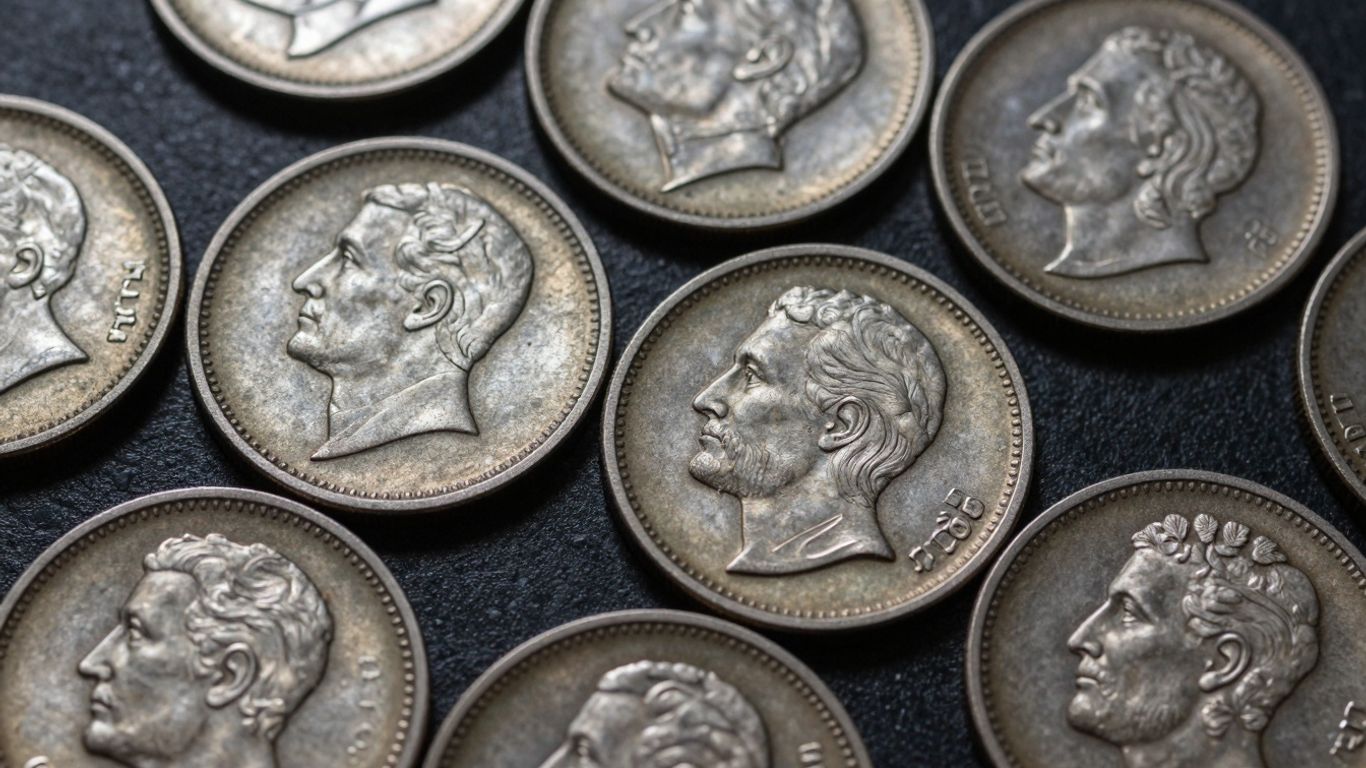
So, you’ve found a coin with a weird little bump or a design that looks a bit off. Cool! But is it actually worth something, or is it just a damaged coin? That’s the million-dollar question, right? Turns out, there are a few big things that make an error coin go from "huh, that’s odd" to "wow, that’s a treasure." First off, rarity is huge. If only one or two of these mistakes ever happened, it’s going to be way more sought after than something that popped up a few hundred times. Think about the 1943 bronze penny – only a handful exist, and people go nuts for them. Then there’s the condition. Even a rare error won’t fetch top dollar if it’s all scratched up or worn down to nothing. Collectors want to see that error clearly, and the better the overall shape of the coin, the more it’s worth. Finally, demand plays a massive role. Some errors, even if they’re not super rare, are just really popular with collectors. It’s a bit of a balancing act between how many were made, how nice they look, and how many people want to own one.
Notable High-Value Error Coins
Some mint errors have become legendary in the coin collecting world, fetching prices that make your jaw drop. These aren’t your everyday finds; they’re the cream of the crop, the mistakes that history remembers.
- 1943 Bronze Lincoln Cent: This is the big one. Struck on a copper planchet instead of the intended zinc-coated steel during wartime, only about 20 are known to exist. It’s sold for over $1.7 million at auction.
- 1969-S Doubled Die Obverse Lincoln Cent: This penny shows really noticeable doubling on the date and lettering. In top condition, these can easily go for over $100,000.
- 2000 Sacagawea Dollar Mule: This is a fascinating one where the obverse (heads) die was accidentally paired with a reverse (tails) die from a different series, in this case, the Washington Quarter. Depending on its condition, these can fetch anywhere from $50,000 to $100,000.
These examples show just how significant a single mistake can be when the stars align with rarity and demand.
The Role Of Grading Services In Valuation
Okay, so you’ve got a coin that might be a valuable error. Now what? This is where grading services like PCGS (Professional Coin Grading Service) and NGC (Numismatic Guaranty Company) come in. They’re basically the official referees of the coin world. When you send a coin to them, they examine it really closely, determine its authenticity, and assign it a grade based on its condition. For error coins, this is super important. A professional grade can confirm that the error is genuine and not something someone faked. It also gives a standardized rating of the coin’s condition, usually on a scale from 1 to 70. A coin with a high grade, like MS-65 (Mint State, 65 out of 70), from a reputable service can make its value skyrocket, sometimes tenfold, compared to an uncertified coin. It’s like getting a seal of approval that tells potential buyers exactly what they’re getting, reducing risk and boosting confidence. Without this certification, it’s much harder to prove an error is real and to get the best price for it.
Authenticating And Safeguarding Your Collection
So, you’ve found a cool-looking coin with a weird mark or a doubled design. Awesome! But before you start dreaming of riches, we need to talk about making sure it’s the real deal and how to keep it safe. It’s not always as simple as it looks, and unfortunately, there are folks out there trying to pull a fast one.
The Importance Of Third-Party Grading
Look, I’m not saying you can’t spot a fake, but sometimes it takes a trained eye, and frankly, a lot of specialized equipment. That’s where the big grading services come in. Companies like PCGS (Professional Coin Grading Service) and NGC (Numismatic Guaranty Company) are basically the gold standard. They have experts who examine coins, determine their grade (how good of condition it’s in), and then seal it in a protective holder, often called a "slab." A coin in a slab from a reputable service is generally considered authentic and graded accurately. It’s like getting a verified stamp of approval.
Why is this so important for error coins? Because errors can be faked. Someone might try to create a doubling effect or add a fake "cud" to a regular coin. A third-party grader will catch these tricks. Plus, they assign a numerical grade, which is a big deal for value. A coin that looks great to you might get a lower grade from an expert, and that affects how much it’s worth.
Recognizing Counterfeit Errors
Spotting fakes takes practice. Here are a few things to watch out for:
- Unnatural Appearance: Does the "error" look too perfect, too symmetrical, or just plain weird compared to known genuine errors? Sometimes fakes have a "too good to be true" vibe.
- Wrong Metal: If a coin is supposed to be copper but feels too light or looks too shiny, it might be struck on the wrong metal planchet, or worse, it could be a fake made from a different material.
- Suspicious Pricing: If an error coin is being sold for way less than similar, authenticated coins, be very cautious. It’s often a sign that it’s not genuine or is in much worse condition than advertised.
- Lack of Certification: While not always a deal-breaker for very common errors, if a coin is being sold as a rare or valuable error and it’s not in a slab from a major grading service, that’s a big red flag.
Counterfeiters often focus on common error types that are easier to mimic. They might try to simulate doubled dies with etching or create artificial die cracks. Always compare suspect coins to known genuine examples, preferably those authenticated by a reputable service. The details matter, and subtle differences can reveal a fake.
Tips For Verifying Coin Authenticity
So, what can you do to be sure?
- Educate Yourself: The more you learn about genuine error types and what they look like, the better you’ll be at spotting fakes. Study images of authenticated coins.
- Use Magnification: A good magnifying glass or a jeweler’s loupe is your best friend. Look closely at the details of the supposed error. Are the lines sharp and consistent with known errors, or do they look etched or added?
- Compare and Contrast: If possible, compare the coin in question to a known genuine example of the same error type. Even better, compare it to a regular, non-error coin from the same year and mint.
- Check the Edge: For errors involving the edge, like missing lettering or reeding, examine it carefully. Sometimes fakes have seams or tooling marks on the edge.
- Trust Your Gut (But Verify): If something feels off about a coin, it probably is. Don’t be afraid to walk away from a deal if you have doubts. It’s better to miss out on a potential find than to buy a fake.
Investing In Mint Error Coins
Mint error coins aren’t just cool oddities; they can actually be pretty solid investments. Think about it: these aren’t just mass-produced coins. Each one is a unique accident, a little piece of history that slipped through the cracks at the mint. Because they’re so rare, and because more people are starting to realize how interesting they are, their value can really climb.
Mint Errors As Portfolio Powerhouses
When you’re looking to diversify your investments, error coins offer something different. Unlike regular coins or even just silver or gold, errors have that extra layer of scarcity. It’s not just about the metal content; it’s about owning something that literally can’t be made again. This uniqueness is what drives demand. As more collectors get into the hobby and investors start seeing the potential, prices for good error coins have been going up. It’s like finding a hidden gem before everyone else does.
Market Trends And Investment Potential
The market for error coins has been growing steadily. People are drawn to the stories behind these coins – the 1943 bronze penny, the 1969-S doubled die cent, these are legendary pieces. While you might not find those exact coins easily, there are countless other errors out there that are gaining attention. The key is to stay informed about what’s popular and what has a good track record. Auction results show that high-grade, well-authenticated errors can fetch impressive prices. It’s a market that rewards knowledge and a bit of patience.
Smart Buying And Selling Strategies
So, how do you actually make money with error coins? First off, education is key. You need to know what you’re looking at. Learn the different types of errors, what makes one rarer than another, and what condition really means for value. Buying certified coins from reputable services like PCGS or NGC is a smart move. It means the coin has been authenticated and graded, cutting down on the risk of fakes or overvalued pieces.
Here are a few tips for buying smart:
- Do your homework: Understand the specific error type and its typical market value.
- Prioritize condition: A higher grade can mean a significantly higher price.
- Buy certified: Stick to coins graded by major third-party services.
- Consider rarity: The fewer known examples, the greater the potential for appreciation.
When it comes to selling, timing and presentation matter. Selling through a reputable auction house or dealer specializing in errors can help you reach the right buyers. Having the coin professionally graded beforehand is almost always a good idea. It adds credibility and can justify a higher asking price. Remember, the goal is to buy low and sell high, but with error coins, it’s also about finding those unique pieces that have a story and a future.
The allure of error coins as investments lies in their inherent scarcity and the captivating narratives they carry. Each anomaly represents a singular event in the minting process, making it a non-repeatable item. This fundamental lack of reproducibility, coupled with growing collector interest, creates a strong foundation for potential value appreciation over time. For the astute investor, these coins offer a tangible connection to history and a unique avenue for portfolio growth.
Wrapping It Up
So, we’ve gone through a bunch of coin errors, from the ones that look a little off to the really wild, super rare finds. It’s pretty amazing how a simple mistake at the mint can turn a regular coin into something special, right? Remember, spotting these errors isn’t just about finding a mistake; it’s about finding a piece of history that most people never see. Whether you’re just starting out or you’ve been collecting for a while, keeping an eye out for these unique coins can make your collection way more interesting, and who knows, maybe even more valuable. Happy hunting out there!
Frequently Asked Questions
What exactly is a mint error coin?
A mint error coin is basically a coin that has a mistake made during the process of creating it at the mint. Think of it like a typo on a coin! These aren’t made on purpose; they happen by accident when machines or people mess up during stamping, cutting, or other steps.
Are all mint errors valuable?
Not all mint errors are super valuable. The price really depends on how rare the mistake is, how good the coin’s condition is, and how many people want to collect it. Some common errors might not be worth much more than a regular coin, while super rare ones can be worth a fortune.
What's the difference between a planchet error and a striking error?
A planchet error happens to the blank metal disc *before* it gets stamped, like if it’s the wrong shape or metal. A striking error happens *during* the stamping process, like if the design is off-center or doubled because the dies weren’t lined up right.
What is a 'doubled die' error?
A doubled die error occurs when the die (the stamp that makes the coin’s design) gets hit twice or shifted slightly between strikes. This makes the design look like it’s doubled or fuzzy, especially on the letters and numbers. It’s a pretty cool-looking mistake!
How can I tell if a mint error coin is real or fake?
It’s super important to be careful! Real mint errors are usually certified by professional grading companies like PCGS or NGC. If a deal seems too good to be true, or the coin doesn’t have that official grading, it might be a fake. Always buy from trusted sources.
What are some of the most famous or valuable mint errors?
Some legendary errors include the 1943 copper penny (it was supposed to be steel for the war effort!), the 1955 doubled die penny, and mule coins (where the front and back designs don’t match). These are incredibly rare and can sell for hundreds of thousands or even millions of dollars.
Where can I find mint error coins?
You might find them in your own pocket change – it happens! You can also look at coin shows, specialized coin shops, and reputable online dealers. Sometimes, collectors sell off parts of their collections, which can be a great place to find errors.
What should I do if I think I found a mint error coin?
First, don’t clean it! Cleaning can damage the coin and lower its value. Try to identify the type of error it is, research its rarity, and consider getting it professionally graded. This will help you understand its true value and make it more appealing to other collectors.