Spotting fake coins can feel like a treasure hunt, and sometimes, you need a few tricks up your sleeve. One of the simplest tools in your arsenal is a magnet. While not a foolproof method on its own, the magnet test for coins can be a quick way to weed out many common fakes, especially those made from magnetic base metals. This guide will walk you through how and why this test works, and what other steps you can take to be sure you’re holding the real deal.
Key Takeaways
- A magnet test for coins is a preliminary check. Genuine gold and silver coins are not magnetic, so if a coin strongly attracts a magnet, it’s likely not made of these precious metals.
- This test is limited because some counterfeit coins are made from non-magnetic base metals, meaning they won’t attract a magnet but are still fake.
- To perform the magnet test, use a strong magnet (like neodymium) and see if it attracts the coin. A lack of attraction suggests the coin might be genuine precious metal, but further tests are needed.
- Always combine the magnet test with other methods like checking weight, dimensions, and examining mint markings to get a clearer picture of a coin’s authenticity.
- For absolute certainty, especially with valuable coins, seek professional authentication or purchase solely from trusted, reputable dealers.
Understanding The Magnet Test For Coins
So, you’ve got a coin and you’re wondering if it’s the real deal or just some clever fake. One of the first things many people reach for is a magnet. It seems simple enough, right? If a coin sticks to a magnet, it’s probably not made of precious metal. But like most things in coin collecting, it’s not quite that straightforward.
Why The Magnet Test Is A Preliminary Check
This test is popular because it’s quick and easy. Most genuine gold and silver coins, the kind you’d find in bullion or older collections, aren’t magnetic. Metals like gold, silver, platinum, and palladium just don’t have that magnetic pull. So, if you wave a decent magnet over a coin and it jumps to attention, that’s a pretty good sign it’s not pure gold or silver. It likely contains base metals like iron or nickel, which are magnetic. Think of it as a first-pass filter. It helps you quickly weed out obvious fakes that use magnetic metals as their core.
Limitations Of The Magnet Test For Coins
Here’s where things get a bit tricky. Just because a coin isn’t magnetic doesn’t automatically make it genuine. Many counterfeit coins are made from alloys that aren’t magnetic either. For example, some fakes might use copper or aluminum, which won’t stick to a magnet. So, a coin passing the magnet test only tells you what it isn’t (magnetic), not definitively what it is. It’s like checking if a car has four wheels – it’s a basic requirement, but it doesn’t tell you if it’s a Ferrari or a clunker.
The magnet test is a useful starting point, but it’s far from foolproof. Relying solely on this one test can lead you to believe a fake coin is authentic, or conversely, dismiss a genuine coin that might have a non-magnetic alloy component.
When To Rely On The Magnet Test For Coins
So, when is this test actually helpful? It’s most reliable for ruling out coins made with common magnetic metals like iron or steel. If you’re looking at a coin that’s supposed to be pure gold or silver, and it strongly attracts a magnet, you can be pretty sure it’s not what it claims to be. It’s also a good initial check if you’re buying from a less reputable source or a flea market where fakes are more common. However, for valuable coins or when you need certainty, you’ll always want to combine the magnet test with other methods. It’s best used as part of a larger toolkit, not as the sole arbiter of authenticity.
Identifying Coin Composition With Magnets
So, you’ve got a coin and you’re wondering what it’s really made of. Magnets can actually give you some pretty good clues, especially when you’re trying to figure out if you’re holding something valuable like gold or silver, or if it’s just a common metal pretending to be something it’s not.
How Precious Metals React To Magnets
Precious metals like gold and silver are generally not magnetic. This is a pretty big deal when you’re looking at coins. If you hold a strong magnet near a genuine gold or silver coin, you shouldn’t feel any pull or attraction. This lack of magnetic response is a good sign that the coin might be what it claims to be. It tells you that the primary metal isn’t something like iron or steel, which are strongly magnetic.
However, it’s not a foolproof test on its own. Some base metals that aren’t magnetic can be used to make fake coins, and sometimes even precious metals are mixed with other non-magnetic metals. So, while a magnet can help you rule out certain fakes, it can’t always confirm authenticity.
Detecting Base Metal Alloys With Magnets
This is where the magnet test really shines. Many counterfeit coins are made from cheaper, more common metals that are magnetic. Think iron, nickel, or steel. If your magnet sticks firmly to the coin, it’s a pretty strong indicator that the coin is not made of pure gold, silver, platinum, or palladium. These metals are naturally non-magnetic.
Here’s a quick rundown of how different metals might behave:
- Strongly Magnetic: Iron, Steel, Nickel (often used in cheaper fakes)
- Weakly Magnetic: Some alloys might show a slight pull, but it’s usually noticeable.
- Non-Magnetic: Gold, Silver, Copper, Platinum, Palladium, Aluminum, Lead, Zinc (this is what you want to see for precious metals)
It’s important to remember that a coin might be made of a mix of metals. For example, a coin could be plated with a thin layer of silver over a steel core. The magnet might not stick if the plating is thick enough or if the steel isn’t directly touching the magnet, but this is less common with well-made fakes.
The Role Of Magnetism In Coin Authentication
Think of the magnet test as a quick, preliminary screening tool. It’s one of the easiest ways to spot a fake right off the bat, especially if you’re dealing with coins that are supposed to be made of non-magnetic precious metals. It helps you quickly weed out coins that are obviously not what they seem.
While a magnet can tell you if a coin is made of a magnetic material, it can’t tell you everything. It’s a good first step, but you’ll need to combine it with other tests to be sure. Don’t rely on just the magnet test for valuable coins.
For example, if a coin is supposed to be pure silver and a magnet sticks to it, you can be pretty sure it’s not pure silver. But if the magnet doesn’t stick, it doesn’t automatically mean it’s real. It just means it’s not made of iron or steel. You still need to check other things like weight, dimensions, and markings to get a clearer picture.
Performing The Magnet Test For Coins
Choosing The Right Magnet For Coin Testing
When you’re looking to test coins with a magnet, not just any old fridge magnet will do. You need something with a bit more power. Think rare-earth magnets, like neodymium magnets. These are small but pack a serious punch. You can find them online or at hardware stores. They’re strong enough to show a reaction even with metals that have only a slight magnetic pull, or to confirm the lack of one. A weak magnet might not give you a clear answer, especially if the coin is made of a base metal that’s only weakly magnetic.
Step-By-Step Magnet Test Procedure
Testing a coin with a magnet is pretty straightforward. Here’s how to do it:
- Get your magnet ready: Make sure you have a strong magnet, preferably a neodymium one.
- Prepare the coin: Place the coin on a flat, stable surface. You don’t want it rolling away.
- Approach with the magnet: Slowly bring the magnet close to the coin. Don’t just slap it on there; hover it just above the surface.
- Observe the reaction: Watch closely. Does the magnet pull towards the coin? Does the coin jump up to meet the magnet? Or does nothing happen at all?
- Test different areas: Move the magnet around different parts of the coin – the center, the edges – just to be sure.
The key is to look for any sign of attraction. If the magnet sticks or noticeably pulls the coin, that’s a big clue.
Interpreting Magnet Test Results Accurately
So, what does it mean if your magnet sticks or if it doesn’t? It’s not always a simple yes or no.
- Strong Attraction: If the magnet is strongly attracted to the coin, it’s almost certainly not made of gold, silver, platinum, or palladium. These precious metals are not magnetic. This usually points to a base metal like iron or steel being present, which is a common way to fake coins made of more valuable stuff.
- No Attraction: If there’s no attraction at all, that’s a good sign, but it’s not a guarantee. Many non-precious metals, like copper, aluminum, and zinc, are also not magnetic. So, a coin passing this test could still be a fake made from one of these metals, or it could be a genuine coin made of a non-magnetic alloy. It just means it’s not made of iron or steel.
- Weak Attraction: Sometimes, you might feel a very slight pull. This can happen with certain alloys. It’s less common for genuine precious metal coins but could indicate a plated coin where the core is magnetic.
Remember, the magnet test is a preliminary check. It’s excellent for quickly ruling out coins made with iron or steel, but it can’t definitively confirm a coin’s authenticity on its own. Think of it as a first filter. If a coin fails this test, you can be pretty sure it’s not what it’s claimed to be. If it passes, you’ll need to use other methods to be more certain.
Beyond The Magnet Test: Comprehensive Coin Verification
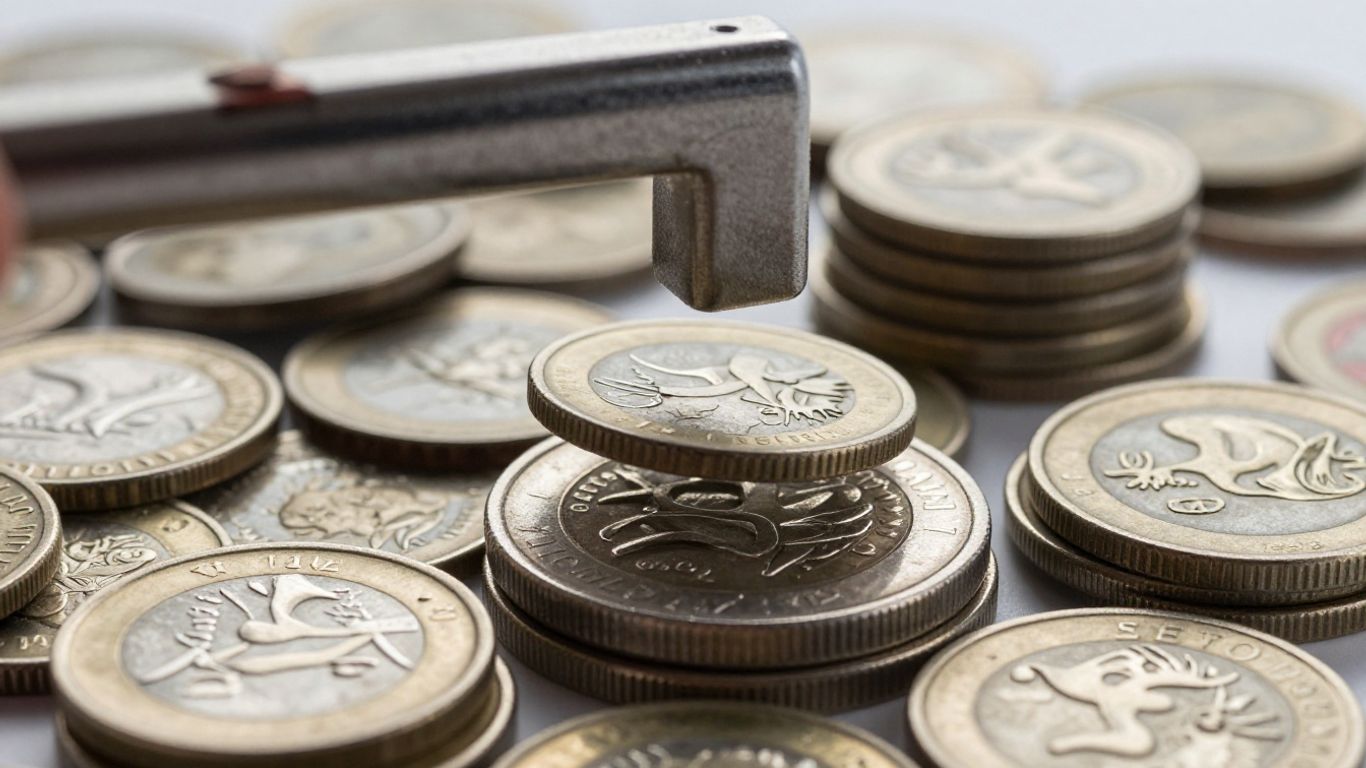
So, you’ve done the magnet test, and it seems okay. That’s a good start, but honestly, it’s just the first step in really knowing if a coin is the real deal. Think of it like checking if your car has gas before a road trip – important, but you still need to check the tires, oil, and brakes. Coins are no different; they have other features that counterfeiters often struggle to get right.
Weight And Dimension Verification
This is where things get a bit more precise. Every coin, especially those made of precious metals, has a specific weight and size. If a coin feels too light for its size, or too heavy, that’s a red flag. You’ll want to get yourself a good digital scale that can measure in grams, preferably to at least two decimal places. Also, a caliper is super handy for measuring the diameter and thickness. You can find the official specs for most coins online. Comparing your coin’s measurements to the official ones is a solid way to spot fakes. A discrepancy of even a fraction of a millimeter or a gram can indicate a problem.
Here’s a quick rundown:
- Weight: Use a precise digital scale. Compare the reading to the coin’s known specifications.
- Diameter: Use a caliper for accurate measurement. Check against official mint data.
- Thickness: A caliper is also best for this. Again, compare with official coin dimensions.
Counterfeiters often get the weight or dimensions slightly off because they’re not using the exact same metal composition or minting process. It’s these small details that can give them away.
Examining Edge Finishes And Reliefs
Take a close look at the coin’s edge. Does it have reeding (those little lines)? Is it smooth? Does it have lettering on it? Each coin type has a specific edge design, and it’s something that’s surprisingly hard to fake perfectly. The ‘relief’ refers to how raised the design elements (like the portrait or the date) are from the coin’s surface. Authentic coins usually have a clean, consistent relief that allows them to stack neatly. Counterfeits might have reliefs that are too high, too low, or just look a bit mushy. It’s these intricate details that often separate a genuine piece from a fake. You might need a magnifying glass, or a loupe, for this part.
Understanding Mint Markings And Hallmarks
Coins usually have markings from the mint where they were made. These can include the mint mark itself (like a ‘P’ for Philadelphia or ‘S’ for San Francisco), the year of mintage, and sometimes purity or weight information. For precious metal items, especially jewelry, you’ll also look for hallmarks. These are official stamps indicating the metal content and purity, like ‘925’ for sterling silver or ’14K’ for gold. Different countries have their own hallmark systems. If a coin or piece of jewelry has markings that look off, blurry, or just don’t match what you expect for that particular item, it’s worth investigating further. You can often find databases online to help you verify hallmarks.
Remember, the magnet test is just a starting point. Combining it with these other checks gives you a much better chance of identifying a fake coin.
Common Counterfeiting Methods
It’s a bummer, but fake coins have been around almost as long as real ones. Knowing how these fakes are made is a big step in spotting them. Counterfeiters aren’t usually trying to fool mints; they’re trying to fool collectors and investors. They want to pass off a fake as something much more valuable. There are a few main ways they go about it.
The Struck Counterfeit Process
This method is pretty sophisticated and aims to mimic how actual coins are made. It involves using dies – those engraved metal pieces that stamp the design onto a coin – that are either stolen or faked. A blank metal disc, called a planchet, is put between these dies, and then a powerful press slams them together. This transfers the design onto the planchet. It’s a tough process, and making good fake dies is hard work, so this method is usually reserved for trying to copy really rare and expensive coins. The end result can be incredibly convincing, making these struck counterfeits some of the hardest to detect.
Casting Counterfeit Coins
This is the opposite end of the spectrum – it’s way easier and cheaper. Basically, a counterfeiter makes a mold from a real coin. Then, they pour a molten metal mixture into that mold. It’s a quick way to get a lot of replicas without much fuss. The downside? The coins often aren’t as sharp or detailed as struck coins. You might notice softer details, a slightly different texture, or even tiny imperfections from the casting process. While easy to produce, these cast fakes are often easier to spot if you know what to look for. They might not have the crispness of a genuine coin, and their weight or sound can be off.
Altering Existing Coins
This is a bit of a sneaky tactic. Instead of making a coin from scratch, a counterfeiter takes a common, less valuable coin and messes with it to make it look like a rare, high-value one. They might add tiny engravings or etchings to mimic a rare date or mint mark. Sometimes, they’ll even carefully remove details to change the coin’s appearance. Another trick is coin splitting, where two halves of different coins are glued or soldered together to create the illusion of a rare variety. It’s a cheaper and faster way to try and trick people, relying on subtle changes rather than a full fabrication. The goal is always to make a common coin appear significantly more valuable than it really is.
It’s important to remember that even with these methods, counterfeiters often struggle to perfectly replicate all the security features and fine details of genuine coins. Paying attention to the small things, like the sharpness of the design, the texture of the surface, and any inconsistencies in markings, can go a long way in identifying a fake. If a deal seems too good to be true, it probably is.
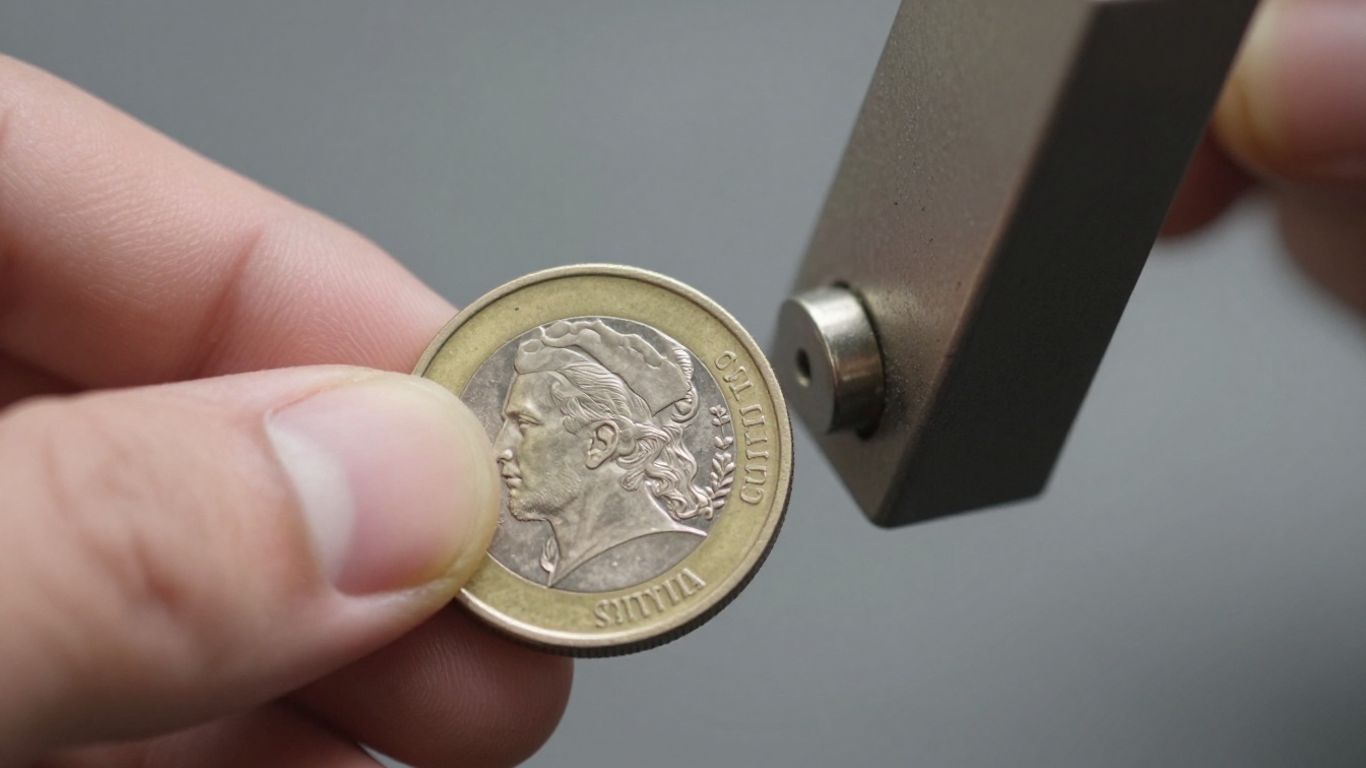
When you’re looking at coins, especially if you’re interested in precious metals like gold, a simple magnet test can be a good first step. Real gold and silver aren’t magnetic, so if a coin strongly sticks to a magnet, it’s a big red flag that it’s likely made of a base metal alloy and not genuine gold coin. It’s not the only test, of course, but it’s a quick way to weed out some obvious fakes.
Signs Of A Fake Coin
Inconsistencies In Markings
When you’re looking at a coin, the first thing that often gives a fake away is the markings. Real coins, especially those made by official mints, have very precise details. Think about the year it was minted, the denomination, and any purity or weight information on bullion coins. If these look a bit fuzzy, uneven, or just plain wrong when you compare them to a known genuine coin, that’s a red flag. Sometimes counterfeiters get the font wrong, or the spacing between letters is off. It’s these little details that can really tell a story.
Unusual Edge Finishes And Relief Details
Take a close look at the coin’s edge. Does it have reeding, lettering, or is it plain smooth? Each type of coin has a specific edge treatment. If it looks different from what it should be, that’s suspicious. The relief is how raised the design elements are. Counterfeiters often struggle with this. The images might be too flat, making them hard to see, or too high, making the coin feel chunky and not stackable with others. Genuine coins usually have a clean, consistent relief that allows them to sit nicely together.
Weight Discrepancies
This is a big one. Counterfeit coins are often made with cheaper metals, which means they might not have the correct weight. Even a slight difference can be a sign something’s not right. You’ll need a good digital scale for this. Compare the weight of the coin you have with the official specifications for that particular coin. If it’s off, even by a tenth of a gram, be very careful.
Here’s a quick look at how weight can differ:
| Coin Type (Example) | Official Weight | Potential Fake Weight | Difference |
|---|---|---|---|
| Gold Eagle (1 oz) | 33.93 grams | 32.5 grams | -1.43 grams |
| Silver Maple Leaf | 31.39 grams | 30.0 grams | -1.39 grams |
Don’t just eyeball it. Precision matters when you’re checking for fakes. A good scale is your friend here, and knowing the exact specs for the coin you’re examining is half the battle. It’s surprising how much a small weight difference can indicate a problem.
Other Non-Destructive Coin Authentication Methods
So, you’ve done the magnet test, and maybe you’re still not 100% sure. That’s totally fine! There are a few other simple tests you can try at home that won’t hurt your coins one bit. Think of these as extra layers of checking, just to be extra safe.
The Ping Test For Sound Verification
This one’s pretty neat and relies on how different metals sound when they’re struck. Genuine precious metal coins often have a distinct ring to them. It’s kind of like tapping a wine glass – you know the sound of a good one. Counterfeit coins, often made from cheaper alloys, tend to sound duller or more muted.
Here’s how to do it:
- Gently hold the coin between your thumb and forefinger.
- Use another coin or a hard, non-damaging object (like a plastic pen cap) to lightly tap the edge of the coin you’re testing.
- Listen carefully to the sound. Does it have a clear, sustained ring, or is it a dull thud?
It takes a bit of practice to get a feel for the right sounds, especially since different coin compositions will naturally have slightly different tones. Comparing a suspect coin to one you know is genuine is the best way to learn.
The Ice Cube Test For Thermal Conductivity
This test is surprisingly effective, especially for gold and silver coins. Precious metals are excellent conductors of heat, meaning they transfer heat really quickly. So, if you place an ice cube on a real gold or silver coin, it’ll melt much faster than it would on a regular metal surface.
- Place a genuine coin and the coin you’re testing side-by-side.
- Put an ice cube on top of each coin.
- Observe how quickly each ice cube melts. The one that melts faster is likely the one made of a better heat-conducting metal.
This works because the ice is essentially drawing heat away from the coin. A coin that feels cold to the touch and melts ice rapidly is a good sign.
Odor And Rub Tests For Surface Clues
These are more old-school methods, and honestly, they’re not as reliable as the others, but they can sometimes offer a hint. Some base metals, when rubbed or handled a lot, can develop a faint metallic or even slightly unpleasant odor. Precious metals generally don’t have a strong smell.
- Rub Test: Gently rub the surface of the coin with a soft cloth. Look for any discoloration on the cloth, which might indicate a plating that’s wearing off.
- Odor Test: Hold the coin close and give it a sniff. While not definitive, a strong metallic smell can sometimes be a red flag.
Remember, these tests are best used in combination with others. They’re not foolproof on their own but can add another piece to the puzzle when you’re trying to figure out if a coin is what it claims to be. Always prioritize methods that don’t risk damaging the coin’s surface or details.
When To Seek Professional Coin Authentication
Look, the magnet test is pretty neat, and so are some of the other simple checks we’ve talked about. They can give you a good idea if something’s off. But let’s be real, sometimes you’re dealing with something that’s worth a good chunk of change, or maybe you’re just not 100% sure. That’s when it’s time to call in the pros.
Consulting Reputable Dealers
Buying from a dealer who’s been around the block is usually your safest bet. These folks know their stuff. They have a reputation to uphold, so they’re not going to risk selling you fakes. If you’re eyeing a coin and have doubts, ask them about it. A good dealer will be happy to show you how they authenticate coins and might even have their own testing equipment.
- Ask about their return policy. A solid dealer will stand behind their products.
- Look for dealers who specialize in the type of coins you’re interested in.
- Check online reviews and forums to see what other collectors say about them.
Understanding Advanced Testing Technologies
Beyond what you can do at home, there are some pretty sophisticated ways to check if a coin is the real deal. These methods are usually non-destructive, meaning they won’t hurt the coin at all.
- X-Ray Fluorescence (XRF) Scanners: These handy devices can tell you the exact metal composition of a coin without even touching it. They’re super accurate for identifying alloys and purity.
- Specific Gravity Tests: This involves measuring the coin’s weight in air and then in water. Different metals have different densities, so this can be a strong indicator of authenticity, especially for precious metals.
- Advanced Imaging: High-resolution cameras and microscopes can reveal tiny details, like minting errors or tool marks, that counterfeiters often miss.
Sometimes, the simplest tests are the most telling. But when the stakes are high, or the coin is particularly rare, relying on professional tools and knowledge is the smartest move. It’s better to pay a little for an expert opinion than to lose a lot on a fake.
The Importance Of Documentation
When you buy a significant coin, you should get some paperwork with it. This isn’t just a receipt; it’s proof of authenticity. Reputable dealers will provide documentation that details the coin’s specifics, its grading (if applicable), and sometimes even its provenance (its history of ownership).
- Certificates of Authenticity (COA): While these can sometimes be faked too, a COA from a well-known grading service or a trusted dealer carries weight.
- Original Purchase Receipts: Keep these! They show where and when you bought the coin.
- Grading Reports: If the coin has been professionally graded by services like PCGS or NGC, their reports are a strong indicator of authenticity and condition.
Navigating The World Of Coin Collecting Safely
So, you’ve gotten pretty good at spotting fakes with a magnet, which is awesome. But honestly, that’s just the first step. The coin world can be a bit tricky, and knowing how to stay safe is just as important as knowing your metals. It’s not just about the coins themselves, but also about where you get them and how you keep them.
The Value Of Buying From Trusted Sources
This is probably the most important thing I can tell you. When you’re looking to buy coins, whether they’re shiny bullion or old numismatic pieces, stick to dealers who have a solid reputation. It’s like buying a used car; you want someone who’s been in business a while and has good reviews. Trying to save a few bucks by buying from a random online seller or at a flea market can end up costing you a lot more if you end up with a fake. A good dealer will stand behind their products and usually have policies in place to make sure you’re getting the real deal. They can also answer your questions and help you understand what you’re buying. For example, some modern bullion coins, like the Canadian Maple Leaf, have built-in security features that even a good dealer can show you how to verify. It’s worth looking into reputable dealers who source directly from mints.
Recognizing Deals That Are Too Good To Be True
We all love a bargain, right? But in coin collecting, if a deal seems way better than anything else out there, it probably is. Counterfeiters often try to offload fakes by pricing them attractively. Think about it: if a coin is supposed to be worth hundreds or thousands, and someone is selling it for a fraction of that, what’s the catch? It’s usually a fake. Don’t let the excitement of a low price blind you to the potential risks. Always do your homework and compare prices from multiple sources before jumping on a deal.
Building Confidence Through Education
Honestly, the more you learn, the more confident you’ll feel. You’re already doing great by reading up on tests like the magnet test. Keep going! Learn about different minting processes, common security features on various coins, and even the history behind certain issues. The more knowledge you have, the better you’ll be at spotting inconsistencies. It’s also helpful to understand how coins are made and how fakes are produced. For instance, knowing that casting is a common method for creating fakes means you can look for tell-tale signs like softer details or a lack of crispness that you might not notice otherwise. The more you educate yourself, the less likely you are to be fooled.
If you ever find yourself holding a coin you suspect is fake, don’t try to pass it on to someone else – that’s illegal. If you bought it from a dealer, let them know. If you were scammed, reporting it to the authorities is the next step. It’s better to be safe than sorry, and education is your best defense.
Wrapping Up: Your Magnet Test and Beyond
So, there you have it. Using a simple magnet is a pretty good first step to check if your coins are the real deal, especially for gold and silver. It’s not foolproof, mind you, as some fake metals don’t stick to magnets either, but it’s a quick way to weed out the obvious fakes. Remember, though, this is just one tool in your toolbox. Always try to use a few different methods, like checking the weight or looking closely at the details, to be sure. Buying from places you trust is still the best bet, but knowing these little tricks can give you more confidence when you’re looking at coins. Happy collecting, and may your coins always be genuine!
Frequently Asked Questions
Why is the magnet test useful for coins?
The magnet test is a quick way to check if a coin might be fake. Most real gold and silver coins aren’t magnetic. If a magnet sticks to your coin, it’s a big clue that it’s probably made of a different metal, like iron, and might be a fake.
Can the magnet test tell me for sure if a coin is real?
Not always. While a magnet sticking to a coin is a strong sign of a fake, some fake coins are made from metals that aren’t magnetic. So, if a magnet *doesn’t* stick, it doesn’t automatically mean the coin is real. It’s best to use this test along with other methods.
What kind of magnet should I use for testing coins?
A strong magnet works best. Rare-earth magnets, like neodymium magnets, are powerful and good for this. You don’t need a huge one; a small, strong magnet is usually enough to see if it attracts the coin.
How do I perform the magnet test on a coin?
It’s simple! Just hold a magnet close to the coin. Don’t let them touch unless you’re sure the magnet won’t scratch the coin. See if the magnet pulls towards the coin. If it does, the coin is likely not made of pure gold or silver.
What does it mean if a coin feels lighter than it should?
Coins are made to specific sizes and weights. If a coin feels too light for its size, it might be made of a cheaper metal or be hollow inside, which are common signs of a fake.
Besides magnets, what other simple tests can I do?
You can try the ‘ping’ test by tapping the coin and listening to the sound – real silver often makes a clear ringing sound. Another is the ice cube test: real silver conducts heat well, so an ice cube on top should melt faster than on other metals.
What should I do if I suspect a coin is fake?
First, don’t try to sell it, as that’s illegal. If you bought it from a dealer, tell them about your concerns; they might offer a refund. If you’re unsure, it’s always a good idea to take it to a trusted coin expert or dealer for a professional opinion.
Is buying from reputable dealers the best way to avoid fakes?
Yes, absolutely! Reputable dealers have a reputation to uphold and are less likely to sell counterfeit coins. They often have knowledge and tools to verify authenticity, making it the safest way to collect or invest in coins.