So, you’ve got a gold coin and you’re wondering if it’s the real deal? It’s smart to be cautious. Lots of fakes are out there, and nobody wants to pay good money for something that isn’t genuine. Thankfully, you don’t need super fancy equipment to get a pretty good idea if your coin is authentic. We’ll go through some simple ways on how to test gold coins right at home, using things you might already have or can get easily. It’s all about looking closely, checking the details, and using a bit of science.
Key Takeaways
- Start with basic checks like looking at the coin’s surface, color, and any markings, then feel its weight and size against official specs.
- Use simple tests like a magnet, a ping sound, or even the way ice melts on the coin to spot differences from genuine gold.
- Density and specific gravity tests, while requiring a bit more effort, offer a scientific way to confirm a coin’s metal composition without damaging it.
- Close inspection with a magnifier and surface tests like scratching on ceramic or using vinegar can reveal subtle clues about authenticity.
- For ultimate certainty, consider professional appraisals and always buy from trusted sources to avoid counterfeit coins.
Initial Visual and Tactile Assessments
Before you even think about fancy tests, just looking at and holding the coin can tell you a lot. It’s like meeting someone for the first time; you get a feel for them right away. The same goes for gold coins. Your first impressions can be surprisingly accurate.
Examining Coin Surfaces and Details
Take a good, hard look at the coin. Does it look right? Real gold coins usually have a certain sharpness to their details. Think about the lettering, the images, the little lines in a design. Are they crisp, or do they look a bit fuzzy or worn down in a way that doesn’t make sense?
- Sharpness of Design: Genuine coins have clear, well-defined designs. Counterfeits often have softer, less detailed imagery.
- Surface Texture: Look for any unusual pitting, casting lines, or a grainy texture that doesn’t match what you’d expect from minted gold.
- Wear Patterns: Does the wear look natural, or does it seem like it’s trying to hide something? Sometimes fakes show wear in odd places.
Assessing Luster and Color
Gold has a unique shine, a kind of warm glow that’s hard to fake perfectly. The color should be consistent, too. If you see patches that look different, or a color that seems too brassy or too dull, that’s a flag.
Real gold has a distinct luster that’s hard to replicate. It’s not overly shiny like cheap costume jewelry, nor is it dull. It has a rich, warm appearance that feels substantial.
Checking for Hallmarks and Engravings
Many gold coins, especially investment-grade ones, will have markings on them. These could be purity stamps (like "999" or "24K"), mint marks, or other official engravings. Check if these look professionally done. Sometimes, fake hallmarks are poorly made, uneven, or just don’t look right compared to known genuine examples.
- Purity Marks: Look for stamps indicating the gold content. Are they clear and correctly formed?
- Mint Marks: If the coin is supposed to have a mint mark, is it present and properly executed?
- Engraver’s Details: Sometimes, you can even see the initials of the designer or engraver. These tiny details are often missed on fakes.
Weight and Measurement Verification
When you’re looking at a gold coin, the first thing you might think about is its size and how heavy it feels. This is where weight and measurement checks come in handy. Genuine gold coins are made to very precise specifications, and even small deviations can be a red flag. Counterfeiters often struggle to get these details exactly right, making this a pretty solid way to spot fakes.
Performing a Gold Coin Weight Test
This is one of the most straightforward tests. Major mints around the world publish the exact weight for every coin they produce. You’ll need a reliable digital scale, one that can measure to at least two decimal places. Place the coin on the scale and record the weight. Then, compare this number to the official specifications for that particular coin. For instance, a standard one-ounce bullion coin that’s off by even a tenth of a gram might be suspicious. If the weight is way off, it’s a strong indicator that something isn’t right. It’s a good idea to combine this with other tests, as some fakes might get the weight close but miss other properties.
Measuring Diameter and Thickness Accurately
Weight alone doesn’t tell the whole story. You also need to check if the coin’s dimensions match up. Using a good set of calipers will let you measure the coin’s diameter and thickness with precision. Real gold coins are manufactured with very tight tolerances. If a coin has the correct weight but seems a bit too thick or too wide, it could mean it’s made of a different metal inside. Counterfeiters find it tough to replicate the weight, size, and metal composition all at once. So, this check can catch many fakes that might pass a simple scale test. Jot down your measurements and compare them against official numbers from trusted mint sources or a dealer you trust. When both weight and size line up, your confidence in the coin’s authenticity grows.
Comparing Against Official Specifications
To make the most of your weight and measurement tests, you need to know what the genuine article should be like. This means consulting official specifications. You can usually find these on the websites of the mints that produced the coins, or from reputable coin dealers. These specs will list the exact weight, diameter, and thickness for each coin type. Having this information handy allows for a direct comparison.
Here’s a quick rundown of what to look for:
- Weight: Does the coin’s weight match the official standard precisely?
- Diameter: Is the coin’s width within the specified range?
- Thickness: Does the coin’s thickness align with the official measurements?
When you’re evaluating a gold coin, remember that consistency is key. Genuine coins are produced with meticulous attention to detail. If a coin deviates significantly in weight or dimensions from its official specifications, it warrants further investigation. Don’t dismiss small discrepancies; they can be the first clue that a coin isn’t what it appears to be.
For example, the official specifications for a common one-ounce American Gold Eagle coin are a diameter of 32.7mm and a thickness of 2.87mm. If your coin measures differently, it’s worth digging deeper. You can find similar data for many other popular coins, like the Canadian Maple Leaf or the South African Krugerrand. Having these official numbers is your benchmark for comparison.
Magnetic Properties Check
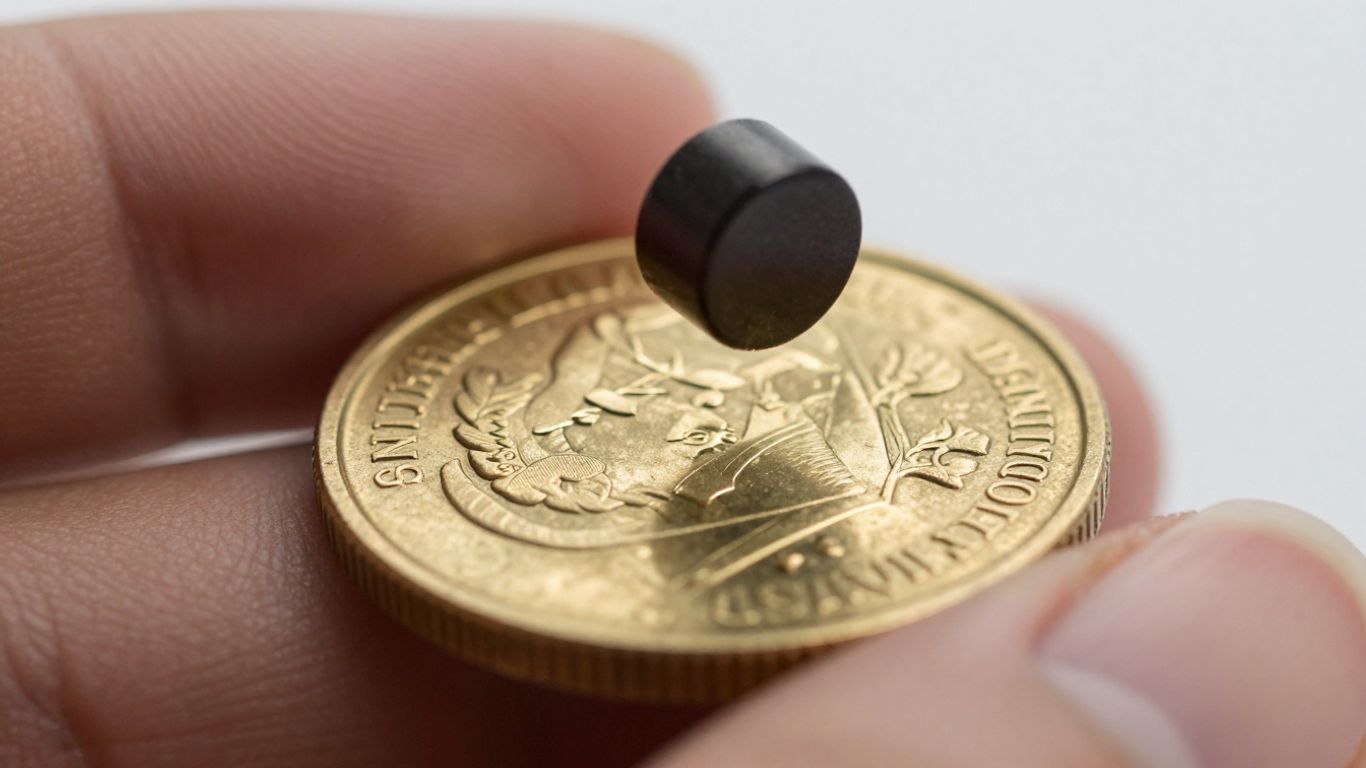
Gold, in its pure form, isn’t magnetic. This is a pretty handy characteristic when you’re trying to figure out if a coin is the real deal or just a clever imitation. Counterfeiters often use other metals, some of which are magnetic, to cut costs or give their fakes a bit more weight. So, if your coin decides to play stick-with-the-magnet, you’ve likely got a problem.
Understanding How Magnets Interact with Gold
Pure gold (like 24 karat) and most gold alloys used in coins won’t react to a magnet at all. They’re non-ferrous, meaning they don’t contain iron or nickel, which are the usual culprits for magnetic attraction. However, it’s not quite as simple as ‘if it sticks, it’s fake.’ Some common metals used in fakes, like iron or nickel, will definitely stick. But other metals, like lead or copper, aren’t magnetic either, so a coin made with those might not stick but still isn’t gold.
Conducting a Simple Magnet Test
This is one of the easiest tests you can do. You’ll need a reasonably strong magnet – a small refrigerator magnet might not be enough. A neodymium magnet, often sold as ‘rare earth magnets,’ works best. Just hold the magnet close to the coin. Don’t expect it to leap into the magnet’s grasp; just observe if there’s any pull or attraction.
Here’s a quick rundown:
- Get a strong magnet: Neodymium magnets are ideal.
- Approach the coin: Hold the magnet near the coin, but don’t let them touch yet.
- Observe the reaction: See if the coin moves towards the magnet or sticks to it.
Interpreting Magnet Test Results
- Coin sticks to the magnet: This is a strong indicator that the coin is not pure gold. It likely contains significant amounts of magnetic metals like iron or nickel. You can probably set this one aside as suspect.
- Coin shows no attraction: This is good news, but it’s not a guarantee. It means the coin might be gold, or it could be made of non-magnetic metals like copper, lead, or even some types of steel that aren’t magnetic. This test alone isn’t enough to confirm authenticity.
Remember, the magnet test is just one piece of the puzzle. It’s a quick way to rule out obvious fakes, but it won’t confirm a genuine coin. Always combine this with other tests like weighing, measuring, and checking the coin’s sound.
Sound and Resonance Checks
Ever heard of the ‘ping test’ for gold? It’s a pretty neat trick that relies on how different metals vibrate. Genuine gold coins, when struck, produce a distinct, clear ringing sound that lasts for a bit. Think of it like a tiny bell. Counterfeit coins, often made from cheaper alloys, tend to sound dull or the sound just dies out really fast.
Performing the Gold Coin Ping Test
This isn’t complicated at all. You can do it right at home with just a couple of items. Here’s how:
- Balance the coin: Gently place the coin on the tip of your finger. You want it stable but not pressed down hard.
- Give it a tap: Use a non-metallic object, like a small plastic stick or even another coin (though be careful not to scratch your suspect coin). A light tap is all you need. Some people even use a pencil eraser.
- Listen closely: Pay attention to the sound produced. Is it a clear ring, or more of a thud?
Listening for Distinct Tones
What you’re listening for is that characteristic high-pitched tone. It’s a sound that seems to hang in the air for a moment. If you have a coin you know for sure is real, comparing the sounds side-by-side is the best way to get a feel for the difference. It’s like learning to distinguish between different musical notes. You can even try using a sound analysis app on your phone, though don’t rely on that alone.
Comparing Sounds to Known Genuine Coins
Having a reference coin is super helpful. If you can get your hands on a coin that’s certified authentic and of the same type, you can do a direct comparison. This helps train your ear. Without a known genuine coin, you’re relying more on your general sense of what sounds ‘right’ for gold. It takes a bit of practice, but it’s a quick way to spot obvious fakes.
While the ping test is a useful indicator, it’s not foolproof. Worn coins or those with surface treatments might not sound quite right, and some clever fakes can mimic the sound reasonably well. Always use this test in conjunction with other methods for a more reliable assessment.
Density and Buoyancy Analysis
So, you’ve looked at the coin, checked its weight, and maybe even given it a good sniff (don’t judge!). Now, let’s get a bit more scientific with density. This is where we figure out how much ‘stuff’ is packed into the coin’s volume. Gold is a pretty dense metal, meaning a small piece weighs a surprising amount. Counterfeiters often struggle to get this right, using cheaper metals that are either too light or too heavy for their size.
Conducting a Density Test for Gold
This test is a solid way to check if your coin is the real deal without damaging it. It relies on a simple principle: different materials have different densities. We’ll use a basic water displacement method, which is a classic way to figure this out. The key is comparing the coin’s actual density to the known density of pure gold.
Here’s how you can do it at home:
- Weigh the coin: First, get an accurate weight of your dry coin using a sensitive scale. Write this number down.
- Measure displaced water: You’ll need a small container filled with water. Place this container on your scale and zero it out. Then, carefully submerge the coin in the water (a thin thread can help). The scale will now show the weight of the water the coin pushed aside.
- Calculate density: Divide the coin’s dry weight by the weight of the displaced water. This gives you the coin’s density.
Understanding Specific Gravity
Specific gravity is basically density compared to water. Since gold has a specific gravity of about 19.3 (for pure gold), your calculation should come out close to this number if the coin is genuine. If the number is significantly lower, it might be plated or made of a less dense metal. If it’s higher, it could be an alloy with denser metals, or perhaps a trick of the trade. It’s a good idea to compare your results to the official specifications for the coin you have. You can find these specs from mints or trusted dealers.
Counterfeit coins often try to mimic the weight and appearance of genuine gold, but getting the density just right is a challenge for them. This test helps reveal those discrepancies.
Using Water Displacement for Measurement
This method, often called the water displacement method, is super useful. It’s all about measuring volume indirectly. By seeing how much water the coin pushes out of the way, we get its volume. Combined with the coin’s weight, we can then calculate its density. It’s a bit like solving a puzzle, but with science. Remember, precision matters here, so use a good scale and a steady hand. This test is a great follow-up if the coin feels a bit off in weight or size compared to its official specs.
Surface Interaction Tests
Sometimes, the way a coin reacts to other materials can tell you a lot about whether it’s the real deal. These tests are pretty straightforward and don’t require fancy equipment, making them great for a quick check.
Performing the Ceramic Scratch Test
This is a classic method that relies on the fact that real gold is a relatively soft metal. You’ll need an unglazed ceramic plate or tile for this. Gently drag the edge of the coin across the unglazed surface. A genuine gold coin should leave a distinct yellow or golden streak. If you see a black or gray streak, it’s a strong indicator that the coin is not pure gold, likely made from a base metal with plating. It’s a simple visual cue that can save you a lot of trouble.
Understanding the Skin Test for Gold Purity
This test is based on how gold interacts with your skin. Real gold, especially higher purities, generally doesn’t react chemically with skin. To perform it, simply hold the coin against the skin of your wrist or finger for a few minutes. If your skin turns black or green where the coin touched it, it’s a sign that the coin contains alloys or base metals that are reacting. Genuine gold shouldn’t cause this discoloration. It’s a quick way to get a feel for the coin’s composition, though it’s best used alongside other methods.
Conducting the Vinegar Test for Authenticity
White vinegar can also be used as a testing agent. It’s a mild acid that can reveal if a coin has been plated or is made from less noble metals. Submerge the coin in a small bowl of white vinegar for about 5 to 8 minutes. Observe the coin carefully. If it’s genuine gold, you shouldn’t see any change in its color or surface appearance. However, if the coin starts to tarnish, change color, or show signs of corrosion, it’s likely not pure gold. This test is quite effective for detecting common fakes. Remember, you can find more details on various testing methods that can help you verify your precious metals.
Thermal Conductivity Assessment
Gold is a fantastic conductor of heat. This means it transfers heat really quickly. Counterfeit coins, often made from cheaper metals, just don’t transfer heat the same way. We can use this difference to our advantage with a simple test.
Performing the Ice Test
This test is pretty straightforward and doesn’t require any fancy equipment. You’ll need a few ice cubes and your gold coin. The idea is to see how fast the ice melts when it touches the coin. Genuine gold’s high thermal conductivity will melt ice noticeably faster than most fake materials.
Here’s how to do it:
- Place a few ice cubes on a flat, non-metallic surface.
- Hold your gold coin and place it directly on top of one of the ice cubes.
- Observe how quickly the ice begins to melt under the coin.
Observing Ice Melt Rates
When you place a real gold coin on an ice cube, you should see the ice start to melt pretty rapidly right where the coin is touching it. It’s almost like the coin is drawing the heat from the ice. You’ll likely see a distinct pool of water form quickly around the coin.
Now, if you try this with a coin made of a different metal, like lead or even plated brass, the melting process will be much slower. The ice might melt a little, but it won’t be as dramatic or as fast as it is with real gold. It’s a visual cue that tells you something about the metal’s properties.
Understanding Gold's Heat Transfer Properties
Gold has a very high thermal conductivity, meaning it’s really good at moving heat around. Think of it like a superhighway for heat. When the coin touches the ice, the heat from the coin (even just room temperature heat) quickly transfers to the ice, causing it to melt. This happens because gold’s atomic structure allows for efficient energy transfer.
Most common metals used to fake gold, like iron or nickel, have much lower thermal conductivity. They’re more like country roads for heat – things move, but much more slowly. So, the speed at which the ice melts is a direct reflection of the coin’s material composition. It’s a neat trick that relies on basic physics.
Detailed Inspection with Magnification
Sometimes, the naked eye just doesn’t cut it. When you really want to know what you’re looking at, grabbing a magnifying tool is the next logical step. This isn’t about spotting obvious flaws; it’s about seeing the tiny details that counterfeiters often miss or get wrong. A good loupe can be your best friend in spotting fakes.
Using a Loupe for Close Examination
A jeweler’s loupe, typically with 10x magnification, is perfect for this. It lets you zoom in on the coin’s surface and really scrutinize the craftsmanship. You’re looking for a level of detail and precision that’s hard to fake consistently. Think of it like looking at a high-resolution photo versus a blurry one – the difference is stark.
Inspecting Lettering and Edges
When you look at the lettering on a genuine coin, it should be sharp, clear, and well-defined. There shouldn’t be any fuzziness or signs of wear that look unnatural. The edges are also a big giveaway. Check the reeding (the little lines around the rim) – are they evenly spaced and crisp? On fakes, the lettering might look mushy, or the reeding could be uneven, poorly formed, or even missing.
Identifying Tiny Design Elements and Flaws
Beyond the letters and edges, zoom in on the actual design. Look at things like the fine strands of hair on a portrait, the details in a shield, or the individual feathers on an eagle. These small elements are often where fakes fall apart. You might see casting bubbles, rough textures, or areas where the metal looks ‘soft’ or poorly struck. Sometimes, you can even spot a faint seam line where the mold used to create the fake coin was joined.
Here’s a quick checklist for your magnified inspection:
- Lettering: Is it sharp, clear, and consistent?
- Reeding: Are the edge lines uniform and well-defined?
- Design Details: Are small features like hair, feathers, or patterns crisp?
- Surface Texture: Does it look smooth and consistent, or are there pits, bubbles, or rough patches?
- Color Variations: Are there any odd discolorations or signs of plating wearing thin?
Remember, practice makes perfect. The more genuine coins you examine closely, the better you’ll become at spotting the subtle differences that indicate a fake. It’s about training your eye to recognize quality and consistency.
Sometimes, you might notice slight imperfections even on genuine coins, especially older ones. The key is to compare these to known genuine examples or to look for patterns of flaws that are common in counterfeits.
Advanced Purity Testing Methods
Understanding Acid Testing Procedures
So, you’ve done the basic checks, and maybe you’re still not 100% sure. This is where things get a bit more serious, and honestly, a bit riskier for your coin. Acid testing is a classic method, but it’s not for the faint of heart, or for coins you can’t afford to scratch. The idea is pretty straightforward: real gold, especially higher karats, doesn’t react much with strong acids. Cheaper metals or alloys used in fakes? They tend to show a reaction, like changing color or even dissolving.
Recognizing Reactions to Nitric Acid
When you use a nitric acid test kit, you’ll typically scratch a tiny bit of metal off the coin onto a testing stone. Then, you apply a drop of acid. If the scratch mark stays gold-colored, that’s a good sign. If it turns green, white, or starts to bubble, you’ve likely got something other than pure gold. Different strengths of acid are used for different karat levels, so you need to know what you’re testing for. It’s a bit like a chemistry experiment, but with potentially valuable results – or valuable damage.
Considering Risks of Coin Damage
Here’s the big catch: acid testing usually leaves a mark. You’re either scratching the coin or applying acid directly to it. For a collector or investor, this can significantly reduce the coin’s value. Think about it – a coin with a visible acid mark or scratch isn’t going to fetch the same price as a pristine one. So, while acid tests can give you a strong indication of purity, they often come at the cost of the coin’s condition. It’s a trade-off that many people try to avoid, especially with valuable or rare pieces. Many prefer methods that don’t involve altering the coin’s surface at all.
Professional Verification and Purchase Practices
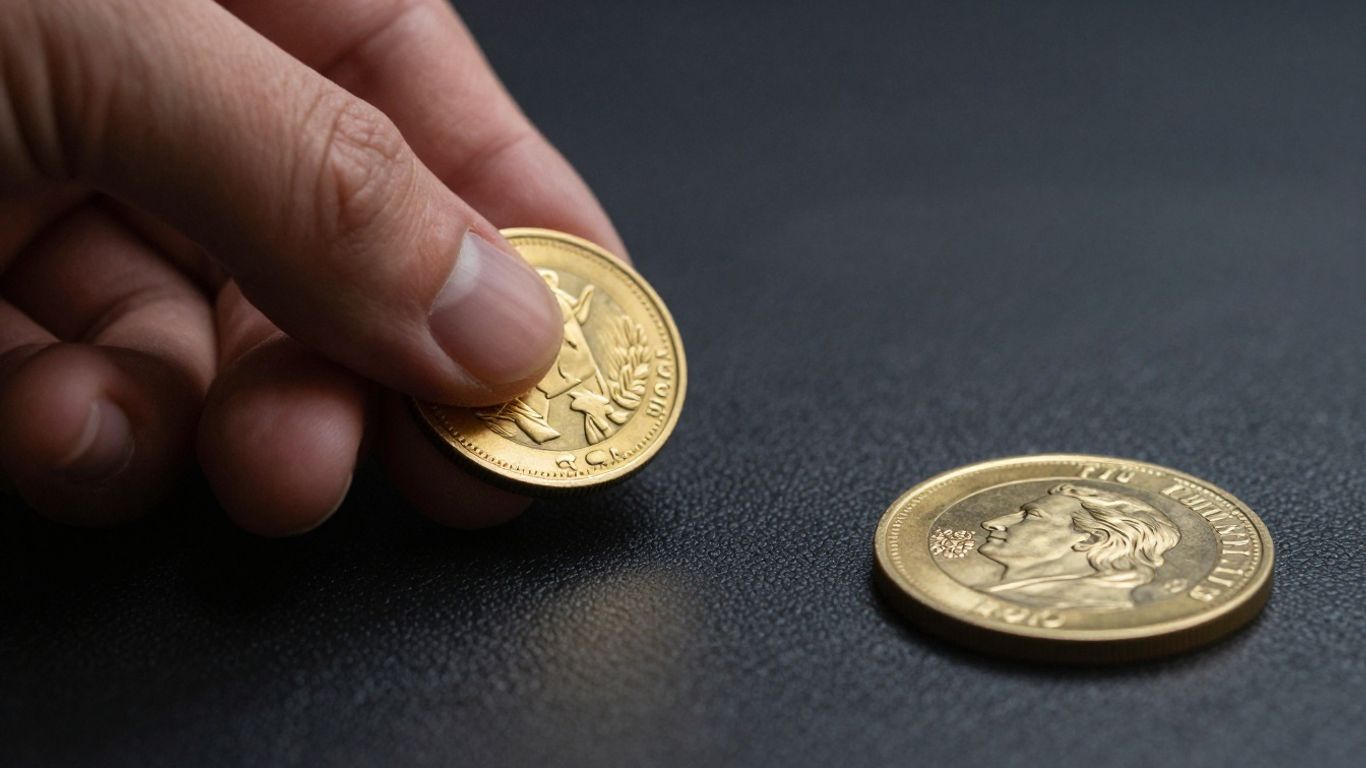
So, you’ve done all the home tests, and maybe you’re still not 100% sure, or perhaps you’re looking to make a significant purchase. That’s where the pros come in. Relying on experts and being smart about where you buy can save you a lot of headaches and money.
Consulting Professional Gold Appraisers
Sometimes, the tests you can do at home just aren’t enough, especially with really valuable or rare coins. This is when you might want to bring in someone who really knows their stuff. Professional appraisers have fancy tools and a trained eye that can spot fakes a mile away. They can use things like X-ray fluorescence (XRF) scanners, which check the metal composition without damaging the coin, or even specific gravity tests. Getting a professional opinion can give you solid proof of authenticity, which is handy if you ever need it for insurance or when you decide to sell.
Purchasing from Reputable Dealers
Honestly, one of the best ways to avoid getting a fake is to buy from a dealer you can trust. Think of it like buying a used car – you want to go to a place with a good reputation. Reputable dealers usually have a long history, good reviews from other customers, and they’re upfront about what they’re selling. They’ll give you details about the coin’s weight, purity, and condition. Plus, they often have clear return policies and might even offer to buy back coins later. It’s a good sign if they’re transparent about their prices and don’t pressure you into buying.
Evaluating Seller History and Policies
Before you hand over your cash, take a moment to look into the seller. Do they have a history of selling genuine items? Are their prices way lower than what you see everywhere else? That’s usually a big red flag. Also, check their return policy. If they don’t have one, or if they make it really difficult to return something, that’s not a great sign. It’s also worth noting how they handle payments – are they pushing for quick, untraceable methods? Sticking with sellers who are open, honest, and have a solid track record is just smart.
When buying gold, especially in larger quantities or for investment purposes, always prioritize sellers who provide detailed documentation and have a transparent history. This diligence protects your investment and provides peace of mind.
Wrapping Up Your Gold Coin Checks
So, you’ve gone through the steps, maybe tried a few of these tests yourself. It’s good to know there are ways to get a better idea if that gold coin in your hand is the real deal. Remember, no single test is perfect, but putting a few together gives you a much clearer picture. Checking the weight, giving it a tap to hear the sound, and just looking closely with a magnifier can tell you a lot. If something still feels off, or if you’re dealing with something really valuable, don’t hesitate to get a professional opinion. It’s better to be safe than sorry when it comes to your gold.
Frequently Asked Questions
What's the easiest way to start checking if a gold coin is real?
You can begin with simple things you can see and feel. Look closely at the coin’s details, like the pictures and writing, to see if they are sharp and clear. Also, check its color and shine. Sometimes, just holding the coin and feeling its weight can give you a clue if something feels off compared to what you expect.
Why is checking the coin's weight and size important?
Real gold coins made by official mints have very specific weights and sizes. If a coin is too light or too heavy, or if it’s a bit too big or too small, it’s a big sign it might not be pure gold. Counterfeiters often have trouble getting these measurements exactly right.
Can a magnet really tell me if a gold coin is fake?
Yes, it can be a helpful clue! Pure gold isn’t magnetic, meaning a magnet won’t stick to it. If you hold a strong magnet near the coin and it gets pulled towards it, the coin likely has other metals mixed in that aren’t supposed to be there. But remember, if the magnet doesn’t stick, it doesn’t automatically mean it’s real gold, as some fakes use non-magnetic materials.
What is the 'ping test,' and how does it work?
The ping test is all about sound. When you gently tap a real gold coin, it makes a clear, high-pitched ringing sound that lasts for a bit. Coins made with cheaper metals often sound dull or the sound stops very quickly. It’s like tapping a real crystal glass versus a regular one.
How does the density test help check for fake gold?
This test uses math and water. Gold is very dense, meaning it’s heavy for its size. You weigh the coin, then measure how much water it pushes out of the way when you put it in water. By comparing these numbers, you can figure out the coin’s density. If the density doesn’t match what pure gold should be, it’s likely a fake or has other metals inside.
Are there any simple tests I can do on the coin's surface?
You can try a few things. One is the ceramic scratch test: gently rub the coin on an unglazed ceramic plate. A real gold coin should leave a yellow streak. Another is the skin test: rub the coin on your wrist; real gold usually doesn’t leave a mark, while fakes might leave a black or green stain.
What is the 'ice test,' and why does it work?
The ice test checks how well the coin conducts heat. Gold is a great heat conductor, meaning it transfers heat quickly. If you place a small piece of ice on a real gold coin, it will melt much faster than if you put the ice on a coin made of a different metal. This is because the gold coin quickly draws heat from the ice.
When should I consider getting a professional opinion on my gold coin?
If you’ve done a few simple tests and still have doubts, or if the coin is very valuable, it’s always a good idea to ask an expert. Professional appraisers have special tools and lots of experience to tell you for sure if your coin is real and what it’s worth. Also, always try to buy gold from trusted dealers you know and have a good reputation.