Buying gold coins can be a smart move, but there’s a real problem with fakes out there. Scammers are getting pretty good at making fake gold, and it’s easy to get tricked, especially online. We’re going to walk through how to spot fake gold coins, so you don’t end up losing your money. It’s not just about knowing the fancy tests; sometimes, it’s the simple stuff that catches a fake. Let’s get you up to speed on what to look for.
Key Takeaways
- Counterfeit gold is a big issue, with millions in fake items seized yearly. Scammers often sell fake graded coins online at low prices.
- Common tricks include gold-plating base metals, using heavy metals like tungsten, and faking grading labels or hallmarks.
- Simple at-home tests like the magnet test (gold isn’t magnetic) and checking weight/dimensions against official specs can reveal fakes.
- Always buy from dealers with good reputations. If a deal seems too good to be true, it probably is. Check reviews and look for transparency.
- For extra certainty, consider professional appraisals or advanced tools like XRF machines. New tech like blockchain is also helping verify authenticity.
Understanding The Threat Of Counterfeit Gold
It might seem like a rare problem, but fake gold coins are a real headache for anyone trying to invest in precious metals. Scammers are getting pretty good at making things look legit, and they’re targeting popular coins because, well, that’s where the money is. They might plate cheap metals to look like gold, or use materials that have a similar weight, trying to fool you. This isn’t just about losing a few bucks; it’s about protecting your savings, especially when gold is supposed to be a safe bet during uncertain economic times.
The Pervasive Nature Of Gold Fraud
Gold fraud isn’t some new thing; people have been trying to pass off fakes for ages. But with the internet, it’s gotten easier for these counterfeiters to reach a wider audience. You see it a lot on online marketplaces where it’s harder to keep an eye on everything. Some reports suggest that a noticeable chunk of gold coins sold online could be fake, though getting exact numbers is tough. Law enforcement agencies do seize fake gold regularly, sometimes in big amounts. It’s a constant game of cat and mouse, with counterfeiters always trying to stay one step ahead.
Why Authenticity Matters In Gold Investments
When you buy gold, you’re usually doing it for a reason – maybe to diversify your investments, protect against inflation, or just because you like owning something tangible and valuable. If that gold turns out to be fake, or not as pure as advertised, your investment is basically worthless. You lose the money you spent, and you don’t get the security you were looking for. It’s like buying insurance and then finding out it doesn’t cover anything when you need it. Making sure your gold is the real deal is key to actually benefiting from owning precious metals. Always purchase gold from reliable sources to ensure authenticity and avoid fraudulent products [5562].
Common Tactics Used By Counterfeiters
Counterfeiters use a few tricks to make their fake gold coins seem real. One common method is using base metals like tungsten or copper and then plating them with a thin layer of real gold. Tungsten is particularly tricky because it has a density very close to gold, making weight and dimension tests less reliable on their own. They also get good at faking markings, like purity stamps or even the logos of official grading services. Sometimes, they’ll even try to replicate the packaging or holders that genuine coins come in. It’s a whole production designed to deceive.
The sophistication of counterfeit gold is increasing. Modern methods involve advanced manufacturing techniques that can mimic the appearance and even the feel of genuine gold. This means that relying solely on visual inspection is no longer enough. Investors need to be aware of these evolving tactics and prepare to use more rigorous verification methods to protect their assets.
Essential At-Home Tests To Spot Fake Gold Coins
So, you’ve got some gold coins and want to make sure they’re the real deal without calling in the cavalry? Good thinking. While the fancy stuff like XRF machines is great, there are a few simple checks you can do right at home. These aren’t foolproof against super-fakes, but they’ll catch a lot of the common scams.
The Magnet Test For Non-Magnetic Gold
This is probably the easiest test. Gold, in its pure form, isn’t magnetic. So, if you have a strong magnet – like a rare earth magnet – and your coin sticks to it, you’ve got a problem. It means there’s likely a magnetic metal mixed in, or it’s not gold at all. Keep in mind, some coins might have non-magnetic base metals, so this is more of a ‘if it sticks, it’s fake’ kind of test, rather than a ‘if it doesn’t stick, it’s real’ guarantee.
Weight And Dimension Verification
Counterfeiters often get the weight or size wrong. Every official gold coin has specific dimensions and a precise weight. You’ll need a good digital scale that can measure to at least a tenth of a gram, and ideally, calipers for accurate measurements. Compare what you have to the official specs for that particular coin. For example, a standard American Gold Eagle coin has a specific weight and diameter. If your coin is noticeably lighter, heavier, or a different size, it’s a big red flag.
Here’s a quick look at some common coin specs:
| Coin Type | Weight (grams) | Diameter (mm) | Thickness (mm) |
|---|---|---|---|
| American Gold Eagle (1 oz) | 33.93 | 32.70 | 2.87 |
| Canadian Gold Maple Leaf (1 oz) | 31.1035 | 29.50 | 2.00 |
| South African Gold Krugerrand (1 oz) | 33.93 | 32.60 | 2.50 |
Note: These are approximate values for 1 oz coins. Always check the official mint specifications for the exact coin you are verifying.
The Ping Test For Authentic Sound
This one takes a bit of practice, but it’s surprisingly effective. When you tap a real gold coin, it should make a clear, ringing sound that lasts for a few seconds. Think of a bell. You can gently tap it against another known real gold coin or a hard, non-metallic surface like a piece of dense plastic or wood. Fake coins, often made of cheaper metals, tend to produce a dull thud or a very short, muted sound. It’s all about the density and the way the metal vibrates. You can try this with a few coins you know are genuine to get a feel for the authentic sound.
While these at-home tests are a great starting point, they won’t catch every fake. Sophisticated counterfeits can be made to mimic the weight and even the sound of real gold. If you have any doubts after performing these checks, it’s always best to seek professional help from a reputable dealer or a coin grading service.
Advanced Methods For Gold Coin Authentication

So, you’ve done the basic checks, like the magnet test and weighing your coins. That’s a good start, but sometimes, fakes are really well-made. When you need to be absolutely sure, especially with valuable coins, there are more advanced ways to check.
Utilizing Acid Tests For Purity
Acid testing is a classic method, often used by jewelers. It involves scratching a tiny bit of metal from the coin onto a testing stone and then applying specific acids. Each acid is designed to react differently with various gold purities and other metals. The way the scratch mark reacts (or doesn’t react) tells you about the gold’s fineness. It’s pretty effective for determining if the gold is what it claims to be, but you do need to be careful not to damage the coin, and you need the right kits and knowledge.
The Role Of X-Ray Fluorescence (XRF) Machines
This is where things get a bit more high-tech. XRF machines are non-destructive, meaning they don’t harm the coin at all. They work by shooting X-rays at the coin’s surface. The way the coin’s atoms respond to these X-rays gives a detailed breakdown of the elemental composition. It can tell you exactly what metals are present and in what percentages, right down to the surface layer. These machines are incredibly accurate for verifying gold content without any risk to the coin itself. They’re often used by professional dealers and assayers.
Professional Appraisal For Certainty
Sometimes, the best way to know for sure is to just ask an expert. A professional appraiser or a reputable coin dealer has seen thousands of coins, both real and fake. They have the experience, the tools (like XRF machines, sometimes), and the knowledge to spot even the most convincing counterfeits. They can also tell you about the coin’s market value, which is a whole other ballgame. It might cost a little bit, but for peace of mind on a significant purchase, it’s often well worth it.
When you’re dealing with potentially high-value gold coins, relying solely on simple home tests can leave you vulnerable. Advanced techniques like acid testing, while requiring care, offer a more precise look at purity. For the highest level of confidence, especially with rare or expensive pieces, professional appraisal or the use of sophisticated equipment like XRF analyzers is the way to go. These methods provide a level of certainty that basic checks just can’t match.
Recognizing Red Flags In Gold Coin Transactions
Beware Of Prices Too Good To Be True
Okay, so you’re looking to buy some gold coins, and you stumble upon a deal that seems amazing. Like, way better than what you’ve seen anywhere else. This is where you need to pump the brakes and get suspicious. If a seller is offering gold coins at a price that’s significantly lower than the current market value, it’s almost always a bad sign. Think about it – why would someone sell valuable gold for less than it’s worth? It’s usually a trick to get you to buy a fake. I’ve seen listings where graded coins were going for half price on some online sites. That’s a huge warning sign.
Scrutinizing Online Marketplaces
Shopping for gold online can be convenient, but it’s also a minefield for scams. You really need to do your homework. First off, check out the seller’s feedback. If they have little to no history, or if their ratings are mostly negative, steer clear. Seriously, avoid sellers with poor reviews on platforms like eBay. It’s a pretty good indicator that something’s not right. Also, look for clear contact information. A legitimate dealer should have a phone number and a physical address, not just a generic email address. If they’re hiding their details, that’s a big red flag.
Identifying Inconsistencies In Appearance
Sometimes, the fakes are just… off. When you’re looking at gold coins, especially if you’re comparing them to pictures of known genuine ones, pay attention to the details. Counterfeit coins often have slight differences in weight and size. This is because they’re usually made with less precise manufacturing methods. Genuine coins, especially from official mints, have really strict standards for their dimensions and weight. While tiny variations can happen even with real coins, a counterfeit will usually be noticeably different. Look at the design details too. Are the engravings sharp and clear, or do they look a bit fuzzy or smudged? Any little inconsistency in how the coin looks, feels, or weighs compared to what it should be is worth investigating further before you hand over any cash.
When you’re buying gold, especially online or from a private seller, always remember the golden rule: if it seems too good to be true, it probably is. Don’t let the excitement of a potential bargain cloud your judgment. Take your time, do your research, and trust your gut if something feels off.
The Importance Of Reputable Dealers
When you’re looking to buy gold coins, especially if you’re not an expert yourself, sticking with dealers who have a solid reputation is a really smart move. It’s like choosing a mechanic you trust for your car – you want someone who knows their stuff and won’t try to pull a fast one. A good dealer is your first line of defense against fake gold.
Researching Seller Reputation
Before you hand over any cash, take a little time to check out who you’re dealing with. You wouldn’t buy a house without looking into the real estate agent, right? Same idea here. Look for dealers who are part of industry groups, like the American Numismatic Association (ANA) or the Industry Council for Tangible Assets (ICTA). Membership in these groups often means they follow certain standards. Also, don’t skip reading reviews. Check out sites like Trustpilot or even the Better Business Bureau (BBB) to see what other customers are saying. Consistent positive feedback is a good sign, but pay attention to any recurring complaints – those can be red flags.
Verifying Dealer Credentials
Beyond just reputation, make sure the dealer is on the up-and-up. Do they have clear contact information? We’re talking a physical address and a phone number, not just an email address. If they’re a business, are they licensed and insured? This stuff might seem minor, but it shows they’re serious about their business and have something to lose if they get caught scamming people. A dealer who is upfront about who they are and how to reach them is generally a safer bet.
Understanding Seller Transparency
This is a big one. A transparent dealer will be upfront about everything. They’ll clearly state the purity and weight of the gold coins they’re selling. There shouldn’t be any hidden fees or confusing terms and conditions. They should also have a clear return policy. If a dealer is cagey about details or pushes you to make a quick decision, walk away. It’s also worth noting if they offer a buy-back guarantee. While not every dealer does this, it can offer an extra layer of security, knowing you have a way to sell the gold back if needed, without the hassle of finding a buyer yourself or worrying about getting ripped off.
Commonly Targeted Gold Coins For Counterfeiting
It’s a bummer, but some gold coins are just more popular with the folks trying to pull a fast one. They go for the coins that everyone knows and wants, because that’s where the demand is. Think of it like a popular brand – if it’s well-known, there’s a bigger market for fakes too.
Iconic American Gold Eagles
These coins are super recognizable, and that makes them a prime target. Counterfeiters try to get the look and feel just right, sometimes even adding fake mint marks or dates. They’re often made with cheaper metals and then plated to look like the real deal. It’s pretty wild how detailed some of these fakes can be, trying to fool even a seasoned eye.
South African Gold Krugerrands
Another big one. The Krugerrand has been around for a while and is a staple for many investors. Because so many people are familiar with it, fake versions pop up pretty regularly. They might get the weight almost right, but the purity is usually way off. Sometimes they’ll even try to replicate the distinctive springbok antelope design, but it just doesn’t have that crisp, official look.
Canadian Gold Maple Leafs
These are also really popular, especially for their high gold purity. The Maple Leaf’s design, with the Queen’s portrait and the iconic maple leaf, is distinctive. Fakes often miss the mark on the fine details, like the precise engraving or the specific sheen of pure gold. You might notice the color is a bit off, or the coin feels lighter than it should.
It’s not just about the big names, though. Any gold coin that’s in high demand and has a solid reputation is fair game for counterfeiters. They’re always looking for the easiest way to make a quick buck, and replicating something that’s already trusted is often their go-to strategy. This means you really have to be on your toes, no matter what type of gold coin you’re looking at.
Here’s a quick rundown of what to watch out for with these popular fakes:
- Weight Discrepancies: Real gold has a specific density. If a coin feels too light or too heavy for its size, that’s a big red flag.
- Sound Differences (The Ping Test): Authentic gold coins often have a distinct ring when gently struck. Fake coins, made from different metals, will sound duller or just plain wrong.
- Magnetic Properties: Gold itself isn’t magnetic. If a coin sticks to a magnet, it’s definitely not pure gold.
- Surface Imperfections: Look closely for inconsistencies in the strike, plating that looks uneven, or details that seem fuzzy or poorly defined compared to known genuine examples.
Detecting Fake Graded Gold Coins
Examining Grading Service Labels
When you buy a gold coin that’s supposed to be graded, it usually comes in a special plastic case, called a holder, with a label inside. This label tells you who graded it (like PCGS or NGC), the coin’s grade, and other details. The problem is, counterfeiters are getting really good at faking these labels and holders. They might look almost identical to the real thing at first glance. You need to check the label very carefully. Look for any printing errors, odd fonts, or colors that seem off. Sometimes, the hologram or security features on the label might be missing or look poorly done. Always verify the serial number on the label with the grading service’s official website. This is the most reliable way to confirm if the grading is legitimate.
Spotting Fake Holders
These plastic holders are designed to be tamper-evident, meaning you can tell if someone has tried to open them. Counterfeit holders often lack these security features. Real holders from services like PCGS and NGC have specific designs, edge treatments, and sometimes even tiny imperfections that are hard to replicate perfectly. Check if the plastic feels cheap or brittle. Look closely at the edges – are they smooth and uniform, or do they look rough or glued together? Many fake holders will have slightly different dimensions or a less clear plastic. Sometimes, you’ll see fake coins in holders that are clearly just generic plastic cases with a printed label stuck inside, not professionally sealed.
Verifying Coin Authenticity Online
This is where technology really helps. Most major grading services, like PCGS and NGC, have online databases where you can look up a coin using its serial number. If you buy a graded coin, take that serial number and plug it into the grading service’s website. If the coin doesn’t show up, or if the details (like the grade, year, or type of coin) don’t match what’s on the label, then you’ve likely got a fake. This step is super important, especially when buying from less familiar sellers or online marketplaces where scams are more common. It’s a quick check that can save you a lot of trouble and money. Remember, even if the holder and label look good, the online verification is the final word on its authenticity. You can find many resources online to help you compare real and fake holders, which can be quite eye-opening.
Counterfeiters are increasingly sophisticated, mimicking not just the coin itself but also the protective packaging and labeling used by reputable grading services. This means that simply trusting the appearance of a graded coin can be risky. Buyers must adopt a multi-faceted approach, combining visual inspection with digital verification methods to confirm authenticity. The goal is to ensure that the coin inside the holder is as genuine as the grading service claims it to be.
Understanding Gold Purity And Hallmarks
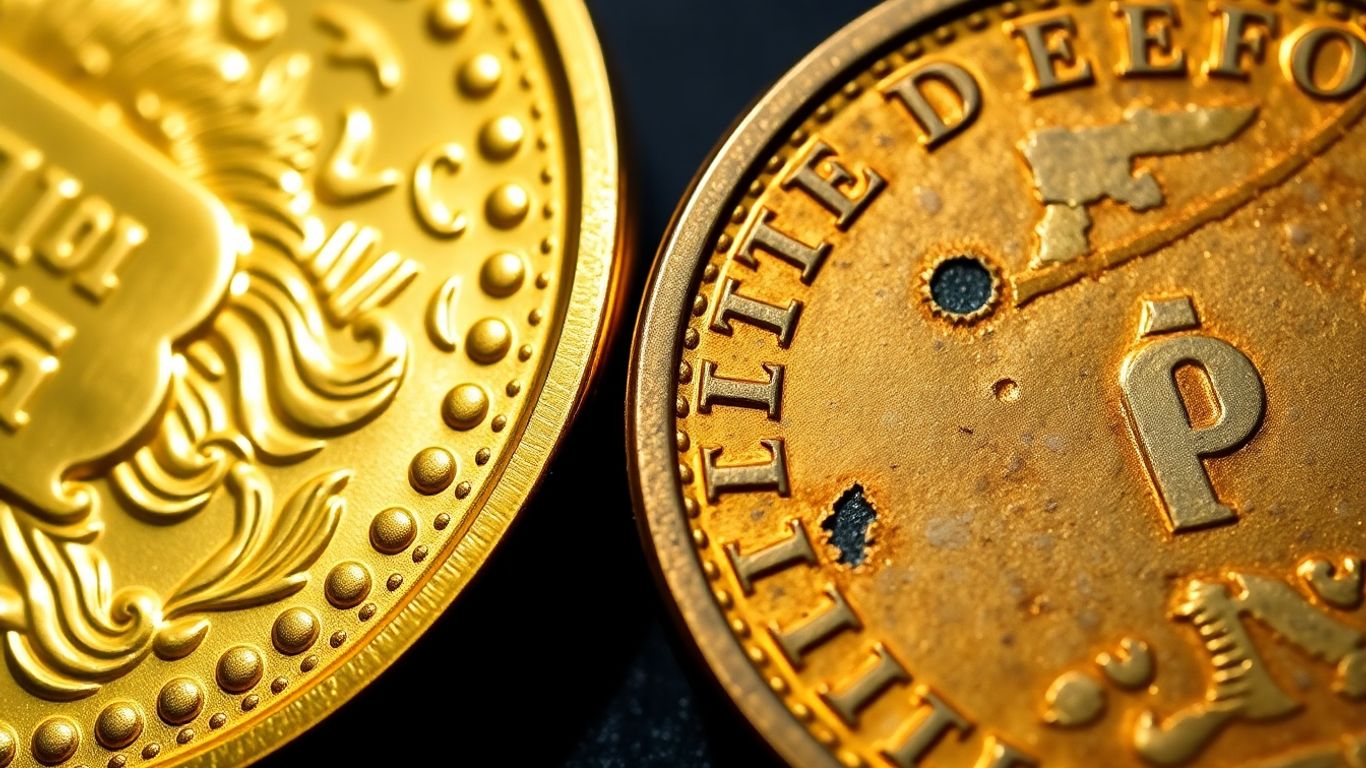
When you’re looking at gold coins, especially if you’re thinking about investing, knowing about purity and hallmarks is pretty important. It’s like a secret code that tells you what you’re actually getting. Scammers love to play on people not knowing this stuff, so getting a handle on it is your first line of defense.
What Purity Levels To Expect
Gold isn’t always 100% pure. It’s often mixed with other metals, like copper, silver, or zinc, to make it harder or change its color. This is where karats come in. You’ll see numbers like 24K, 18K, or 14K. Basically, 24K is considered pure gold, meaning it’s 99.9% gold. But for coins, especially investment ones, you’re usually looking for very high purity, often 99.5% or higher. Bars and coins meant for investment are typically made with minimal alloys to maintain their value. Things like American Gold Eagles or Canadian Maple Leafs are usually minted to very high purity standards.
Interpreting Gold Hallmarks
Hallmarks are official stamps on gold items that tell you about its purity, the maker, and sometimes even the date it was made. Think of them as a guarantee. For example, you might see a stamp like "999" which means 99.9% pure gold. Other common marks include "24K", "18K", or "14K" which correspond to different purity levels. These marks are there to help consumers know they’re getting what they paid for. A genuine hallmark is usually clear, precise, and properly stamped, not something that looks smudged or poorly applied. If you’re buying gold, especially from a dealer, you should be able to find these marks. Understanding these marks is a big step in avoiding scams.
Detecting Base Metals In Fakes
Counterfeiters often try to fool people by using base metals like brass, copper, or even tungsten, and then plating them with a thin layer of real gold. These fakes might feel right or even pass a simple magnet test, but they won’t have the correct weight for their size, and they certainly won’t have legitimate hallmarks. Sometimes, they’ll even try to stamp fake hallmarks onto the piece. If a coin feels too light or too heavy for its size, or if the markings look off, it’s a big red flag. Real gold has a specific density that’s hard to replicate perfectly with cheaper metals, especially when you consider the weight and dimensions together. Always be suspicious of coins that don’t have clear, official markings.
When you’re examining gold coins, pay close attention to the details. The stamping of purity marks and any other official symbols should be sharp and consistent. Any signs of wear that seem to obscure these marks, or if the metal underneath a scratched surface looks different from the surface color, could indicate a fake. It’s better to be overly cautious than to end up with a worthless piece.
Here’s a quick rundown of common purity levels you might see:
- 24 Karat (24K): 99.9% pure gold. Often used for investment bars and some high-purity coins.
- 22 Karat (22K): Approximately 91.7% gold. Common in older gold coins and some modern bullion coins.
- 18 Karat (18K): 75% gold. More common in jewelry than coins, but sometimes seen.
- 14 Karat (14K): 58.3% gold. Primarily used in jewelry, less common for investment coins.
Leveraging Technology To Combat Counterfeits
Blockchain For Traceability
Think of blockchain as a super secure digital ledger. When gold is mined, its journey can be recorded on this ledger. Each step – from the mine to the refiner, to the mint, and finally to the dealer – gets a digital stamp. This creates a clear, unchangeable history for a gold item. If someone tries to swap a real coin for a fake one down the line, that break in the chain is pretty obvious. It makes it much harder for counterfeiters to introduce fake goods into the supply chain without anyone noticing. It’s like having a permanent record of where your gold has been.
QR Codes And NFC Tags For Verification
Some mints and refiners are now adding special codes to their gold products. You might see a QR code or an NFC tag, similar to what’s on some credit cards. When you scan this code with your smartphone or tap the tag, it can link you to a digital certificate of authenticity. This certificate usually has all the details about the specific gold item – its weight, purity, and where it came from. It’s a quick way to check if the physical item matches its digital record. If the code doesn’t work, or the information doesn’t line up, that’s a big warning sign.
Machine Learning In Authentication
This is where things get really high-tech. Machine learning, a type of artificial intelligence, can be trained to spot fakes. Imagine feeding a computer thousands of images of real gold coins and thousands of images of fake ones. The AI learns to recognize the subtle differences that a human eye might miss – tiny imperfections in stamping, slight variations in color, or even microscopic flaws in the metal. Some companies are even developing apps that use your phone’s camera and AI to help you verify gold. It’s still developing, but it shows how technology is constantly evolving to stay ahead of counterfeiters.
Avoiding Common Mistakes When Buying Gold
Buying gold can feel like a big step, and honestly, it’s easy to mess up if you’re not careful. People fall into a few traps pretty regularly, and it’s worth knowing about them so you don’t end up with something that isn’t what you thought it was.
The Necessity Of Testing Gold
Seriously, don’t skip this. It sounds obvious, but you’d be surprised how many people just trust the seller or the packaging. You absolutely need to test the gold yourself, or have it tested. Relying solely on what someone tells you is a recipe for disaster. Simple tests, like seeing if a magnet sticks to it (real gold isn’t magnetic), can tell you a lot. More involved tests, like using an acid kit or an XRF scanner, give you even more certainty about the purity. If a seller balks at you testing the gold, that’s a huge red flag right there.
Confirming Gold Content
It’s not just about whether it’s gold, but how much gold is in it. Some items might be gold-plated or gold-filled, meaning there’s just a thin layer of gold over a base metal. While these might look like gold, they’re worth significantly less. You need to know the karat or the fineness (like .999 pure) to know what you’re actually buying. This is especially important when you’re looking at jewelry or older coins that might not be pure gold. Always ask for the specific gold content and, if possible, verify it.
The Risk Of Private Sales
Buying from a private individual, maybe someone you met online or at a flea market, can sometimes seem like a good deal. You might think you’re cutting out the middleman and saving money. But this is where a lot of scams happen. You don’t have the same protections as buying from a reputable dealer. It’s much harder to verify the authenticity of the gold, and if something goes wrong, you might have no recourse. It’s generally safer to stick with established dealers who have a reputation to uphold. If you do consider a private sale, be extra, extra careful and bring someone knowledgeable with you, or insist on meeting at a dealer’s shop where the gold can be tested on the spot.
When you’re buying gold, think of it like buying a used car. You wouldn’t just hand over cash without checking under the hood, right? Gold needs the same kind of scrutiny. Skipping the checks is like leaving your wallet wide open.
Wrapping Up: Stay Sharp Out There
So, we’ve gone over a bunch of ways to spot fake gold coins. It’s not always easy, especially with how good some fakes look these days. Remember those simple checks like using a magnet or weighing the coin? They’re a good start. But for real peace of mind, especially with bigger buys, getting a pro to look at it or using better testing gear is the way to go. Always, always buy from dealers you trust and keep an eye out for deals that seem way too good to be true. Being a little careful and knowing what to look for can save you a lot of headaches and keep your hard-earned money safe.
Frequently Asked Questions
What's the easiest way to check if a gold coin might be fake at home?
A simple trick is the magnet test. Real gold doesn’t stick to magnets, so if your coin jumps to a magnet, it’s likely not pure gold. Also, listen to the sound it makes when you tap it gently – real gold coins often have a clear, ringing sound, while fakes sound dull.
Why is the weight and size of a gold coin so important?
Gold has a specific weight and density. Fake coins are often made with cheaper metals, so they might be lighter or heavier than a real coin of the same size. Checking if the coin’s weight and measurements match the official specs for that coin is a big clue.
How can I be sure I'm buying real gold coins from a seller?
Always buy from sellers who have a good reputation. Look for reviews, ask friends for recommendations, and make sure they are registered dealers. If a deal seems too good to be true, it probably is – be very careful!
What does it mean if a gold coin looks discolored or has spots?
Pure gold doesn’t rust or tarnish easily. If you see green or black spots, or signs of corrosion, it’s a strong hint that the coin is made of cheaper metals coated with a thin layer of gold, meaning it’s not genuine.
Do I really need a professional to tell me if my gold coin is real?
For most common fakes, at-home tests can be helpful. But if you want to be absolutely sure, especially with valuable coins, getting a professional appraisal or using special testing tools is the best way to know for sure. They have the expertise and equipment.
What are some popular gold coins that counterfeiters often try to fake?
Scammers often target well-known coins that many people want to buy. Some common targets include the American Gold Eagle, the South African Gold Krugerrand, and the Canadian Gold Maple Leaf. These are popular, so there’s a bigger market for fakes.
What should I watch out for with 'graded' gold coins, especially online?
Be very careful with graded coins bought online, especially from overseas sellers. Counterfeiters sometimes fake the grading labels and plastic cases (holders) from companies like PCGS or NGC. Always check the grading label and holder closely for any oddities, and if possible, verify the coin’s grade directly with the grading service.
Are there any new technologies that help spot fake gold?
Yes! Technology is helping fight fakes. Some gold products have QR codes or special tags that link to proof of authenticity. Also, special machines like XRF scanners can check the metal’s makeup without harming the coin, and even computer programs are being developed to spot fakes.