So, you’ve got some old coins lying around and are wondering if they’re worth more than just their face value? It’s a common question, and figuring out how to research coin values can feel a bit overwhelming at first. There’s a lot to consider, from the coin’s condition to how rare it is. But don’t worry, it’s totally doable. We’ll walk through the steps to help you get a good idea of what your coins might be worth, without needing to be a history professor or a Wall Street whiz. It’s all about knowing where to look and what to look for.
Key Takeaways
- Understanding different coin values, like face, market, and book value, helps you know what to look for.
- Things like how rare a coin is, its condition, and if people want it play a big part in its worth.
- Using price guides and checking online sales records are smart ways to get a handle on coin values.
- Be careful not to clean your coins; it can actually lower their value. Handle them with care.
- For really old or valuable coins, it’s often best to get a professional opinion to know their true worth.
Understanding the Fundamentals of Coin Valuation
So, you’ve got a coin, maybe found it in your change, or perhaps it’s been sitting in a jar for ages. You’re probably wondering, ‘Is this thing actually worth anything?’ It’s a fair question, and the truth is, figuring out a coin’s real worth isn’t always as simple as looking at the number stamped on it. There’s a whole world of value beyond just the face value.
Decoding Different Types of Coin Value
When we talk about coin value, it’s not just one number. Think of it like this: a coin can have several different kinds of worth, and they all tell a different story.
- Face Value: This is the easiest one. It’s the denomination printed right on the coin – like a quarter is worth 25 cents. For most coins you find day-to-day, this is all they’re really worth as money.
- Market Value: This is what collectors or buyers are actually willing to pay for a coin right now. It changes a lot and depends on things like how rare the coin is and how many people want it.
- Intrinsic Value: This is about what the coin is made of. If it’s got silver or gold in it, that metal has a value on its own, which can be way more than the face value.
- Book Value: This is what you’ll find in coin price guides. It’s usually a good starting point, often showing what a dealer might sell a coin for, but it’s not always the final word.
Identifying Key Factors That Influence Worth
What makes one coin worth a few cents and another worth a small fortune? A few big things come into play:
- Rarity: This is a huge one. If only a few thousand of a certain coin were ever made, or if most of them got lost or melted down, the ones left are going to be worth more. Sometimes, a tiny difference in the mintmark or a small production error can make a coin super rare.
- Condition: How well has the coin held up over the years? A coin that looks almost brand new, with no scratches or wear, is going to be worth a lot more than one that’s been tossed around a lot. We’ll get into grading later, but basically, the better it looks, the higher the value.
- Historical Significance: Does the coin tell a story? Maybe it was made during a major historical event, or it features a famous person. Coins tied to important moments in history often get a bump in value.
- Demand: Even if a coin is rare, if nobody really wants it, its value won’t be that high. Conversely, if a lot of people are looking for a specific coin to complete a set, its price can go up, even if it’s not that rare.
The Importance of Face Value Versus Market Value
It’s easy to get confused between what a coin says it’s worth and what someone will actually pay for it. Your pocket change is a good example. A quarter has a face value of 25 cents. That’s what it’s worth as money. But if you find a rare error quarter, or a really old one in perfect condition, its market value could be dollars, or even hundreds of dollars.
Most of the time, the coins we use every day are only worth their face value. The real excitement in coin collecting comes from finding those special pieces where the market value far outstrips what’s printed on them, usually due to rarity, condition, or historical interest.
So, when you’re looking at a coin, always remember to look beyond the number stamped on it. There’s a whole lot more to its story and its worth.
Leveraging Essential Resources for Accurate Valuations
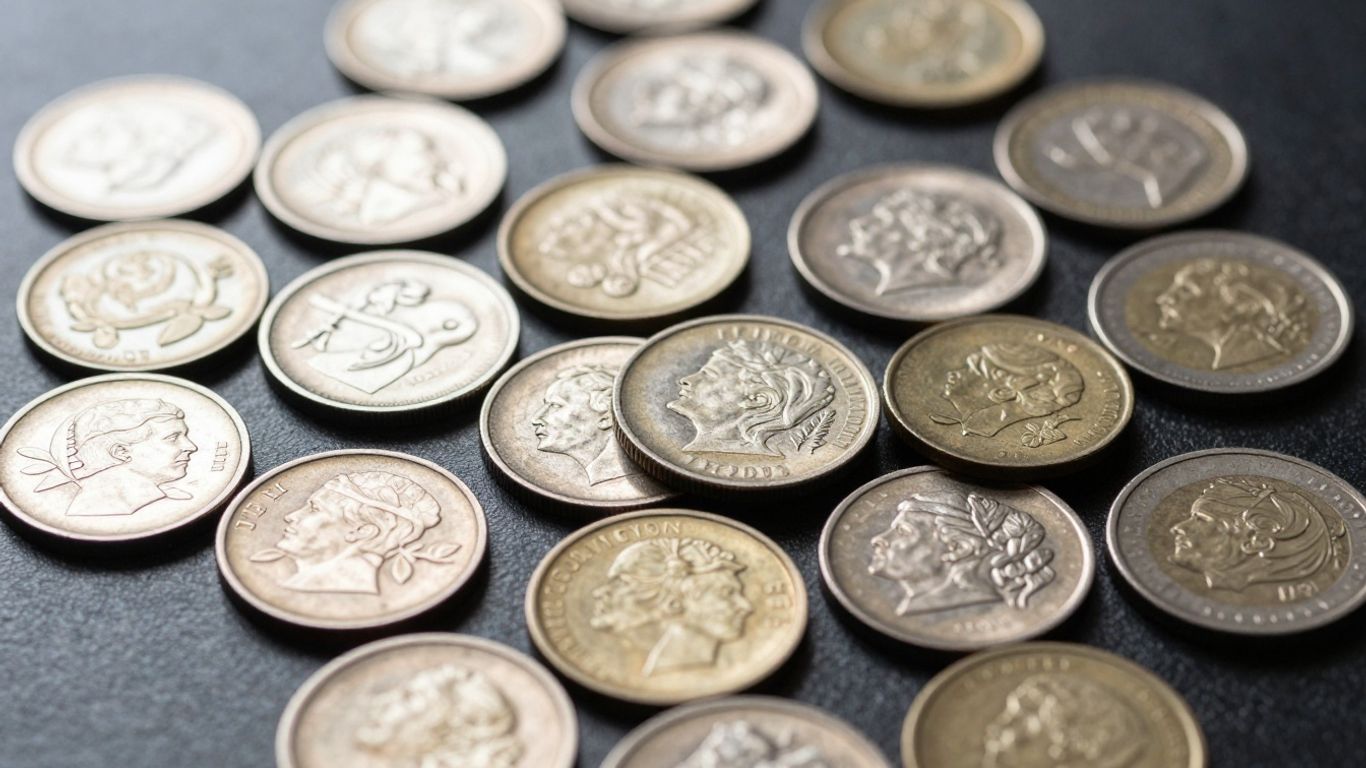
So, you’ve got some coins and you’re wondering what they’re actually worth. It’s not always as simple as looking at the number stamped on the front. There are a bunch of tools and places you can check to get a better idea. Think of it like doing your homework before a big test – the more you prepare, the better you’ll do.
Navigating Coin Collector Price Guides
Coin price guides are like a catalog for coin values. They list different coins and give you an idea of what they might sell for. But here’s the thing: these guides aren’t always set in stone. The prices you see are usually based on a coin’s condition, and that’s where things can get tricky. You need to be honest about how good or bad shape your coin is in. A guide might show a high price for a rare coin, but if your coin has scratches or wear, its actual worth will be much lower. It’s also smart to look at a few different guides if you can. They might have slightly different numbers, and seeing a range can give you a more realistic picture. You can find these guides online or in book form at hobby shops or libraries. Checking out a general coin index can be a good starting point to see what’s out there.
Utilizing Online Resources and Auction Records
Beyond printed guides, the internet is a goldmine for coin values. Websites dedicated to coin collecting often have databases where you can look up specific coins. Even better, many sites show recent auction results. Seeing what people have actually paid for similar coins in recent sales is super helpful. It’s like getting a real-time snapshot of the market. Just remember to pay attention to the details of those auction sales – was the coin in perfect condition? Was it a rare variety? These details matter a lot. Online forums and collector communities can also be good places to ask questions, but always take advice with a grain of salt and try to verify it elsewhere.
The Role of Reference Books in Research
Reference books are kind of like the older, more established cousins of online resources. They often go into a lot more detail about coin history, minting errors, and specific varieties that might not be covered on a quick website lookup. Think of a really detailed book about U.S. silver dollars, for example. It might explain the subtle differences between coins made in different years or at different mints, and how those differences affect value. These books can be a bit more of an investment, but for serious collectors, they’re often worth it. They provide a solid foundation for understanding the nuances of coin collecting.
When you’re looking up coin values, remember that the listed price is often for a coin in near-perfect condition. Your coin might be worth less if it shows signs of wear, damage, or has been cleaned. Always compare your coin’s condition to the descriptions in the guides or online resources.
Here’s a quick rundown of what to look for:
- Coin Type: Is it a penny, nickel, dime, quarter, or something else?
- Date: The year the coin was minted.
- Mintmark: The small letter indicating where the coin was made (e.g., ‘D’ for Denver, ‘S’ for San Francisco).
- Condition: This is a big one. Look for wear, scratches, nicks, or any other damage.
- Rarity: How many of these coins were made, and how many are still around?
Using these resources takes a bit of effort, but it’s the best way to get a solid handle on what your coins are really worth.
Assessing Coin Condition and Rarity
When you’re looking at coins, two big things really matter: how good a shape they’re in and how many of them are out there. These two points, condition and rarity, are what separate a common piece of metal from something truly special.
Accurately Identifying and Grading Coins
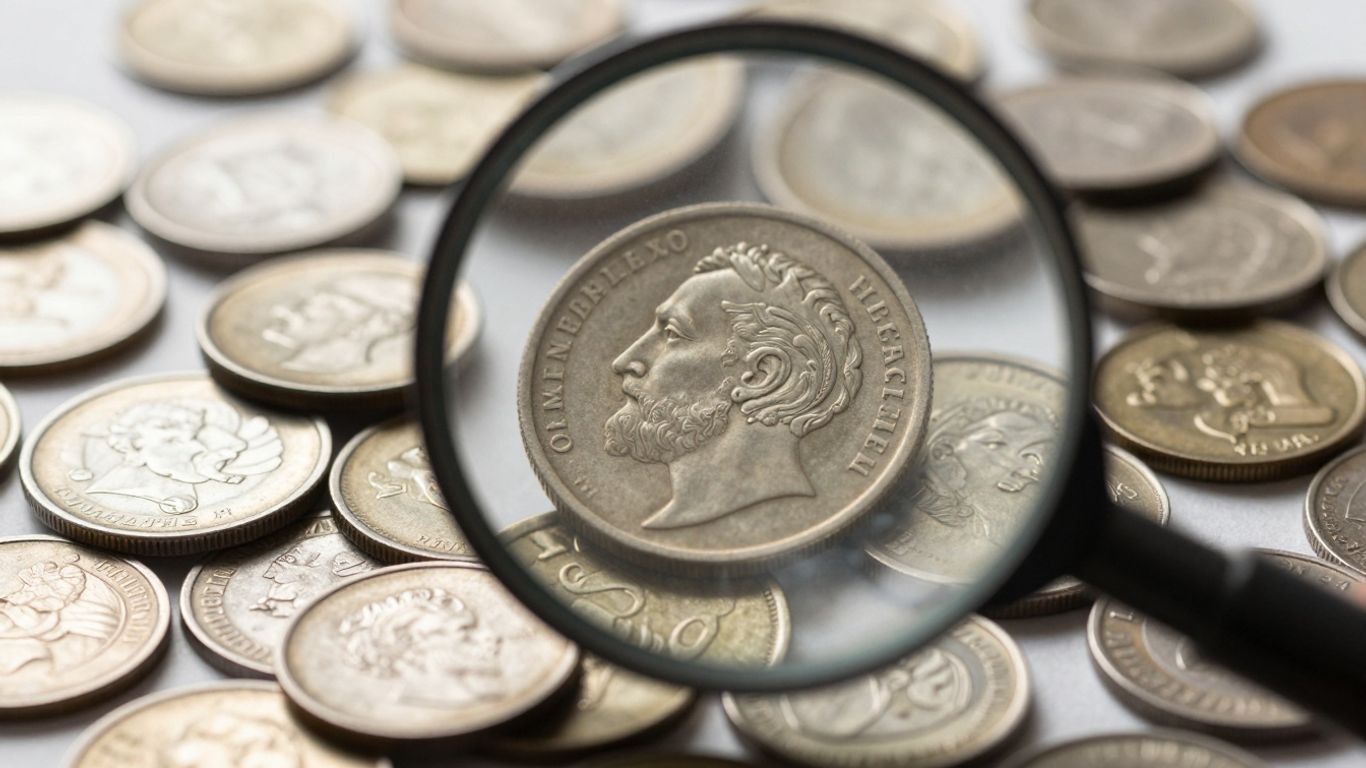
Figuring out a coin’s condition is like giving it a report card. It’s not just about whether it’s shiny or dull; it’s about the tiny details that show how much it’s been handled or if it has any flaws from when it was made. Collectors use a grading scale, often from 1 to 70, to describe this. A coin graded ‘Mint State’ (MS) means it looks like it just left the mint, with no wear at all. The higher the number in the MS range, the better the coin looks. On the other hand, a coin graded ‘Good’ (G) will show a lot of wear, with most of the design just visible as an outline. It’s important to look at coins under good light, maybe with a magnifying glass, and handle them only by the edges to avoid adding more wear.
- Look for luster: This is the original shine or glow a coin has. Coins that still have most of their luster are usually worth more.
- Check for wear: Examine the high points of the design. Are they worn smooth, or are the details still sharp?
- Note any damage: Look for scratches, nicks, or bent spots. These can really hurt a coin’s value.
Grading is a skill that takes practice. Comparing your coin to known examples in grading guides or online databases is a smart way to start. Don’t be afraid to spend time with each coin, really looking at it.
Understanding the Impact of Rarity on Value
Rarity is pretty straightforward: the fewer of something there are, the more people usually want it, and the higher the price goes. For coins, rarity can come from a few places. Maybe the mint only made a small number of them to begin with. Or, perhaps a lot of them were melted down over the years, or just lost to time. Even a small difference in the number made can make a big difference in value.
Here’s a quick look at what makes a coin rare:
- Low Mintage: The number of coins produced by the mint in a specific year and at a specific location.
- Survival Rate: How many of those coins are still around today in good condition.
- Key Dates: Certain dates or mintmarks within a coin series that were produced in significantly lower numbers.
The Significance of Mintmarks and Dates
Every coin has a date, telling you when it was made. But many coins also have a mintmark, which is a small letter or symbol showing where it was produced. For example, a ‘D’ might mean it was made in Denver, and an ‘S’ in San Francisco. These little marks can be a huge deal. A coin from the same year and type, but with a rarer mintmark, can be worth much more than one from a more common mint. Sometimes, a specific date is just harder to find in good condition, making it a ‘key date’ for collectors trying to complete a set. So, always check both the date and any mintmarks – they’re like a coin’s unique ID card.
Exploring Market Trends and Demand Dynamics
The coin market isn’t static; it’s always shifting. Prices can go up or down based on what people want, how many coins are out there, and just general collector buzz. Keeping an eye on these changes is key if you want to get the most for your coins.
Recognizing How Demand Affects Coin Prices
Think of it like any other market. If a lot of people suddenly want a specific coin, its price will likely climb. This can happen for all sorts of reasons – maybe a famous person is linked to it, or it’s featured in a popular movie. Sometimes, it’s just a trend that catches on in the collecting world. Coins made from precious metals, like silver coins, often hold their value because of the metal itself, but collector demand can push their prices even higher. It’s a mix of the material and the desire for the item.
Here’s a quick look at what influences demand:
- Rarity: Fewer coins available usually means more people want them.
- Historical Significance: Coins tied to big events or famous people get more attention.
- Aesthetics: Some coins are just more visually appealing, which collectors notice.
- Current Trends: What’s popular in the collecting community right now?
Understanding what makes a coin desirable to others is half the battle. It’s not just about the metal or the date; it’s about the story and the scarcity.
Predicting Future Market Trends
This is where it gets a bit tricky, like trying to guess the weather next month. However, you can look at certain signs. Are there new books or documentaries coming out about a specific type of coin? Are major coin shows seeing a lot of interest in certain series? Sometimes, economic factors play a role too – when people have more disposable income, they might spend more on hobbies like coin collecting. Watching what experts are talking about and what’s being discussed on collector forums can give you clues. You might even find some great deals on coins that aren’t super popular right now but could be in the future. It’s about spotting potential before everyone else does. For instance, some trusted coin buyers in Tampa are seeing increased interest in certain historical pieces.
Staying Updated on Changing Market Fluctuations
So, how do you actually keep up? It’s not a one-and-done thing. You need to make it a habit. Regularly checking price guides, even if you’re not buying or selling right away, helps you see the general direction prices are heading. Online auction results are goldmines for this kind of information – you can see what coins are actually selling for, not just what someone is asking. Talking to other collectors or dealers can also give you the inside scoop. The more you expose yourself to the market, the better you’ll get at spotting these shifts. It’s a bit like learning a new language; the more you practice, the more fluent you become in understanding coin values.
Strategies for Successful Coin Research
Figuring out what your coins are actually worth can feel like a puzzle sometimes. It’s not just about looking at a coin and guessing; there’s a method to the madness. Cross-referencing prices from different places is your best bet for getting a reliable number. Think of it like checking the weather from a few different apps before deciding if you need an umbrella. You wouldn’t trust just one source, right? The same goes for coins.
Here’s a breakdown of how to do it right:
- Check Multiple Price Guides: Don’t just grab the first guide you see. Look at a few different ones, both online and in print. They might have slightly different values listed, and seeing a range helps.
- Scour Online Auction Records: Sites that show past sales are goldmines. You can see what people have actually paid for similar coins, not just what someone thinks they’re worth. This gives you a real-time look at the market.
- Talk to Other Collectors: Sometimes, just chatting with folks who know their stuff can give you insights you won’t find in any book or on any website. Online forums are great for this.
It’s all about building a picture from different angles. If you’re looking to sell, knowing the real market value is key. For instance, if you’re in Tampa and considering selling gold, understanding current market rates is important. Reputable dealers like Tampa Coin Buyers can offer fair prices, but you should go in knowing what to expect.
When you’re researching, remember that condition is a huge part of the story. A coin that looks great but has been cleaned might be worth less than a slightly worn one that’s in its original state. Always pay attention to the details – the date, the mint mark, and any imperfections.
Developing your own approach to collecting is also part of this. What are you trying to achieve? Are you building a set, looking for specific rare pieces, or just enjoying the hunt? Having a plan helps you focus your research and make smarter decisions about what to buy or sell. It stops you from just randomly picking up coins without a clear purpose.
Engaging with Professionals for Expert Appraisals
Sometimes, you just can’t figure out what a coin is worth on your own. That’s where the pros come in. Getting an expert opinion can save you a lot of headaches and, more importantly, a lot of money. It’s like going to a doctor when you’re sick; you want someone who knows what they’re doing.
Consulting Reputable Coin Dealers
When you’re looking to sell or just get a solid idea of your coin’s value, talking to a coin dealer is a good first step. But not all dealers are created equal, right? You want someone who’s been around, knows their stuff, and doesn’t try to pull a fast one. Look for dealers who are members of professional organizations. These groups usually have standards that members have to follow. It’s also smart to check out reviews online or ask other collectors if they have recommendations. A dealer like Archangel Coins might be a good place to start if you’re dealing with precious metals.
Finding Certified Numismatic Appraisers
For really valuable or rare coins, you might need a more formal appraisal. This is where certified numismatic appraisers come in. These folks have special training and credentials. They can give you a detailed report on your coin’s condition, rarity, and market value. It’s a bit more involved than just asking a dealer, but for important pieces, it’s worth it. You can often find these professionals through directories of appraisal societies. They’ll look at your coin closely and give you a professional opinion.
Understanding Appraisal Fees and Transparency
Before you hand over your prized coins for an appraisal, always ask about the cost. Some appraisers charge by the hour, others by the coin, and some might take a percentage if you decide to sell through them. It’s important to have this conversation upfront so there are no surprises. Transparency is key here. You should know exactly what you’re paying for and what you’re getting in return. A good appraiser will be upfront about their fees and what their appraisal report will include.
Getting professional help is a smart move, especially when dealing with coins that could be worth a significant amount. It’s about making sure you’re not leaving money on the table or getting ripped off. Doing your homework on the professional you choose is just as important as researching the coin itself.
Avoiding Common Pitfalls in Coin Valuation
When you’re looking into the worth of your coins, it’s easy to stumble into a few traps that can really mess with their value. Let’s talk about some of the big ones so you can steer clear.
The Detrimental Effects of Cleaning Coins
This is a huge one, and honestly, it trips up a lot of people. You find an old coin, maybe it looks a bit grimy or dull, and your first thought is, "I should clean this up!" Big mistake. Cleaning a coin, even with the best intentions, almost always lowers its value. Think about it: collectors want coins as they were found, with their original surfaces intact. When you scrub, polish, or use harsh chemicals, you’re not just removing dirt; you’re removing the coin’s original patina, which is often a sign of age and authenticity. This can create tiny scratches, called hairlines, that are visible under magnification and scream "tampered with" to anyone who knows coins. Even a gentle wipe with your thumb can leave oils that cause damage over time. It’s best to leave the cleaning to the professionals, and even then, it’s usually only done in very specific circumstances for very valuable coins.
Verifying the Reputation of Coin Dealers
So, you’ve decided to sell a coin or maybe buy a new one. You need a dealer, right? But not all dealers are created equal. It’s super important to do your homework before handing over your coins or your cash. A shady dealer might try to lowball you on a sale or sell you a coin with problems you can’t see. How do you check? Look for dealers who are members of professional organizations like the American Numismatic Association (ANA) or the Professional Numismatists Guild (PNG). These groups have codes of ethics, and their members are generally trustworthy. Online reviews can also give you a sense of a dealer’s reputation, but take them with a grain of salt. It’s always better to deal with someone who has a solid track record and is transparent about their business practices. You can often get a good sense of a dealer’s standing by asking other collectors or checking with these organizations.
Handling Coins to Preserve Their Condition
This ties back to cleaning, but it’s broader. How you physically handle your coins matters a lot. The oils and acids on your skin can transfer to the coin’s surface, causing discoloration and damage over time. This is why you’ll always see collectors and dealers handling coins by their edges, using soft cotton gloves, or specialized tools like coin tongs. Even dropping a coin, no matter how short the distance, can cause nicks or dents that affect its grade and value. Think of your coins like delicate historical artifacts. You wouldn’t touch a museum piece with your bare hands, would you? The same care should be applied to your collection. Proper handling is a simple step that makes a big difference in keeping your coins in the best possible shape for years to come. It’s a small habit that protects your investment.
The temptation to "improve" a coin’s appearance is strong, but often leads to irreversible damage. Collectors value authenticity and original surfaces above all else. Resist the urge to polish or alter your coins; their natural state is usually their most valuable one.
Special Considerations for Rare and High-Value Coins
When you start looking at coins that aren’t just everyday pocket change, things get a bit more interesting. These aren’t your average finds; they’re the ones that make collectors’ eyes light up. Identifying unique characteristics is the first step to understanding their true worth.
Think about what makes a coin stand out. It could be a mistake made at the mint, like a double strike or an off-center impression. These aren’t flaws; they’re what make a coin one-of-a-kind. The mintmark is also a big deal. A coin from a less busy mint, or one that only operated for a short time, is often much rarer than one from a major facility. And don’t forget the history. Coins tied to big events or famous people? They get a serious value boost.
Here’s a quick look at what really bumps up a coin’s value:
- Mint Errors: Things like doubled dies, repunched mintmarks, or coins struck on the wrong metal planchet.
- Low Mintage: If only a few thousand, or even hundreds, were ever made, that scarcity drives demand.
- Historical Significance: Coins commemorating important events, people, or places.
- Exceptional Condition: Even rare coins can be worth much less if they’re heavily worn or damaged.
Valuing these special coins isn’t just about looking up a number. It’s about appreciating the story behind it, the circumstances of its creation, and how many others like it still exist. This careful assessment is key for anyone serious about investing in numismatics.
For these kinds of coins, precision is everything. You can’t just guess. A slight difference in grade or a missed detail can mean thousands of dollars one way or the other. It’s why getting a professional opinion is often a smart move. They have the trained eye to spot those subtle details that make a coin a true treasure or just a nice old piece of metal.
Maximizing Returns When Selling Your Collection
So, you’ve spent time researching and maybe even building a nice coin collection. Now comes the part where you want to get the most bang for your buck when it’s time to sell. It’s not always as simple as just taking it to the first shop you see, you know? You really need to think about how you approach it.
Setting Realistic Expectations for Coin Worth
First things first, let’s talk about what your coins are actually worth. It’s easy to get caught up in the idea that every old coin is a goldmine, but that’s usually not the case. Many collectors tend to overestimate the value of their pieces. Dealers, for instance, often buy coins at a fraction of what they might sell for to the public – think around 30% of the estimated retail price. This covers their overhead, risk, and profit margin. So, before you even start talking to buyers, do your homework. Look at recent sales of similar coins, not just asking prices. This gives you a much clearer picture.
Exploring Online Platforms for Coin Sales
These days, the internet opens up a whole world of possibilities for selling. Instead of being limited to local buyers, you can reach collectors all over the globe. Online auction sites and specialized coin forums can be great places to list your items. You have more control over the selling process and can often set your own prices or participate in bidding wars that drive up the value. It does take more effort, though – you’ll need good photos and detailed descriptions. If you’re looking to sell, checking out Tampa Coin Buyers for home appointments might be an option if you prefer a more personal touch.
Organizing Your Collection for Optimal Sale
How you present your collection can make a big difference. If you have multiple coins, grouping them logically makes it easier for potential buyers to understand what you’re offering. You might group them by date, mint mark, series, or condition. Having a clear inventory, perhaps in a spreadsheet, detailing each coin’s specifics and your research on its value, is super helpful. This organization shows you’re serious and makes the buyer’s job easier, which can lead to a smoother, more profitable sale. It’s also a good idea to have a list of coins you’re willing to sell and those you might want to keep.
When you’re ready to sell, remember that presentation matters. A well-organized collection with clear documentation is far more appealing to buyers than a jumbled box of coins. This attention to detail can directly translate into a better selling price.
Here are some common selling methods:
- Auctions: Can generate competitive bidding, potentially leading to higher prices, especially for rare items.
- Direct Sales to Dealers: Often quicker and more straightforward, but expect offers below retail value.
- Online Marketplaces: Provide broad reach and control, but require more effort in listing and customer interaction.
- Private Treaty Sales: Involves negotiating directly with a buyer, offering flexibility and potentially better returns if you find the right person.
Preserving the Value of Your Coin Collection
So, you’ve done the research, you’ve figured out what your coins are worth, and maybe you’ve even made a few sales. That’s great! But what about keeping the coins you do have in good shape? It’s not just about buying them; it’s about making sure they don’t lose their value over time. Honestly, it’s pretty straightforward once you get the hang of it.
Proper Storage Techniques for Coin Preservation
This is where things get really important. Think of your coins like delicate historical artifacts – because, well, they are! You wouldn’t just toss a museum piece in a dusty box, right? The same applies here. The environment where you keep your coins matters a lot. You want a place that’s stable, meaning the temperature and humidity don’t swing wildly. Big changes can actually damage the metal over time, leading to all sorts of problems like corrosion or even just making them look dull.
Here are a few pointers for good storage:
- Avoid PVC: Seriously, stay away from plastic holders that contain PVC. Over time, this stuff breaks down and can actually damage your coins. It’s a common mistake, and it’s easily avoidable.
- Archival Quality is Key: Look for holders specifically labeled as archival-safe. These are made from materials that won’t react with the metal of your coins. Things like Mylar flips, inert plastic capsules, or even specialized coin tubes are good options. You can find a lot of these supplies at places that cater to collectors, like BCW’s archival-safe storage solutions.
- Keep it Clean and Dry: A basement that floods or an attic that gets super hot and humid? Probably not the best spot. Aim for a consistent, dry environment.
Handling coins correctly is just as vital as the storage itself. Always try to touch coins only by their edges. Your fingers have oils and acids that can transfer onto the coin’s surface, and over time, this can cause discoloration or even permanent damage. It might seem like a small thing, but it makes a big difference in keeping your coins looking their best.
Securing Valuable Coin Collections
Okay, so you’ve got some really valuable pieces. Now you need to think about keeping them safe from theft. This isn’t just about locking them in a drawer. For truly high-value collections, you might need to consider more robust security measures. This could mean using a safe deposit box at a bank, investing in a high-quality home safe, or even looking into specialized storage facilities that cater to precious items. It’s about peace of mind, knowing your investment is protected.
The Long-Term Benefits of Careful Handling
It might seem like a lot of fuss, but taking these steps really pays off in the long run. Coins that are well-cared for will retain their original condition, which is exactly what collectors and buyers are looking for. A coin that’s been handled carefully, stored properly, and kept away from damaging elements will always be worth more than one that’s been neglected. It’s about preserving not just the metal, but the history and the potential future value of each piece in your collection. Think of it as an investment in your investment.
Keep Collecting!
So, you’ve learned a lot about figuring out what your coins are actually worth. It’s not just about looking at a number in a book; it’s about understanding the history, the condition, and what other people are willing to pay. Remember to use those price guides, check different sources, and don’t be afraid to ask for help from folks who know their stuff. Coin collecting is a journey, and knowing how to value your finds just makes it that much more interesting. Keep digging through those change jars and estate sales – you never know what hidden treasures you might find next.
Frequently Asked Questions
What's the difference between a coin's face value and its real worth?
A coin’s face value is what it says it’s worth, like a quarter being worth 25 cents. Its real worth, or market value, is what people are willing to pay for it. This can be much higher if the coin is rare, in great shape, or in high demand.
How do I know if my coin is rare?
Rarity often comes down to how many were made (mintage), how many still exist, and how many people want to collect it. Things like special dates, mintmarks (where it was made), and unique errors can also make a coin rare.
Does the condition of a coin really matter that much?
Yes, condition is super important! A coin that looks brand new and has no scratches or wear will be worth way more than one that’s worn out. Experts have a grading system to describe how good a coin’s condition is.
What's a 'mintmark' and why should I care about it?
A mintmark is a tiny letter or symbol on a coin that tells you which U.S. Mint facility made it. Different mints produced different amounts of coins, so a mintmark can tell you if a coin is rarer from one place than another.
Are price guides helpful for finding out what my coins are worth?
Absolutely! Price guides, like the ‘Red Book,’ are like maps for coin values. They list many coins and give you an idea of what they might be worth based on their date, mintmark, and condition. Just remember these are guides, not exact prices.
Should I ever clean my old coins?
Generally, no! Cleaning a coin, even with the best intentions, can remove its natural patina and create tiny scratches that collectors can see. This can actually lower its value significantly. It’s best to leave them as they are.
How can I tell if a coin dealer is trustworthy?
Look for dealers who are members of respected numismatic (coin collecting) organizations. Check online reviews and see if they have a good reputation. Don’t be afraid to ask questions and get a second opinion if you’re unsure.
What's the best way to store my coins to keep them safe?
Keep your coins in protective holders made for coins, like Mylar flips or hard plastic cases. Store them in a cool, dry place away from sunlight and humidity. Avoid storing them in plastic bags that aren’t specifically for coins, as some plastics can damage them over time.