Thinking about putting some money into silver coins? You know, the old ones, like dimes and quarters from before 1965? They’re often called “junk silver,” but that name doesn’t really tell the whole story. These coins have a history, a real value based on their silver content, and some people think they could be a good bet for the future, especially looking ahead to 2026. Let’s break down what these constitutional silver coins meaning really is, why they matter, and what they might be worth.
Key Takeaways
- “Junk silver” refers to U.S. coins made before 1965 that are valued for their silver content (90%) rather than their collector status, offering a way to own physical silver at low premiums.
- The shift from silver to copper-nickel clad coins in 1965, driven by rising silver prices, is a real-world example of Gresham’s Law, where valuable “good money” was hoarded and disappeared from circulation.
- Constitutional silver coins are seen as a hedge against inflation and a safe-haven asset during economic uncertainty, with potential for value increase due to factors like expected interest rate cuts and geopolitical instability.
- While bought for their silver weight, these coins can sometimes hold hidden numismatic value from rare dates, mint marks, or varieties, adding a collector’s element to the investment.
- Acquiring constitutional silver involves understanding premiums over the spot price, checking dealer reputation for authenticity, and considering strategies like dollar-cost averaging for consistent portfolio building.
Understanding Constitutional Silver Coins Meaning
When we talk about "constitutional silver" coins, we’re really talking about a specific era of U.S. coinage that holds a special place for investors and history buffs alike. These aren’t just any old coins lying around; they represent a time when the metal content of our currency was directly tied to precious metals, specifically silver.
Defining "Junk Silver": More Than Just Old Coins
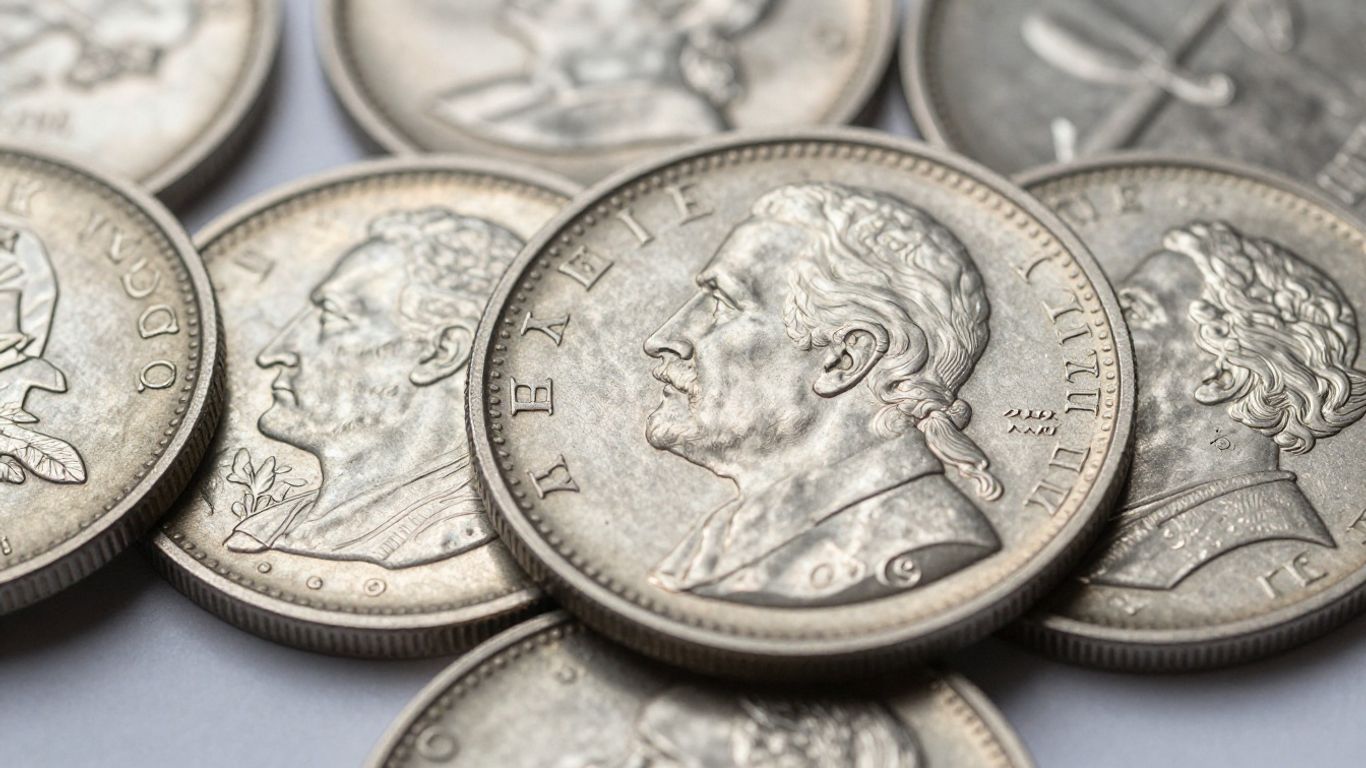
The term "junk silver" might sound a bit dismissive, but it’s actually a pretty common way to refer to U.S. dimes, quarters, and half dollars minted before 1965. Why "junk"? Because these coins are valued primarily for their silver content, not for their rarity or collector appeal. Most of them are worn from years of circulation, making them less interesting to numismatists. However, this wear doesn’t diminish the silver inside. Their true worth lies in the silver they contain, making them a practical way to own physical silver. Think of it this way: a pre-1965 quarter, even if it looks a bit beat up, contains about $3.62 worth of silver at a $20/ounce spot price, which is way more than its 25-cent face value.
The Shift From Silver to Clad Coinage
For a long time, U.S. dimes, quarters, and half dollars were made from a 90% silver alloy. This practice went on for nearly 175 years, from 1795 all the way up to 1964. But things changed with the Coinage Act of 1965. The price of silver had been climbing, and it reached a point where the melt value of the silver in these coins was actually higher than their face value. People started hoarding them, and the coins just stopped circulating. It’s a classic example of Gresham’s Law – "bad money drives out good." The government then switched to a copper-nickel clad composition for most coins, which is what we still see today. You can often tell the difference just by looking at the edge of a coin; pre-1965 silver coins have a solid silver edge, while the newer clad ones show a distinct copper stripe.
Intrinsic Value Versus Face Value
This brings us to a key concept: intrinsic value versus face value. The face value is what the coin is stamped with – a dime is worth 10 cents, a quarter is worth 25 cents. The intrinsic value, however, is based on the actual worth of the metal the coin is made from. For constitutional silver, the intrinsic value, driven by the silver content, far surpasses its face value. This is why these coins are so interesting to investors. They offer a tangible asset whose value is tied to a globally traded commodity, silver, rather than just a number printed on it by a government.
Here’s a quick look at the silver content in common constitutional coins:
| Coin Type | Face Value | Silver Content (90%) | Approx. Silver Weight (troy oz) | Intrinsic Value (at $20/oz spot) |
|---|---|---|---|---|
| Dime | $0.10 | 0.0723 troy oz | 0.0723 | ~$1.45 |
| Quarter | $0.25 | 0.1808 troy oz | 0.1808 | ~$3.62 |
| Half Dollar | $0.50 | 0.3617 troy oz | 0.3617 | ~$7.23 |
Note: Intrinsic values are approximate and fluctuate with the market price of silver.
The Historical Significance of Silver Coinage
Before the mid-1960s, the United States had a long tradition of using silver in its coinage. For nearly 175 years, from 1795 to 1964, dimes, quarters, and half dollars were struck from a 90% silver and 10% copper alloy. This wasn’t just about making pretty coins; it was a practical decision. The silver content gave these coins intrinsic value, meaning they were worth something based on the metal they contained, not just their face value. This era saw coins that were both currency and a store of value.
The Era of 90% Silver U.S. Coins
For generations, Americans carried around coins that were, in part, made of precious metal. Think about it: every dime, quarter, and half dollar minted before 1965 contained a significant amount of silver. This practice wasn’t unique to the U.S.; many countries used silver in their circulating currency. The 90% silver composition was a standard that balanced durability with the economic reality of silver’s value. These coins were the backbone of everyday transactions for a very long time.
Reasons for the Coinage Act of 1965
So, what changed? Well, the price of silver started to climb. As the metal became more valuable on the open market, the melt value of these silver coins began to exceed their face value. It became more profitable for people to hoard the silver coins or melt them down than to spend them. This led to a shortage of coins in circulation. To address this, President Lyndon B. Johnson signed the Coinage Act of 1965. This act removed silver from dimes and quarters entirely and reduced the silver content in half dollars to 40% (a change that was later reversed). The goal was to keep coins circulating by making them less valuable as raw metal.
Gresham’s Law in Action
This situation is a perfect real-world example of Gresham’s Law, which basically states that "bad money drives out good." In this case, the "bad money" was the new, silver-less (or less silver) coinage, and the "good money" was the older, silver-rich coins. People naturally held onto the more valuable silver coins, letting the less valuable ones circulate. This is precisely why finding pre-1965 silver coins today is a bit like finding treasure; most of them were pulled out of circulation decades ago. The Bland-Allison Act of 1878 was an earlier attempt to support silver prices by mandating government purchases, showing the ongoing tension between silver’s monetary and market value throughout history.
Here’s a quick look at the change:
| Coin Type | Composition Before 1965 | Composition After 1965 (Dimes/Quarters) | Composition After 1970 (Half Dollars) |
|---|---|---|---|
| Dimes & Quarters | 90% Silver, 10% Copper | Copper-Nickel Clad | Copper-Nickel Clad |
| Half Dollars | 90% Silver, 10% Copper | 40% Silver, 60% Copper (1965-1970) | Copper-Nickel Clad |
The shift away from silver in coinage wasn’t just a change in metal; it marked the end of an era where everyday money held tangible precious metal value. This transition is a key reason why older silver coins are now sought after by investors and collectors alike.
Investment Potential in 2026
Bullish Outlook for Gold and Silver
Looking ahead to 2026, the signs are pointing towards a strong year for precious metals, including the silver found in your constitutional coins. Many financial experts and institutions are forecasting continued price increases. It’s not just a short-term blip; some analysts are talking about a structural shift in how these metals are viewed by big players. We’re seeing predictions for gold prices ranging from $3,600 to $5,000 per ounce, and silver is expected to follow suit. This positive outlook is built on several key economic factors that we’ll get into.
Factors Driving Precious Metal Prices
So, what’s behind this optimism for 2026? A few big things are at play. First, central banks around the world are buying gold at record rates. They’re looking to diversify their reserves, moving away from just holding U.S. dollars. This massive demand from official institutions provides a solid floor for prices. Then there’s the expected action from the Federal Reserve. Anticipated interest rate cuts make assets like gold and silver, which don’t pay interest, more attractive to investors. Plus, let’s be honest, global tensions and policy uncertainties aren’t going away anytime soon, and that always makes safe-haven assets like precious metals shine. It’s a mix of institutional buying, monetary policy shifts, and ongoing global unease that’s really pushing prices up.
Central Bank Demand and Monetary Policy
Central bank activity is a huge piece of the puzzle for precious metal prices in 2026. These institutions are actively increasing their gold holdings, a trend that’s been growing for a while now. This isn’t just about speculation; it’s a strategic move to balance their reserves. On the monetary policy front, the Federal Reserve’s anticipated rate cuts are a significant tailwind. When interest rates are lower, holding assets that don’t yield income, like gold and silver, becomes more appealing compared to bonds or savings accounts. This combination of strong official demand and a changing interest rate environment creates a compelling case for precious metals.
The current market environment suggests that 2026 could be a strategic time to increase your holdings in precious metals. The confluence of institutional buying, potential monetary easing, and persistent global uncertainties creates a favorable backdrop for assets like constitutional silver.
Here’s a look at some of the projected price targets for gold in 2026:
| Institution | Gold Target | Expected Increase |
|---|---|---|
| Bank of America | $5,000/oz | +19% |
| Goldman Sachs | $4,900/oz | +17% |
| Deutsche Bank | $4,950/oz | +18% |
| J.P. Morgan | $4,000/oz | +14% |
| HSBC | $3,600-$4,400/oz | +5% to +8% |
As of February 3, 2026, silver is priced at $88.10 per ounce. This represents a significant increase of $6.43 from the previous day and a substantial rise of over $56 compared to the price one year prior. While gold often grabs the headlines, silver’s dual role as both a monetary metal and an industrial commodity gives it unique potential. Soaring industrial demand, particularly from sectors like renewable energy and electronics, provides a strong baseline for its value. Additionally, the gold-to-silver ratio often suggests that silver might be undervalued relative to gold, hinting at a potential catch-up rally. This makes constitutional silver an interesting prospect for investors looking at the precious metal prices chart 2026.
Silver’s Unique Role in the Market
Silver isn’t just another shiny metal you can hoard. It plays a pretty interesting dual role in the grand scheme of things, acting as both a store of value and a necessary component for a lot of the tech we use every day. This makes its market dynamics a bit different from, say, gold.
Dual Nature: Monetary Metal and Industrial Commodity
Think about it: silver has been used as money for thousands of years. It’s got that historical weight, that tangible asset appeal that people flock to when they’re worried about the economy. But it’s also a workhorse in industry. We’re talking about electronics, solar panels, medical equipment – all sorts of things need silver to function. This industrial demand is a big deal, and it’s not going anywhere.
Soaring Industrial Demand
This industrial side of silver is really picking up steam. As technology advances and the world pushes for more renewable energy, the need for silver just keeps growing. Solar panels, for instance, rely heavily on silver to convert sunlight into electricity. Plus, its unique properties make it indispensable in certain medical and electronic applications. This constant, growing demand from manufacturers provides a solid floor for silver prices, regardless of what investors are doing. It’s a different kind of security than just being a safe-haven asset; it’s demand driven by necessity.
The Gold-to-Silver Ratio Indicator
One of the ways folks try to figure out if silver is a good buy is by looking at the gold-to-silver ratio. Basically, it tells you how many ounces of silver it takes to buy one ounce of gold. When this ratio is high, it suggests silver might be undervalued compared to gold, and vice versa. It’s a historical indicator that many investors watch closely. For example, if the ratio is around 80:1, it means you need 80 ounces of silver to equal the price of one ounce of gold. Historically, this ratio tends to revert to a lower number over time, which could mean big gains for silver investors if it happens again. It’s a bit of a complex metric, but it’s a key part of understanding silver’s place in the precious metals market. Many are watching this ratio closely as investment in silver and gold is surging.
The interplay between silver’s monetary history and its modern industrial utility creates a unique market position. While economic uncertainty often drives investors to silver as a hedge, its essential role in burgeoning technologies provides a consistent demand that underpins its long-term value proposition.
Acquiring Constitutional Silver
So, you’re thinking about getting some of that constitutional silver, huh? It’s a pretty straightforward way to get your hands on actual silver without breaking the bank. Most folks buy it in bags, usually labeled as "$100 face value" bags. This doesn’t mean the bag is worth $100; it means it contains a mix of old dimes, quarters, and half dollars that used to add up to $100. The real value comes from the silver inside.
Benefits of Investing in "Junk Silver"
Why bother with these old coins? Well, they’ve got a few things going for them. For starters, they’re a really accessible way to own physical silver. You’re not dealing with fancy packaging or minting fees like you might with brand-new silver coins or bars. Plus, because they’re actual U.S. currency, they’re pretty easy to recognize and understand. If you ever needed to, say, trade a few coins, people know what they are.
Here are some of the main perks:
- Tangible Asset: You physically hold the silver, which feels pretty solid in uncertain times.
- Cost-Effective: Generally, you’ll pay a lower premium over the silver spot price compared to other silver products.
- Divisible: You can easily break down a bag into smaller units (like individual dimes or quarters) if needed.
- Recognizable: These are familiar U.S. coins, making them easier to deal with than obscure foreign coins.
Divisibility and Recognizability
This is where constitutional silver really shines, especially when you compare it to, say, a big silver bar. Imagine you have a 100-ounce silver bar and you only want to sell or trade 5 ounces. It can be a bit of a hassle, right? You might need a scale, and the buyer might be wary. But with a bag of old dimes and quarters, you can just pull out a few coins. Each dime or quarter is a small, recognizable unit of silver. This makes it much more practical for smaller transactions or if you just want to sell off a little bit at a time. It’s like having change in your pocket, but the change is actually valuable silver.
Dealer Reputation and Authenticity
When you’re buying these coins, especially in bulk, you want to make sure you’re dealing with someone honest. It’s not like buying a loaf of bread; you’re investing your money. Look for dealers who have been around for a while and have good reviews. They should be upfront about their pricing, including any premium they charge over the current silver price. Authenticity is key, so always buy from a reputable source that guarantees their coins are genuine 90% silver. Some dealers might even offer programs where you can set up automatic purchases, which can be a smart way to build your holdings over time without trying to guess the best moment to buy. You can find a good selection of these coins from places like SD Bullion.
Buying constitutional silver is about more than just acquiring metal; it’s about securing a piece of history that holds tangible value. The ease of transaction and the inherent divisibility make it a practical choice for many investors looking to diversify their portfolios with precious metals.
Beyond Bullion: The Hunt for Numismatic Value
So, you’ve got your hands on some of that "junk silver," right? Most folks buy these old dimes, quarters, and halves purely for the silver content – the melt value. And that’s totally smart. But here’s a little secret: sometimes, tucked away in those bags of common coins, you might just find a real treasure. It’s like finding a rare comic book in a box of old newspapers. We’re talking about numismatic value, which is basically collector value, and it can sometimes push a coin’s worth way beyond just its silver weight.
Identifying Potential "Hidden Gems"
While dealers usually do a pretty good job of sorting out the obvious rarities before selling bags of circulated coins, it’s not a perfect science. Think about it – they’re dealing with a lot of volume. This means there’s always a chance a coin with a special date, a rare mint mark, or a unique variety might slip through. These are the "hidden gems" that can turn a simple silver investment into a bit of a treasure hunt.
Key Dates and Rare Varieties
What makes a coin a "key date" or a rare variety? It usually comes down to a few things:
- Low Mintage: If a coin was only produced in small numbers for a specific year or at a particular mint, it’s naturally going to be scarcer.
- Historical Significance: Sometimes, coins from important historical periods or those with unique design elements become more desirable to collectors.
- Mint Errors: Believe it or not, mistakes made during the minting process can create incredibly rare and sought-after coins. These are often the most exciting finds.
- Specific Combinations: It’s not just the year; it could be a specific mint mark (like a ‘D’ for Denver or an ‘S’ for San Francisco) combined with a particular date that makes it rare.
Examples of Collectible Silver Coins
While it’s impossible to list every single rare coin, here are a few types of older U.S. silver coins that, if you find them in the right condition and with the right date/mint mark, could be worth more than their silver:
| Coin Type | Potential Key Dates/Varieties (Examples) | Notes |
|---|---|---|
| Barber Dime | 1892-O, 1901-S, 1913-S | Produced from 1892 to 1916 |
| Mercury Dime | 1916-D, 1942/1 over 1 | Known for its winged cap design |
| Washington Quarter | 1932-D, 1932-S | First year of issue for this design |
| Standing Liberty Quarter | 1916, 1918-S, 1927-S | Distinctive design with a shield |
| Walking Liberty Half | 1916-S, 1921, 1921-D, 1927-S | Iconic American design |
| Franklin Half Dollar | 1949-S (rare variety), 1953-S | Features Benjamin Franklin’s portrait |
Remember, the condition of the coin plays a huge role. A worn-out coin, even if it’s a rare date, might not have much numismatic value. But hey, finding one is still pretty cool, and you’ve still got the silver!
Premiums and Market Value Explained
When you’re looking at constitutional silver coins, or any silver for that matter, you’ll notice the price isn’t just the raw silver value. There’s something called a ‘premium’ that gets added on. Think of it as the cost of doing business for the people who mint, transport, and sell these coins to you. It covers their expenses and a bit of profit, too.
Understanding the Premium Over Spot Price
The ‘spot price’ is basically the current market price for an ounce of silver, trading right now. The premium is the amount you pay above that spot price. For constitutional silver, like old dimes, quarters, and halves, this premium is usually pretty low. That’s a big part of why people like them – you get real silver, but without paying a huge markup like you might for some newer, fancier silver products. It’s like buying in bulk; the more you buy, the less the per-unit cost tends to be.
Factors Influencing Premium Fluctuations
So, why does this premium change? A few things are at play. When everyone suddenly wants silver, maybe because the economy feels shaky, demand goes up. If the mints can’t churn out new coins fast enough, or if there are shipping delays, that can push premiums higher. It’s basic supply and demand, really. Sometimes, specific coins might have a slightly higher premium because they’re easier to handle or verify, or maybe the dealer has a special deal on them.
Here’s a quick look at what can affect premiums:
- Market Demand: High demand usually means higher premiums.
- Supply Chain Issues: Problems getting coins from the mint to the dealers can increase costs.
- Dealer Costs: Their overhead, like rent and staff, needs to be covered.
- Coin Type: Some coins might be more popular or easier to process, affecting their premium.
It’s important to remember that while the silver content is the main driver of value for constitutional silver, the premium is a real cost. Shopping around and understanding these factors helps you get the best deal possible. Don’t just look at the spot price; check the total price you’ll actually pay.
Competitive Rates and Bulk Purchasing
This is where buying in larger quantities really pays off. If you’re buying a whole bag of $100 face value constitutional silver, the premium per ounce is almost always lower than if you were just buying a single coin or two. Dealers often have tiered pricing – the more you buy, the better the rate. This makes bulk purchases a smart move if you’re planning to invest a significant amount. It’s a way to get more silver for your money, effectively lowering your average cost over time.
Strategic Portfolio Diversification
Adding constitutional silver to your investment mix isn’t just about having something shiny; it’s a smart move for spreading out your risk. Think of it like not putting all your eggs in one basket. When the stock market gets wobbly, or other investments aren’t doing so hot, having some physical silver can act like a safety net. It’s a way to keep your overall portfolio more stable.
Constitutional Silver as an Inflation Hedge
Inflation is that sneaky thing that makes your money buy less over time. When prices go up, the value of your cash goes down. Constitutional silver, because it has intrinsic value tied to the silver content, tends to hold its value better than fiat currency during inflationary periods. It’s like a tangible asset that doesn’t get eroded by rising prices in the same way paper money does. So, while your dollars might be losing purchasing power, your silver coins are likely to maintain or even increase theirs.
Safe-Haven Asset During Economic Uncertainty
When the global economy feels shaky – maybe there’s political unrest, a looming recession, or unexpected global events – people tend to look for places to put their money that feel secure. That’s where safe-haven assets come in. Gold and silver have historically played this role. They aren’t tied to any single government’s policies or a specific company’s performance. During times of doubt, demand for these physical metals often goes up, which can help protect your wealth when other markets are in turmoil.
Dollar-Cost Averaging for Consistent Acquisition
Trying to time the market – buying low and selling high – is really tough, even for the pros. A more reliable approach for building your silver holdings is dollar-cost averaging. This means investing a set amount of money at regular intervals, say, every month, regardless of the current price. If the price of silver is down that month, your fixed amount buys more silver. If the price is up, it buys less. Over time, this strategy can help smooth out your average purchase price and reduce the stress of trying to guess the perfect buying moment. It’s a disciplined way to build your position steadily, much like contributing to a retirement fund.
Navigating the 2026 Market Landscape
Projected Price Targets for Gold and Silver
Looking ahead to 2026, the outlook for precious metals remains quite positive. Many financial institutions are putting out their predictions, and the general vibe is that gold could see some serious gains. We’re talking about targets that suggest a significant shift in the market, not just a quick bump. Silver is expected to follow suit, boosted by its dual role as a monetary asset and an industrial necessity.
Here’s a peek at what some analysts are saying:
| Institution | Gold Target (per oz) | Expected Increase |
|---|---|---|
| Bank of America | $5,000 | +19% |
| Goldman Sachs | $4,900 | +17% |
| Deutsche Bank | $4,950 | +18% |
| J.P. Morgan | $4,000 | +14% |
| HSBC | $3,600 – $4,400 | +5% to +8% |
These projections are based on a few key things happening in the world right now. Central banks are buying gold like crazy, more than they have in decades. Plus, there’s talk of the Federal Reserve cutting interest rates, which usually makes gold and silver more attractive to investors. And let’s not forget the ongoing global uncertainties that always seem to push people towards safer assets. It’s a lot to take in, but it paints a pretty clear picture for where things might be headed. For more on this, you can check out Maximizing Your Investment in a Chaotic Global Economy: Why Gold and Silver Are Essential for Portfolio Diversification in 2024.
Potential Risks and Market Corrections
Now, it’s not all sunshine and rainbows. While the forecasts are generally upbeat, it’s smart to think about what could go wrong. Markets don’t just go up forever, right? Sometimes they need a breather. One big factor is how the Federal Reserve handles interest rates. If they decide to keep rates higher for longer than expected, that could slow down the demand for gold and silver. Also, if all the global conflicts suddenly calm down, that might reduce the appeal of precious metals as a safe haven. It’s a good idea to be aware of these possibilities.
While the precious metal prices chart 2026 looks optimistic, it’s wise to consider the long-term view, including potential market corrections. The World Bank predicts the current rally might moderate or consolidate around 2027 after hitting new highs. This would be a natural breather, not a crash.
Long-Term Outlook Beyond 2026
So, what happens after 2026? Most signs point to continued strength, but maybe at a more moderate pace. Think of it like this: the big surge might happen leading up to and during 2026, and then things might settle into a steady, upward trend. Some analysts suggest that after hitting new highs, there could be a period of consolidation, which is totally normal for any market. This doesn’t mean prices will crash, just that they might level off for a bit before potentially heading higher again. It’s all part of the cycle. The key takeaway is that the underlying reasons for investing in gold and silver – like inflation concerns and global instability – aren’t likely to disappear anytime soon. This suggests that holding onto these assets for the long haul is a solid strategy. You can View Live Gold Price Charts & Historical Data to keep an eye on trends.
The U.S. Mint’s Role in 2026
Early Releases and Special Issues
The U.S. Mint always has something cooking, and 2026 is no different, especially with the nation’s 250th anniversary coming up. They’ve already put out a schedule for early releases, and it looks like collectors are in for a treat. We’re talking about things like proof American Silver Eagles, the yearly Native American dollar, and the first of the Innovation dollars for the year. It’s shaping up to be a busy year with lots of different coins and designs.
The dual-dated 1776 ~ 2026-W Proof American Silver Eagle, complete with a special "250" Liberty Bell privy mark, is a standout item expected early in the year. Many of these products are available through a subscription service, kind of like signing up for a magazine, where you automatically get the next item in a series. It’s a convenient way to make sure you don’t miss out on popular releases.
The Significance of Privy Marks
Privy marks are like little symbols or emblems stamped onto a coin, separate from the main design. They often signify a special event, a particular mint, or a limited edition. For 2026, the "250" Liberty Bell privy mark on some coins is a direct nod to the country’s 250th anniversary. It adds a layer of historical context and collectibility to the coin. Think of it as a small, official stamp of approval for a significant occasion. It’s not just about the silver content; it’s about the story the coin tells.
Understanding Mint Marks and Coin Finishes
When you’re looking at U.S. Mint products, you’ll often see letters like ‘P’, ‘D’, ‘S’, or ‘W’ stamped on them. These are mint marks, telling you where the coin was made: Philadelphia (P), Denver (D), San Francisco (S), or West Point (W). For collectors, knowing the mint mark can be important because certain mints might produce fewer coins or have a reputation for higher quality.
Then there are coin finishes. You’ll hear terms like ‘proof’ and ‘uncirculated’.
- Uncirculated: These are coins struck on the regular production line, meant for general circulation or as bullion. They look like typical coins you might find, though Mint-produced uncirculated coins are usually in better condition than those from circulation.
- Proof: These coins are specially made for collectors. They are struck multiple times with polished dies and planchets, resulting in a mirror-like background and frosted design elements. They’re meant to showcase the coin’s design in the best possible light.
The U.S. Mint’s production schedule for 2026, especially around the 250th anniversary, means a lot of special attention is being paid to design details and commemorative elements. This includes not just the main artwork but also those smaller, significant marks like privy marks and the specific mint where the coin was struck. For anyone interested in constitutional silver or collectible coins, paying attention to these details can really make a difference in understanding a coin’s story and potential appeal.
Wrapping It Up
So, looking ahead to 2026, it seems like silver coins, especially those older ones with actual silver content, are shaping up to be more than just pocket change. They’re seen as a solid way to add some real metal to your investments, acting like a safety net when the economy gets shaky or prices for everyday stuff keep climbing. Plus, there’s always that little thrill of maybe finding a rare coin in the mix. Whether you’re a seasoned collector or just starting to think about protecting your savings, these coins offer a tangible piece of history with potential value. It’s definitely worth keeping an eye on how these silver pieces perform in the coming years.
Frequently Asked Questions
What exactly is “junk silver”?
The term “junk silver” might sound bad, but it’s actually a nickname for old U.S. coins, like dimes, quarters, and half dollars, made before 1965. These coins are mostly valued for the silver they contain, not because they’re rare collector’s items. Think of them as tiny silver bars that used to be money.
Why did the U.S. stop making silver coins?
Back in the day, coins were made with a good amount of real silver. But as the price of silver went up, it became cheaper to just melt down the coins for their silver than to use them as money. So, in 1965, the U.S. switched to making coins out of a mix of copper and nickel, which we still use today.
How much is a bag of “junk silver” worth?
A bag of $100 worth of these old silver coins actually contains a lot more value than $100. It holds about 71.5 ounces of pure silver. If silver is worth $20 an ounce, that bag could be worth around $1,430! So, the real value is in the metal, not the face value.
Why are people excited about silver prices in 2026?
Many experts think silver prices will go up in 2026. This is because the U.S. might lower interest rates, making silver more attractive. Also, there’s a lot of uncertainty in the world, and silver is seen as a safe place to put your money. Plus, countries are buying a lot of silver for their reserves.
Is silver only valuable as money?
No, silver is special because it’s used in many industries, like making solar panels and electronics. This demand from factories helps keep its price steady. It’s both a type of money and an important material for technology.
What’s the difference between buying silver coins and silver bars?
Silver coins, especially old U.S. ones, are easy to recognize and can be broken down into smaller amounts for trading. Silver bars are often cheaper for large amounts, but coins offer more flexibility and are easily identifiable.
Can I find rare coins in a bag of “junk silver”?
While most of these coins are common, there’s always a small chance you might find a rare one with extra value for collectors. Things like special dates or mint marks can make a coin much more valuable than just its silver content.
What does “premium” mean when buying silver?
The premium is the extra cost you pay above the current price of silver itself. This covers the costs of making the coin, shipping it, and the dealer’s profit. Premiums can change depending on how much silver is in demand and how easy it is to get.