So, you’ve got some old coins lying around and you’re wondering what they’re actually worth? It’s not just about the metal they’re made of. The condition of a coin plays a huge role, and that’s where the coin grading scale explained comes into play. Think of it like a report card for your coin, telling you how well it held up over time. We’re going to break down this scale, from coins that are barely recognizable to those that look like they just came off the minting press.
Key Takeaways
- The coin grading scale uses a 70-point system, with numbers from 1 (Poor) to 70 (Mint State Perfect), to describe a coin’s condition.
- Grades are broken down into categories like Poor, Fair, Good, Very Good, Fine, Very Fine, Extremely Fine, About Uncirculated, and Mint State.
- Mint State (MS) grades are for coins that have never been circulated, with higher numbers indicating fewer imperfections and better overall appearance.
- Numeric modifiers (like 58 in AU-58) provide finer distinctions within the main letter grades, showing slight differences in condition.
- Factors like the coin’s strike quality, surface preservation (marks, scratches), and original luster significantly influence its final grade and value.
Understanding The Coin Grading Scale Explained
Coin collecting can feel like a bit of a puzzle sometimes, right? You’ve got these old pieces of metal, each with a story, but how do you know what one is really worth? That’s where the coin grading scale comes in. It’s basically a standardized way to talk about a coin’s condition, from barely recognizable to absolutely perfect. Without it, trying to buy or sell coins would be a total free-for-all, with everyone arguing over whether a coin is just ‘worn’ or ‘really worn’.
The Evolution of Coin Grading
Before we had the neat, numbered system we use today, grading coins was a lot more like describing a sunset – everyone had their own idea of what ‘beautiful’ meant. Terms like ‘Good,’ ‘Fair,’ or ‘Excellent’ were used, but they were super subjective. What one person thought was ‘Good,’ another might see as ‘Poor.’ This led to a lot of confusion and, let’s be honest, some shady dealings. It wasn’t until the mid-20th century that numismatists started working towards a more objective system. The foundation for our modern scale was laid by Dr. William H. Sheldon in 1949, who proposed a 1-to-70 point system. The idea was simple: a coin graded 70 was worth 70 times more than a coin graded 1. This concept really took off, and by the 1970s, it was becoming the standard. Later, services like PCGS and NGC expanded on this, adding letter grades to the numbers and really professionalizing the whole process.
The Purpose of a Coin Grading Scale
So, why bother with a whole scale? The main goal is to bring consistency and objectivity to the coin market. Think about it: if you’re buying a coin online, you want to know that the ‘Very Fine’ grade means the same thing whether you’re looking at a coin from a dealer in New York or one from a collector in California. This scale helps prevent people from being misled by vague descriptions. It gives both buyers and sellers a common language to discuss a coin’s condition, which directly impacts its value. It’s all about making the hobby more transparent and trustworthy.
The Role of Certified Graders
Even with a scale, there’s still room for interpretation. That’s where certified graders come in. These are the folks who examine coins professionally. They don’t just eyeball it; they have a whole process. First, they make sure the coin is real and hasn’t been messed with. Then, they compare it to other coins of the same type and year to check for authenticity and quality. They’re looking at things like:
- Strike Quality: How well was the design imprinted onto the coin?
- Surface Preservation: Are there scratches, nicks, or other marks?
- Original Luster: Does the coin still have its original shine or mint glow?
These graders are essentially the referees of the coin world. They assess the coin’s condition and assign it a numerical grade, often sealing it in a protective holder. This certification provides a level of confidence for anyone looking to buy or sell, and it’s why many collectors prefer to deal with certified coins.
Grading a coin isn’t just about assigning a number; it’s about understanding its history, its preservation, and its place within the broader numismatic market. The scale provides a framework, but the grader’s eye and experience bring it to life.
The Basal State: Poor To Fair Condition
When we talk about the lowest grades on the coin grading scale, we’re entering the territory of coins that have seen better days. These are the coins that have been around the block, and then some. They might be recognizable as coins, but don’t expect much in the way of detail or beauty.
Poor (P-1): Barely Identifiable
A coin graded as Poor (P-1) is pretty much at the end of its road. It’s so worn that it’s hard to tell what it even is. You might be able to make out a vague outline, but any dates, mint marks, or design elements are likely gone or completely smoothed over. Think of it as a coin that’s been through a rough tumble, maybe even for decades. It’s more of a historical artifact at this point than a collectible coin in the traditional sense.
These coins are often so worn that they are difficult to identify without significant effort or comparison to a known example. The primary characteristic is the extreme wear that has obliterated most, if not all, of the original design features and legends.
Fair (FR-2): Identifiable Information Present
Moving up slightly to Fair (FR-2), we have coins that are still heavily worn but offer a bit more information. You can usually make out the date, and maybe some of the coin’s type (like "ONE DOLLAR" or "QUARTER DOLLAR"). The overall design might be visible as a faint impression, but the details are completely gone. Lettering might be there, but it’s probably worn down to almost nothing. It’s still a very low grade, but at least you know what coin you’re holding.
About Good (AG-3): Significant Wear Visible
About Good (AG-3) is where things start to get a little clearer, though still very worn. Here, the date and the coin’s type are readable, even if some parts are a bit fuzzy. You might see the outlines of the main design elements, but don’t expect any crispness. Some lettering might be present, but it’s likely not fully legible. It’s a step up from Fair, showing that the coin has seen significant wear but retains enough of its original features to be identified more easily. For collectors looking for the most affordable entry into a series, these might be considered, though they lack the visual appeal of higher-graded coins. If you’re looking to sell coins in Tampa, understanding these lower grades is important, as their value is significantly impacted by their condition, and professional grading might not always be cost-effective for such items, though it can still help attract buyers. selling coins
Here’s a quick look at what defines these basal states:
- Poor (P-1): Barely recognizable. Date and design elements are mostly or entirely gone.
- Fair (FR-2): Date is readable. Faint outlines of design may be present. Lettering may be gone.
- About Good (AG-3): Date and type are readable. Outlines of design are visible but lack detail. Some lettering may be present but not fully legible.
Circulated Coins: Good To Very Fine
Good (G-4): Heavily Worn Features
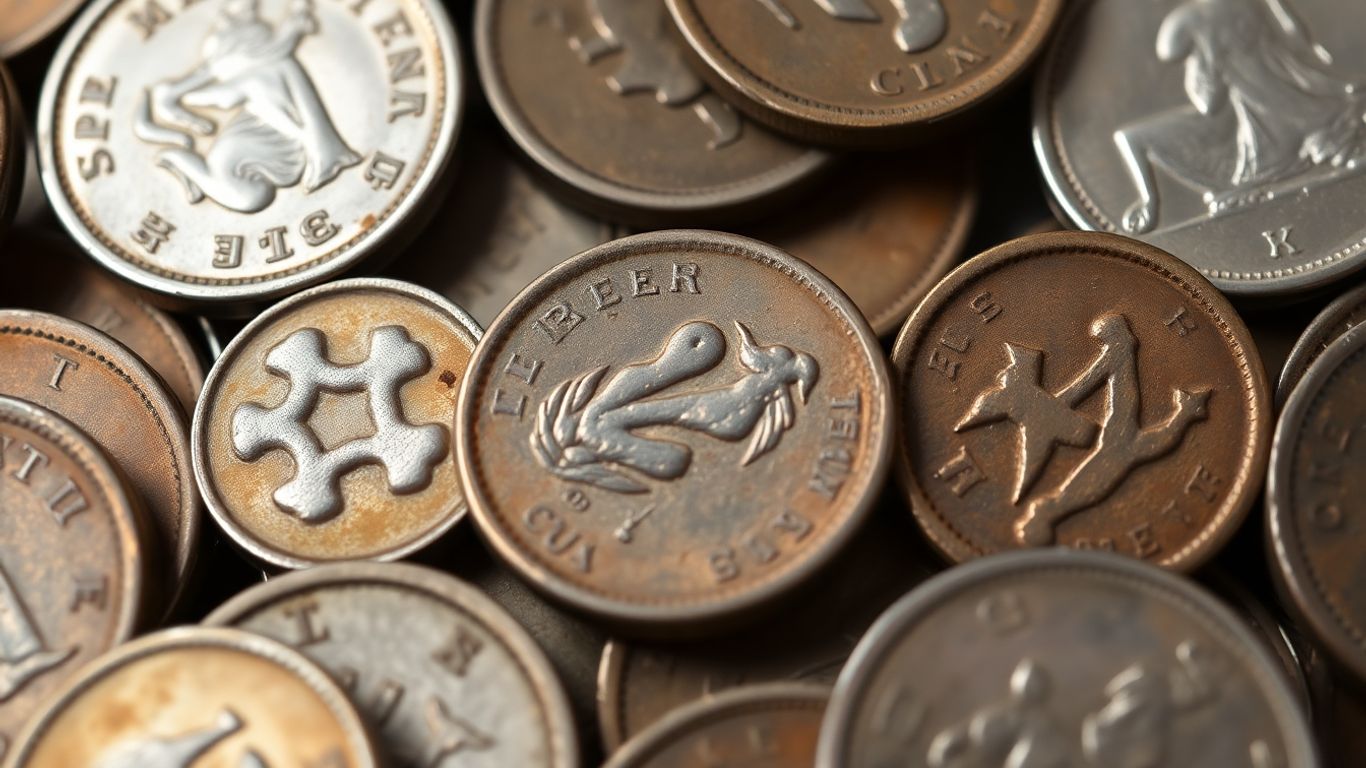
Alright, so we’re moving into coins that have actually seen some action out in the world. A ‘Good’ grade coin, often noted as G-4, means it’s been around the block a few times. You can still tell what the coin is, but don’t expect much in the way of sharp details. The rims are usually pretty full, which is a good sign it’s not completely beat up, but the design elements? They’re pretty much flattened out. Think of it like a favorite old t-shirt – you know what it is, but all the graphics are faded and soft. The lettering might be there, but it’s often merged into the rim, making it a bit of a puzzle to read.
Very Good (VG-8): Major Design Elements Visible
Stepping up a bit, we have ‘Very Good,’ or VG-8. These coins have definitely been used, but they’re holding up a bit better than the ‘Good’ ones. You’ll notice that most of the main design features are still visible, even if they’re worn. The lettering is usually readable, and the rims are generally full and distinct. It’s like that t-shirt again, but maybe the graphic is still mostly there, just a little fuzzy around the edges. You can make out the key parts of the design without too much squinting.
Fine (F-12): Even Wear Across The Surface
Now we’re getting to ‘Fine,’ or F-12. Coins in this condition show wear all over, but it’s pretty even. It’s not like one spot is totally smooth and another is still a bit raised. The overall design elements are still pretty clear, and the lettering is sharp and readable. The rims are well-defined and separate nicely from the main part of the coin. It’s like the t-shirt has been washed many times, but the wear is consistent, and you can still clearly see the design and read the text.
Very Fine (VF-20): Moderate Wear, Key Details Remain
Finally, we hit ‘Very Fine,’ or VF-20. These coins have moderate wear, but here’s the key: the important details are still there. You can see them clearly. For coins with ‘LIBERTY’ on them, all those letters will be visible and easy to read. The rims are full and evenly separated from the rest of the coin. It’s like our t-shirt has been worn a fair bit, but the important parts of the design are still bold and clear, and the fabric hasn’t gotten thin anywhere specific. It’s a nice balance between having seen some circulation and still looking pretty good.
Here’s a quick rundown of what to look for:
- Good (G-4): Design is flat, lettering may be worn into the rim.
- Very Good (VG-8): Major design elements are visible, lettering is readable.
- Fine (F-12): Even wear across the surface, details are clear, rims are distinct.
- Very Fine (VF-20): Moderate wear, key details remain sharp, all lettering is clear.
When you’re looking at coins in the Good to Very Fine range, you’re essentially assessing how much of the original detail has been smoothed away by circulation. It’s a gradual process, and each grade represents a distinct level of wear, but the core elements of the design and inscriptions are still recognizable to varying degrees.
Approaching Uncirculated: Extremely Fine To About Uncirculated
We’re getting close to the really good stuff now, the coins that haven’t seen much action in the real world. This section covers coins that are just a hair away from being perfect, showing only the faintest signs of wear. Think of them as the star athletes who are still in peak condition but might have a tiny scratch here or there from a tough game.
Extremely Fine (XF-40/45): Light Wear, Bold Inscriptions
Coins in this grade are really starting to look good. You can still see most of the details clearly, but the highest points of the design, like the very top of a portrait’s hair or the tips of a shield, might be a little worn down. It’s like a favorite book that’s been read a few times – the cover might have a few scuffs, but all the pages are intact and readable. The lettering is usually sharp and easy to read. These coins often have a nice shine, too, hinting at their original mint luster.
- Wear: Primarily on the highest design points.
- Details: Most design elements are clear and bold.
- Luster: Often retains a good amount of original mint shine.
About Uncirculated (AU-50): Slight Traces of Wear
Now we’re talking about coins that have barely been handled. An About Uncirculated coin has seen very little wear, and it’s usually only visible on the absolute highest points of the design. You’ll still see a lot of that original mint luster, which is a big deal for collectors. It’s like a brand-new car that’s been driven just a few miles – it looks almost perfect, but you might notice a tiny bit of wear on the tires.
These coins are so close to being uncirculated that it’s easy to miss the subtle signs of wear if you’re not looking closely. The key is that the wear is minimal and confined to the most exposed areas.
Very Choice About Uncirculated (AU-58): Minimal Wear Hints
This is the top of the About Uncirculated category, often called "Almost Uncirculated." These coins are incredibly nice. They might have the faintest hint of wear, perhaps a tiny bit of friction on the very highest points, but they still have a fantastic amount of original luster. It’s the kind of coin that makes you do a double-take because it looks so close to perfect. If you’re looking to buy coins that are nearly uncirculated without paying the absolute top dollar for a Mint State coin, AU-58 is a sweet spot. Many collectors consider these coins to be visually indistinguishable from Mint State coins without close inspection. If you’re thinking about selling old coins, understanding these grades is key to setting realistic expectations for your collection.
| Grade | Wear Description |
|---|---|
| AU-50 | Slight wear on highest points; some luster remains |
| AU-58 | Very faint wear on highest points; strong luster |
Mint State: The Uncirculated Spectrum
Alright, so we’ve talked about coins that have seen some action out in the world. Now, let’s move on to the really shiny stuff: Mint State coins. These are the ones that never made it into circulation. Think of them as having left the mint and gone straight into a collector’s album, or at least, that’s the ideal.
Mint State Basal (MS-60)
This is where the uncirculated journey begins. An MS-60 coin has no wear on its highest points, which is the main thing. But, don’t expect perfection here. You’ll likely see some subdued shine, maybe some fine lines called hairlines, and definitely some marks from being handled or stored. It’s uncirculated, sure, but it’s got some stories to tell just by looking at it.
Mint State Acceptable (MS-63)
Stepping up a bit, we have MS-63. These coins are still uncirculated and generally look pretty good. They might have a slightly less vibrant glow than higher grades, and while they should be free of major nicks or obvious contact marks, they’re not exactly pristine. The strike might also be a bit weaker than you’d hope for. Still, it’s a solid uncirculated coin.
Mint State Choice (MS-65)
Now we’re getting somewhere! An MS-65 coin is considered ‘Choice’ Mint State. These usually have a better strike than the lower grades, meaning the design details are sharper. They’ll have minor marks, sure, but they’re typically not in the most important areas of the coin. This is often considered the baseline for a truly desirable uncirculated coin. They generally have good luster and eye appeal, making them quite attractive to collectors. You can find some really nice examples in this Mint State (MS) coins category.
Here’s a quick look at how the numbers break down within the Mint State range:
| Grade Range | Description |
|---|---|
| MS-60 to 64 | Mint State Choice |
| MS-65 to 70 | Mint State Gem |
The difference between grades, even by a single point, can sometimes mean a significant jump in value. It’s all about how well the coin avoided wear and how well it was struck from the beginning.
Gem Quality: Near Perfect Mint State Coins
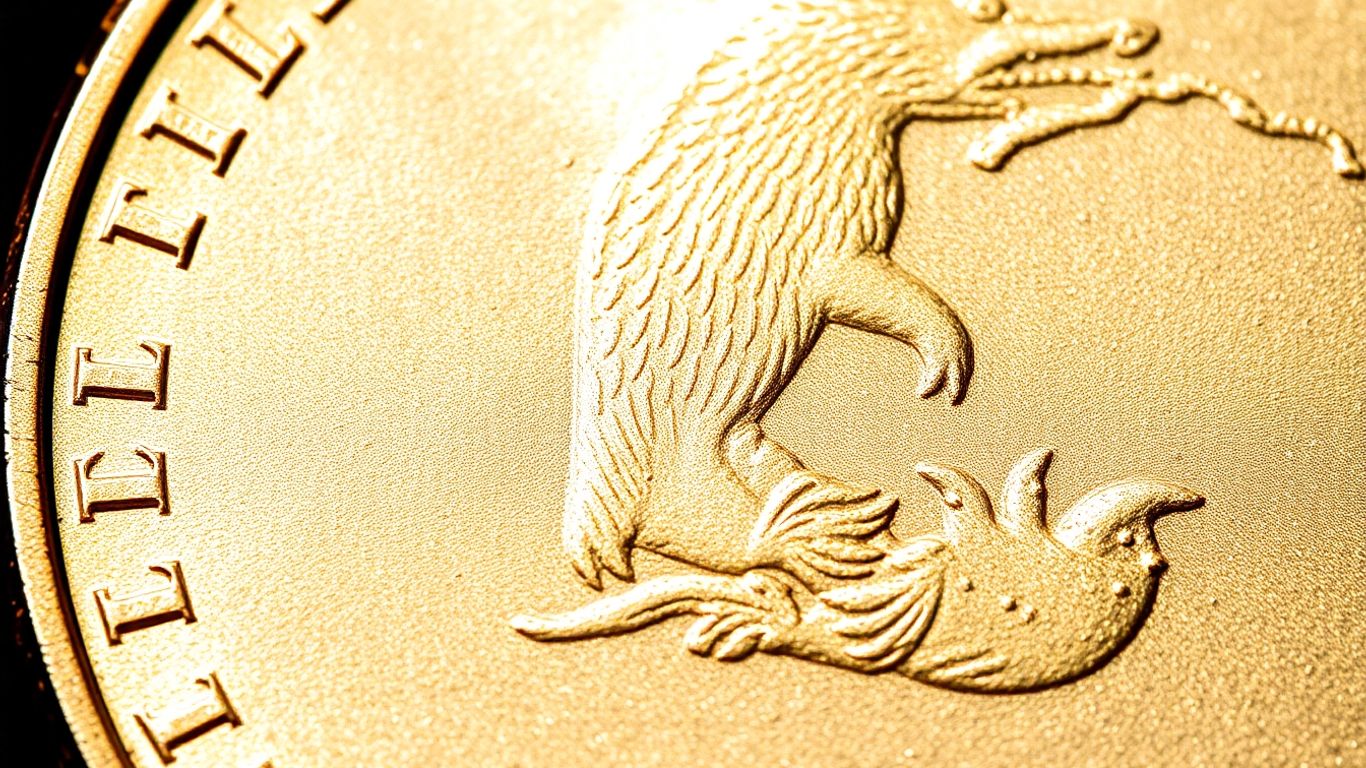
Alright, so we’ve talked about coins that have seen some action and those that are just shy of perfect. Now we’re getting into the really special stuff: Gem Quality Mint State coins. These are the ones that make collectors’ eyes light up. We’re talking about coins that look like they just rolled off the minting press, with very, very little to complain about.
Mint State Gem (MS-65 to MS-69)
When a coin hits the MS-65 mark, it’s officially considered "Gem." This means it’s uncirculated, and while it might have a few minor imperfections, they’re usually not in the main focal areas of the coin. Think of it as a really nice car that has a tiny scratch on the bumper that you’d probably miss if you weren’t looking for it. The strike is usually pretty good, meaning the design details are well-defined, and there’s a good amount of original shine, or luster, still present. As you move up the scale from MS-65, these imperfections become fewer and less noticeable.
Premium Quality Mint State (MS-68)
Stepping up to an MS-68, we’re getting really close to perfection. These coins are exceptionally well-struck, and any imperfections are incredibly subtle. You’d likely need magnification, and even then, you’d have to search hard to find them. The luster is typically brilliant and captivating. These are the kinds of coins that really stand out in a collection.
Almost Perfect Mint State (MS-69)
An MS-69 coin is just one tiny step away from being absolutely flawless. These coins are virtually perfect in every way. They boast a fantastic strike, vibrant luster, and any marks or imperfections are so minuscule and insignificant that they’re barely perceptible, even under magnification. These are the coins that most collectors aspire to own, representing the pinnacle of uncirculated condition without quite reaching the absolute perfect score.
Here’s a quick look at what separates these top-tier grades:
- MS-65 (Gem Uncirculated): Above-average strike, minor marks, often outside focal areas.
- MS-68 (Premium Gem Uncirculated): Very well-struck, very few tiny imperfections, barely visible.
- MS-69 (Superb Gem Uncirculated): Near-perfect strike, minimal imperfections, extremely high eye appeal.
The difference between an MS-65 and an MS-69 might seem small on paper, but in the world of coin collecting, it’s a significant leap. It’s all about those tiny details – the absence of distracting marks, the boldness of the strike, and the intensity of the original mint luster. These factors combine to create a coin that is not just uncirculated, but truly exceptional.
The Pinnacle: Mint State Perfect
Mint State Perfect (MS-70): The Ultimate Grade
Alright, so we’ve talked about coins that look pretty darn good, right? But what about the absolute best of the best? That’s where the MS-70 grade comes in. This is the top dog, the gold standard, the coin that pretty much every collector dreams of finding. It’s the perfect coin, plain and simple. When a coin gets this grade, it means it’s as close to flawless as you can possibly get straight from the mint.
Characteristics of a Perfect Coin
So, what makes a coin earn that coveted MS-70? It’s a combination of things, really. First off, the strike has to be absolutely phenomenal. Every single detail, from the tiniest hair on a portrait to the sharpest point on a design element, needs to be perfectly rendered. There can’t be any weak spots or mushy areas. Then there’s the surface. For an MS-70, the surface has to be pristine. We’re talking no scratches, no nicks, no dings, no bag marks – nothing. Even under magnification, you shouldn’t find any imperfections. It’s like it just came off the press and was immediately put into a protective holder without ever touching anything.
Eye Appeal and Luster in MS-70
Beyond just the technical details, an MS-70 coin has to have amazing eye appeal. This is where that original mint luster really shines through. It should have a bright, vibrant glow that seems to dance across the surface. The way the light plays off the coin is just stunning. It’s not just about being free of flaws; it’s about looking absolutely spectacular. Think of it as the coin equivalent of a flawless diamond – it just catches your eye and holds it. It’s that combination of perfect strike, perfect surface, and dazzling luster that makes an MS-70 coin so special and sought after.
Understanding The Numeric Modifiers
So, you’ve seen those coin grades like MS-65 or AU-58 and wondered what all those numbers mean, right? It’s not just random digits tacked onto a letter. These numbers are actually a big part of the whole grading system, giving us a much finer look at a coin’s condition than just the basic letter grade alone.
The 70-Point Scale Explained
The whole system is built on a 70-point scale, often called the Sheldon Scale. Think of it as a ruler for coin condition. The lowest possible score is 1, and the absolute highest is 70. The higher the number, the better the coin’s condition and, generally, the more it’s worth. This scale was developed way back to give collectors and dealers a consistent way to talk about coins, from ones that are barely recognizable to those that look like they just came off the minting press.
Numeric Values Within Letter Grades
Now, those letters you see – like ‘AU’ for About Uncirculated or ‘MS’ for Mint State – they represent a general range of condition. But within each of those letter grades, there are specific numbers that tell a more detailed story. For example, ‘AU’ covers coins from AU-50 all the way up to AU-59. A coin graded AU-50 might have a bit more wear or a few more marks than one graded AU-58, which is considered the top of the AU range. It’s like saying someone is ‘tall’ versus saying they are ‘6’4"’ – the number gives you a lot more precision.
Here’s a quick look at how some of those numbers fit into the broader categories:
| Letter Grade | Numeric Range | Description |
|---|---|---|
| Poor (P) | 1 | Barely identifiable |
| Fair (F) | 2 | Identifiable details present |
| About Good (AG) | 3 | Significant wear, but some features visible |
| Good (G) | 4 | Heavily worn, major features visible |
| Very Good (VG) | 8, 10 | Major design elements visible, some detail lost |
| Fine (F) | 12, 15 | Even wear across the surface |
| Very Fine (VF) | 20, 25, 30, 35 | Moderate wear, key details remain |
| Extremely Fine (XF) | 40, 45 | Light wear, bold inscriptions |
| About Uncirculated (AU) | 50, 53, 55, 58 | Slight traces of wear, hints of luster |
| Mint State (MS) | 60-70 | No wear, varying degrees of marks and luster |
The Significance of Incremental Differences
It might seem like a small jump from, say, MS-65 to MS-66, but those single-digit increases can actually mean a lot, especially at the higher end of the scale. A coin that gets an MS-65 is considered a ‘Gem’ grade, meaning it’s above average with good luster and only minor imperfections. Pushing up to an MS-66 means it’s ‘Choice Gem’ – even better, with fewer or less noticeable marks and perhaps superior luster. The difference between an MS-68 (‘Premium Gem’) and an MS-69 (‘Almost Perfect’) is where you’re looking at incredibly subtle details, like the placement and severity of the tiniest marks, or the intensity of the original mint luster. These small differences are what collectors who are chasing the very best specimens focus on. It’s this level of detail that makes grading such a fascinating part of collecting, especially for rare coins like some classic Chinese provincial coins.
You’ll also sometimes see a plus sign (+) after a grade, like AU-58+. This doesn’t mean it’s a whole new grade. It just tells you that the coin is at the very top end of its numerical grade, maybe just a hair better than other coins with the same number. It’s like getting an "A" in a class, but the teacher adds a little star to show you were one of the best in the class.
Understanding these numbers helps you know exactly what you’re looking at when you see a coin’s grade. It’s more than just a label; it’s a detailed report card for the coin itself.
Beyond The Sheldon Scale: Adjectives And Terms
So, we’ve talked a lot about numbers and letters, like MS-65 or VF-20. But sometimes, you’ll hear other words thrown around when people discuss coins. These aren’t part of the main 70-point scale, but they give you a better feel for what a coin looks like, especially when it comes to uncirculated pieces.
Brilliant Uncirculated (BU) Defined
This term, BU, is pretty common, especially for modern coins. Basically, it means a coin that looks like it just came from the mint. It should have its original mint luster and be free from any wear. Think of it as a step up from just "uncirculated." While an MS-60 coin is technically uncirculated, it might have some bag marks or other minor issues. A BU coin is generally expected to be a bit nicer, though it doesn’t have a specific numerical grade attached to it like the Sheldon scale does. It’s more of a general description of a coin’s appearance.
Proof Coins: A Different Category
Now, proof coins are a whole other ballgame. These aren’t meant for everyday spending. They’re made specifically to be collectibles, with special finishes. They’re struck at least twice, which gives them a really sharp, detailed look with a mirror-like background and frosted design elements. Because of how they’re made, they don’t really fit neatly into the regular grading scale. You’ll often see them graded separately, like PR-65 or PR-70, but the ‘PR’ stands for Proof, not Mint State. It’s important to know this distinction if you’re looking to buy collectible coins.
The Importance of Original Luster
Luster is that shiny, almost liquid-like appearance a coin has when it’s new. It’s created by the way the metal flows during the minting process. Over time, coins can lose this luster, especially if they’ve been handled or circulated. When grading, especially for higher-end coins, the quality and presence of original luster are a big deal. A coin that still has its full, vibrant luster will almost always be worth more than one that looks dull or has had its luster diminished. It’s a key indicator of a coin’s overall condition and how well it’s been preserved. Think of it like the difference between a brand-new car and one that’s been driven for a few years – the shine is just different.
Here’s a quick rundown of what to look for regarding luster:
- Full and Bright: This is the ideal. The luster should be strong and cover the entire coin surface.
- Slightly Diminished: Some luster might be gone, or it might not be as vibrant, but the coin still looks good.
- Weak or Gone: The coin looks dull, and you can barely see any original shine. This usually happens with circulated coins or those that have been cleaned.
When you’re looking at coins, especially those advertised as uncirculated or BU, pay close attention to how they shine. That original mint luster is a big part of what makes a coin desirable and valuable. It’s not just about the absence of wear; it’s about the presence of that special, fresh-from-the-mint look.
Factors Influencing Coin Grade
Strike Quality and Detail
When a coin is made, it’s struck by dies. The quality of that strike really matters. A coin with a bold, sharp strike will show all the fine details clearly. Think of the hair on a portrait or the lines in a shield – if they’re well-defined, that’s a good sign. Sometimes, the dies themselves might be worn or damaged, leading to weak spots or missing details on the coin. This is especially true for older coins or those from mints that didn’t have the most advanced equipment back in the day. Knowing the typical strike characteristics for a specific coin series can help you spot a well-struck example.
Surface Preservation and Contact Marks
This is a big one. How has the coin been treated since it was made? Even coins that never went into circulation can get marks. These are called contact marks, and they happen when coins bump into each other. The number, size, and location of these marks play a huge role in grading. A coin with just a few tiny marks might still get a high grade, but one with lots of deep scratches or bag marks will be knocked down. It’s all about how well the coin’s surface has been kept clean and free from damage.
Originality of Luster and Eye Appeal
Luster is that original shine or glow a coin has when it comes from the mint. It’s like the coin’s natural beauty. Some coins have a very brilliant, frosty luster, while others might have a duller appearance. This original luster is highly prized. On top of that, there’s "eye appeal." This is a bit more subjective, but it’s basically how attractive the coin is to look at. Does it have pleasing toning? Are the marks distracting? A coin with great luster and eye appeal, even with a few minor imperfections, can sometimes be more desirable than a technically higher-graded coin that looks dull or has unsightly blemishes.
Grading isn’t just about counting flaws; it’s a holistic assessment. A coin’s overall visual impact, combined with its strike and surface condition, all contribute to its final grade. Sometimes, a coin that’s technically not perfect can still be incredibly appealing to collectors.
Wrapping It Up
So, there you have it. We’ve walked through the whole coin grading thing, from coins that look like they’ve been through a rock tumbler to those shiny, perfect ones. It’s a lot to take in, for sure, with all those numbers and letters. But knowing the difference between a ‘Poor’ coin and a ‘Mint State 70’ can really change how you see your collection, or even just that old quarter you found in your pocket. It’s not just about knowing the grade; it’s about appreciating the history and condition each coin holds. Keep this guide handy next time you’re looking at coins, and happy collecting!
Frequently Asked Questions
What is coin grading?
Coin grading is like giving a coin a report card. It’s a way to describe how good a coin’s condition is, from being almost falling apart to looking like it just came from the mint. This helps people know how much a coin might be worth.
Why is there a scale for grading coins?
Before the scale, people described coins using words like ‘Good’ or ‘Excellent,’ but everyone had different ideas about what those words meant. A numbered scale, like the 70-point system, makes it much clearer and more consistent for everyone to understand a coin’s condition.
What does 'Mint State' mean?
Mint State (or MS) means a coin has never been used as money in everyday life. It looks like it just left the place where coins are made. Even within Mint State, there are different levels, from basic uncirculated (MS-60) to nearly perfect (MS-70).
What's the difference between MS-65 and MS-70?
Both are top-notch grades, meaning the coins look great and haven’t been used. An MS-65 coin is considered ‘Gem’ quality, looking very nice with maybe a few tiny marks. An MS-70 coin is absolutely perfect – no flaws at all, even when looked at closely with magnification. It’s the best a coin can be!
What are 'bag marks'?
Bag marks are tiny scratches or dings that coins can get when they’re being made, sorted, or stored, often in large bags. The fewer bag marks a coin has, especially on important parts of the design, the higher its grade will likely be.
What does 'BU' mean?
BU stands for Brilliant Uncirculated. It’s a term used to describe a coin that hasn’t been circulated and still has its original shine or ‘luster.’ It’s not an official grade like those on the 70-point scale, but it tells you the coin looks new and bright.
Do the numbers on the scale really matter that much?
Yes, even small number changes can make a big difference in a coin’s value. For example, a coin graded AU-58 is much more valuable than one graded AU-50 because it has only the tiniest hint of wear, while the AU-50 shows a bit more. It’s all about how close to perfect the coin is.
Who decides a coin's grade?
Professional grading services, like PCGS and NGC, have experts called certified graders. They carefully look at a coin to make sure it’s real, hasn’t been messed with, and then check its condition based on the official grading scale. They are the ones who assign the official grade.