So, you’re looking into 90 percent silver coins, huh? It’s a pretty interesting topic, especially for anyone collecting coins or thinking about investing in silver. These coins have a long history, going way back, and they’re still a big deal today. We’ll break down what makes them special, how to spot them, and what the market looks like, especially as we get into 2026. It’s not just about the silver content; there’s a lot of history and value packed into these pieces.
Key Takeaways
- Ninety percent silver coins, often called ‘junk silver,’ were a standard for U.S. coinage until 1964, containing a significant amount of actual silver.
- The historical journey of silver spans millennia, from ancient currency to its modern role in technology and industry, with 90% silver coins representing a key chapter in its monetary past.
- Identifying these coins involves checking dates (pre-1965 for most U.S. coins), denominations like dimes, quarters, and half-dollars, and understanding mint marks.
- The silver market in 2026 is influenced by both industrial needs, like in electronics and solar power, and investment demand, leading to potential price volatility.
- Collecting 90% silver coins can be a way to own physical silver, offering a balance between collectibility and intrinsic metal value, with strategies like dollar-cost averaging being useful for steady acquisition.
Understanding 90 Percent Silver Coins Explained
When we talk about 90 percent silver coins, we’re usually referring to U.S. dimes, quarters, and half dollars minted before 1965. These coins are often called ‘junk silver’ or ‘constitutional silver’ because their value comes primarily from their silver content, not necessarily their collectible rarity. This pre-1965 coinage represents a significant chunk of silver’s history in everyday commerce. Before the mid-1960s, these coins were made with a mix of 90% silver and 10% copper, which gave them durability for circulation while still holding a good amount of precious metal. It’s this specific composition that collectors and investors focus on today.
Historical Significance of Silver Coinage
Silver has been used as money for thousands of years. Think ancient Greece and Rome; their coins were often made of silver and were accepted across vast trade routes. This metal was so important that it formed the backbone of many economies. It wasn’t just about value; it was about trust and standardization. Having coins made of a consistent silver purity meant people knew what they were getting, which is a big deal when you’re trying to buy or sell goods.
- Ancient Roots: Silver was among the first metals used for coinage, dating back to around the 7th century BCE.
- Global Trade: Silver coins facilitated trade across continents for centuries.
- Monetary Standard: Many countries based their currency systems on silver or a bimetallic standard (gold and silver).
The transition away from silver in coinage wasn’t a sudden event but a gradual process driven by economic pressures and the increasing value of silver itself. As silver prices rose, the metal content of coins became worth more than their face value, leading to hoarding and melting.
The Transition to Modern Silver Coinage
Things started to change in the 20th century. The U.S. switched from 90% silver to a copper-nickel clad composition for dimes and quarters in 1965, and for half dollars in 1971. This wasn’t a random decision; it was largely due to the rising price of silver. The government found it was becoming too expensive to put that much silver into every coin. So, they changed the metal mix to make coins that were more affordable to produce and less likely to be taken out of circulation because their metal value exceeded their face value. This shift marked the end of an era for circulating silver coinage in the United States.
Why 90 Percent Silver Matters to Collectors
For collectors, 90% silver coins are interesting for a few reasons. First, they offer a tangible link to American history. Holding a coin minted in the early 1900s, knowing it circulated during major historical events, is pretty cool. Second, they represent a way to own physical silver. Even if you’re not a numismatist focused on rare dates or mint marks, these coins provide a way to invest in silver at a relatively low premium over the spot price. They are easily divisible, meaning you can sell a few coins at a time if needed, which is a big plus compared to larger silver bars. Plus, they’re just neat to look at and handle, offering a different experience than modern, non-silver coins.
The Evolution of Silver in Global Commerce
Ancient Monetary Foundations
Silver’s story really kicks off way back, around 3000 BCE, in places like Anatolia. That’s where folks figured out how to heat up ore, specifically galena, to get the silver out. It wasn’t just about finding it, though; it was about making it useful. Pretty soon, places like Mesopotamia were using silver rings as a kind of early money, standardized by weight. Think of them as the first coins, even before actual coins were minted. Egypt was importing silver, and in places like Greece, they started minting actual coins, like the famous Athenian Tetradrachm. These weren’t just local currencies; they traveled. Athenian coins showed up in India, Roman coins in China. Silver was the metal that connected the ancient world, bridging different cultures and economies.
Silver’s Role in Medieval Economies
After the Roman Empire kind of fell apart, things got messy economically. But silver was there to help rebuild. It became the backbone of trade again. You had Islamic coins, called Dirhams, moving from Spain all the way to Central Asia. Vikings were trading and hoarding silver they got from places like Baghdad, bringing it back to Britain. Italian bankers were moving money around, backed by silver, from the Middle East to Europe. It was a slow process, but by the year 1500, these separate trade networks were starting to merge, creating a bigger, more connected silver economy. It was setting the stage for what was to come.
The Impact of New World Silver Discoveries
Then came the big one: the discovery of massive silver deposits in the Americas, especially in places like Potosí (in modern-day Bolivia) and Zacatecas (in Mexico). Starting around the mid-1500s, this influx of silver was enormous. We’re talking about tens of thousands of tons flooding into Europe and then spreading across the globe. This wasn’t just a little extra silver; it fundamentally changed global trade. Spanish
Key Historical Milestones in Silver Coinage
Silver’s journey through history is pretty wild, tied up with pretty much everything from empires rising and falling to how we trade stuff. It wasn’t just about making coins; it was about power, trade, and sometimes, just plain survival. Let’s look at some big moments.
The Latin Monetary Union and Standardization
Back in the mid-1800s, Europe was a bit of a mess when it came to money. Different countries used different coins, and trying to trade across borders was a headache. So, in 1865, a bunch of countries – France, Belgium, Italy, and Switzerland – got together and formed the Latin Monetary Union. The big idea was to standardize their silver coins. They agreed on a common weight and purity, specifically a 5-franc coin made with 25 grams of 90% silver. This made it way easier for people and businesses to trade between these countries. It was a pretty smart move for boosting commerce.
The ‘Crime of 1873’ and Demonetization
This one’s a bit controversial, hence the name. In 1873, the United States passed a law that, without much fanfare, stopped minting silver dollars. Before this, both gold and silver were used as the basis for the dollar. This move effectively put the U.S. on a gold standard. Critics, especially those in the silver-producing West, called it the ‘Crime of 1873’ because they felt it unfairly hurt silver miners and farmers who relied on silver’s value. It really changed how money worked in the U.S. and led to a lot of political fights.
Silver’s Role During World Wars
World War I and World War II were massive events that really put a strain on economies, and silver was no exception. Governments needed vast amounts of metal for the war effort – not just for coins, but for industrial uses too. In some cases, silver reserves were used to help finance the war. For example, the U.S. even melted down millions of silver dollars to get the silver needed for shell casings. It shows how critical even a seemingly simple metal like silver could be in times of global conflict.
The End of Silver Backing for Currencies
For a long time, paper money was backed by precious metals like gold or silver. You could, in theory, take your paper bill to the bank and exchange it for a certain amount of silver. But over time, especially in the 20th century, countries started moving away from this. The U.S. officially ended the convertibility of silver certificates into actual silver in 1968. This marked a major shift from commodity-backed money to fiat currency, where the value is based on government decree rather than a physical asset. It was the final nail in the coffin for silver’s role as a primary monetary metal in most major economies.
The history of silver coinage isn’t just a story of metal; it’s a narrative of human ambition, economic shifts, and the constant search for a reliable store of value and medium of exchange. From ancient trade routes to modern financial systems, silver has played a starring role.
Identifying 90 Percent Silver Coins
So, you’ve got some old coins lying around, maybe inherited them or found them at a flea market. How do you know if they’re the "90 percent silver" kind we’re talking about? It’s not as complicated as it sounds, but there are a few things to look for.
Common Dates and Denominations
Most of the 90 percent silver coins you’ll find in the US were made before 1965. Think dimes, quarters, and half-dollars. The US Mint switched to a copper-nickel clad composition starting in 1965, so anything minted that year or later is generally not going to be 90 percent silver (though there are some exceptions for special collector issues, but we’re talking about regular circulation coins here).
Here’s a quick rundown of the common denominations and their typical silver years:
- Dimes: 1892-1945 (Barber Dimes, Mercury Dimes)
- Quarters: 1892-1947 (Barber Quarters, Standing Liberty Quarters)
- Half-Dollars: 1839-1964 (Seated Liberty Half Dollars, Barber Half Dollars, Walking Liberty Half Dollars, Franklin Half Dollars)
- Dollars: 1878-1935 (Morgan Dollars, Peace Dollars)
It’s important to remember that these are general ranges, and there are always specific exceptions or variations. Always double-check the date and the specific coin type.
Mint Marks and Their Significance
Ever notice a tiny letter on a coin, usually near the date or on the reverse? That’s the mint mark, and it tells you where the coin was made. For 90 percent silver coins, the mint mark can sometimes affect its value, especially for rarer dates or mints. The main US mints that produced these coins were:
- P – Philadelphia (often no mint mark on older coins)
- D – Denver
- S – San Francisco
- CC – Carson City (these are particularly sought after by collectors)
For example, a 1901-S Barber Quarter is a very rare and valuable coin, while a 1901 Philadelphia issue is much more common. So, that little letter can make a big difference!
Understanding Coin Grades and Condition
Okay, so you’ve identified a coin as being 90 percent silver. Now what? The condition of the coin, or its "grade," plays a huge role in its value. A coin that looks like it just came off the minting press will be worth a lot more than one that’s heavily worn, scratched, or damaged. Coin grading is a whole science in itself, but for basic identification, you can think of it on a spectrum:
- Uncirculated (Mint State): Looks brand new, no wear on the high points.
- Extremely Fine (XF): Very light wear, but details are still sharp.
- Very Fine (VF): Moderate wear, but the main design elements are clear.
- Fine (F): Significant wear, some details are flattened.
- Good (G): Heavy wear, the coin is barely recognizable.
Professional grading services exist to give coins a precise numerical grade (like MS-65 for Mint State 65), but for most collectors just starting out, being able to tell the difference between a worn-out coin and one that’s in pretty good shape is a good start. The less wear and damage, the higher the grade, and generally, the higher the value, especially for silver coins where the melt value is also a factor.
When you’re looking at 90 percent silver coins, remember that their value comes from two places: the silver content itself (the "melt value") and their numismatic value, which is based on rarity, condition, and historical significance. Sometimes, the silver content is the main driver of price, especially for common dates in lower grades. Other times, a rare coin in top condition can be worth many times its silver weight.
The Market Dynamics of Silver in 2026
Factors Influencing Silver Prices
So, what’s really moving the needle on silver prices these days? It’s a mix of things, honestly. For years, it felt like silver was just kind of hanging out, not doing much. But lately? Things have gotten a lot more interesting. We’re seeing a real shift, and it’s tied to how much silver is actually out there versus how much people want. The days of easily accessible, cheap silver are pretty much over.
Industrial Demand vs. Investment Demand
It’s not just collectors or people looking to hedge against inflation anymore. The real story in 2026 is how much industry needs silver. Think about all the new tech – electronics, solar panels, even medical stuff. They all use silver, and they need a lot of it. This industrial pull is a big deal because it’s consistent. Then you have investors, who can be a bit more flighty, jumping in and out based on market news. When both groups are buying, prices tend to go up. But right now, the industrial side is really the driving force, creating shortages that investors are noticing.
Expert Predictions for Silver’s Future
What are the folks who watch this stuff for a living saying? Well, the chatter is pretty positive. Some analysts are pointing to the gold-to-silver ratio, which has been dropping. That usually means silver is outperforming gold. If that trend continues, and if gold keeps climbing like some predict, silver could see some serious gains. We’re hearing numbers thrown around that would have seemed wild just a few years ago. It’s not just a short-term bump; many think this is the start of silver finally getting the attention it deserves.
Here’s a quick look at what’s been happening:
- Supply Shortages: For about five years straight, we’ve seen more silver being used than mined. This has really eaten into stockpiles.
- Geopolitical Factors: Trade tensions and countries labeling silver as a ‘critical metal’ have made supply chains more complicated and sometimes tighter.
- Asian Demand: Countries like India and China are buying significant amounts of silver, adding pressure to global supplies.
The market feels different now. It’s not just about what happened in the past; it’s about what’s happening right now with technology and global economics. The old ways of thinking about silver prices just don’t seem to fit anymore.
Collecting Strategies for 90 Percent Silver
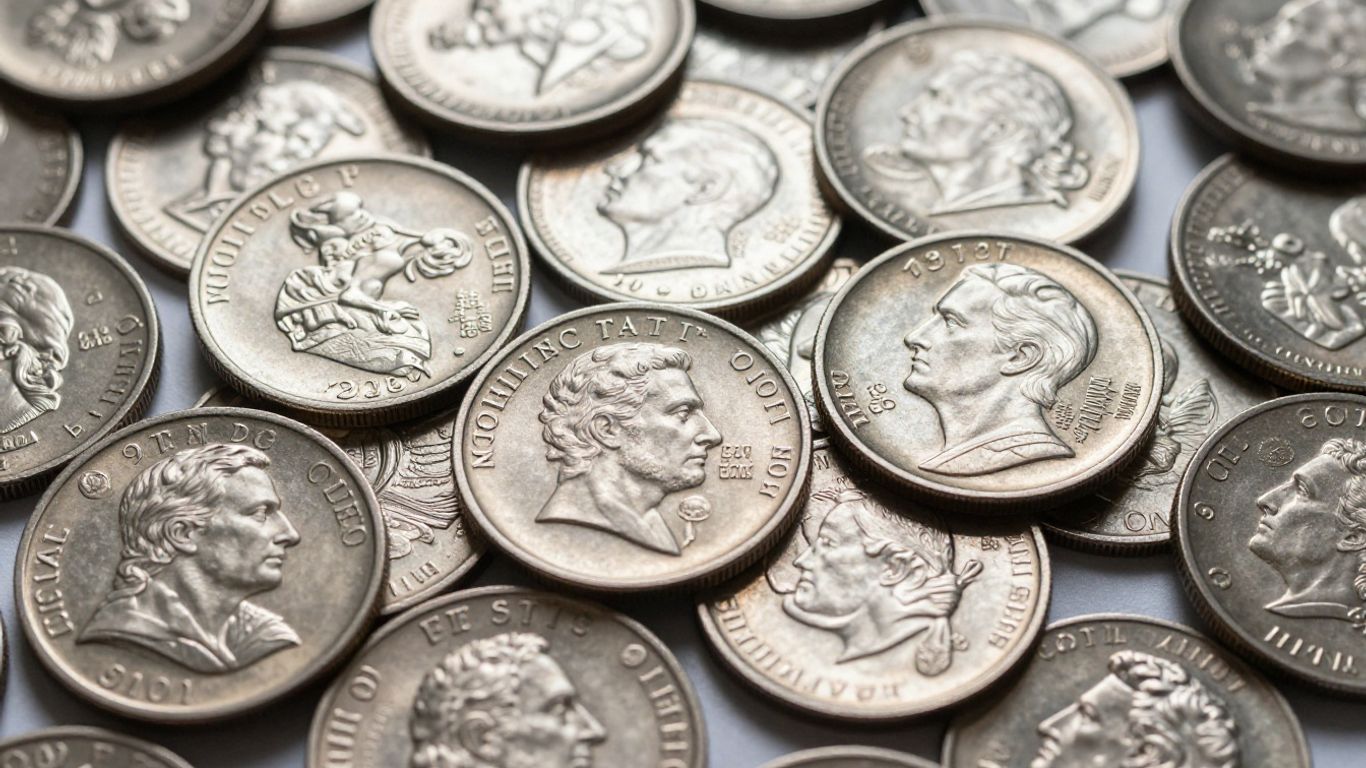
So, you’re looking to get into collecting 90 percent silver coins, huh? It’s a pretty neat area to explore, especially with how much silver’s been in the news lately. Building a collection doesn’t have to be some super complicated thing. You can approach it in a few different ways, and honestly, finding the right strategy for you is half the fun.
Building a Diversified Collection
Think of it like building a good playlist – you don’t want just one type of song, right? The same goes for silver coins. You might start with some common circulated pieces, maybe some old dimes and quarters you find at a local coin shop. Then, you could branch out into specific dates or mint marks that catch your eye. Maybe you’re interested in coins from a particular era, like the ones minted before 1965. Or perhaps you want to focus on a specific denomination, like just collecting silver dollars. Diversifying means you’re not putting all your eggs in one basket, and it makes the collection more interesting to look at and learn about. It also spreads out your risk if one particular type of coin suddenly becomes less popular.
The Role of Dollar-Cost Averaging
Trying to time the market to buy silver at its absolute lowest is a tough game, even for the pros. Honestly, most of us don’t have the time or the crystal ball for that. A much more sensible approach is something called dollar-cost averaging. This is where you invest a set amount of money on a regular schedule, say, every month. If the price of silver is down that month, your fixed amount buys you more silver. If the price is up, you buy a bit less. Over time, this evens out your average purchase price and takes a lot of the guesswork and emotion out of buying. It’s a steady way to build up your holdings without stressing about daily price swings. It’s a bit like setting up a savings plan, but for your silver stash.
Where to Find Quality Silver Coins
Finding the right coins is key. You’ve got a few options here. Local coin shops are great for seeing coins in person and talking to dealers, though prices can sometimes be a little higher. Online marketplaces are vast, offering a huge selection, but you need to be careful about authenticity and condition. Auctions, both live and online, can sometimes yield good deals, but they require quick decisions. Don’t forget about coin shows – they’re fantastic places to browse a wide variety of coins and often find dealers specializing in 90 percent silver. For those looking for a more accessible entry point, junk silver continues to be a favored investment for those seeking physical silver, offering a more accessible entry point compared to newly minted bullion due to potentially lower premiums.
Building a collection of 90 percent silver coins is a journey, not a race. Focus on learning what interests you, be consistent with your buying strategy, and always buy from reputable sources. The enjoyment you get from the coins themselves, and the knowledge you gain along the way, is often more important than chasing the highest profit margins.
Comparing Silver Coins to Other Bullion Forms
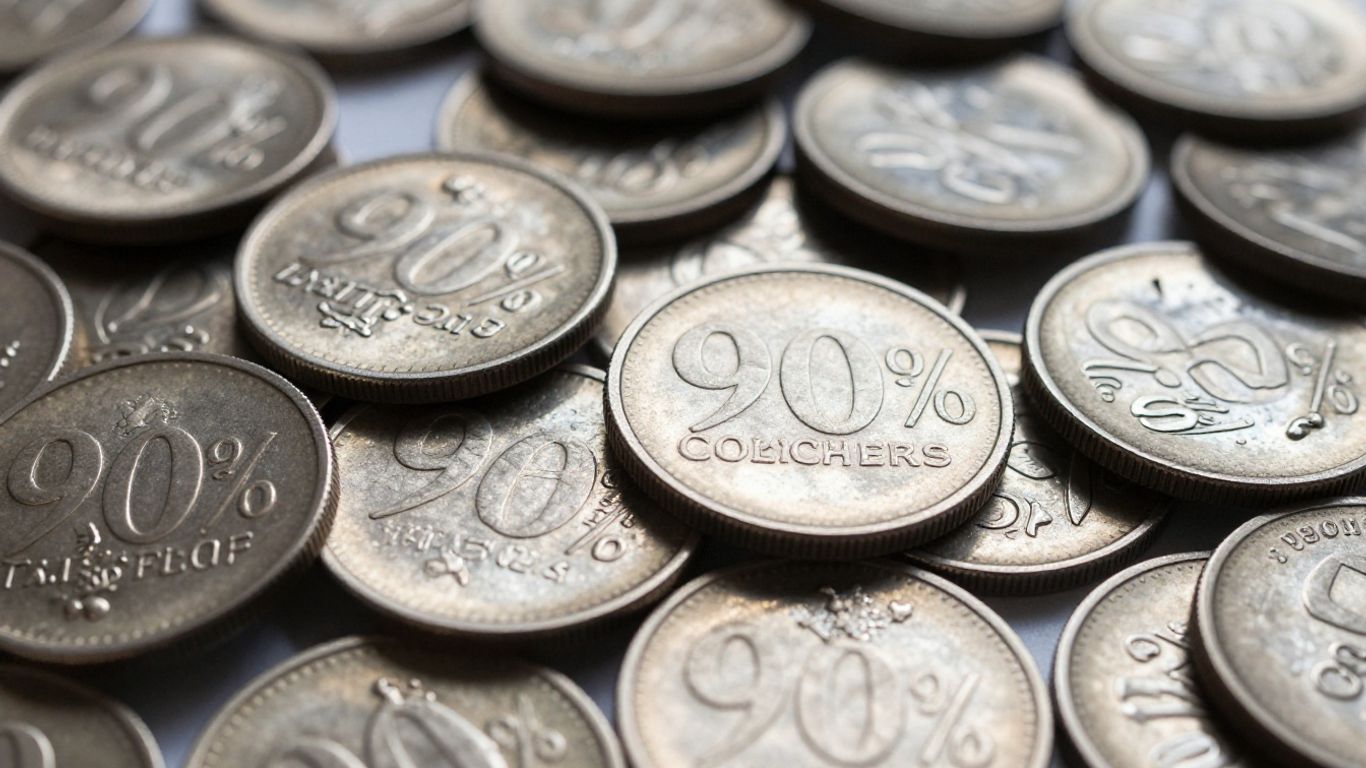
Silver Coins Versus Silver Bars
When you’re looking to buy physical silver, you’ll mostly see two options: coins and bars. Both let you own the actual metal, which is pretty cool, but they’re not quite the same. Think of it like buying eggs – you can get a carton of a dozen, or maybe just a couple of loose ones. It depends on what you need.
Coins, especially the ones from government mints like American Eagles or Canadian Maple Leafs, are super recognizable everywhere. They’re easy to trade because everyone knows what they are. Bars, on the other hand, are usually more straightforward. You can get a lot of silver in a bar, and they often have lower markups over the silver price itself. This means if you’re buying a big chunk of silver, bars can sometimes be a bit cheaper per ounce.
Here’s a quick look at how they stack up:
| Feature | Silver Coins | Silver Bars |
|---|---|---|
| Recognition | High, especially government-minted | High, from reputable refiners |
| Premiums | Generally higher over spot price | Generally lower over spot price |
| Divisibility | Excellent, available in small units (e.g., 1 oz) | Less divisible, sold as a whole unit |
| Best For | Flexibility, smaller purchases, collectors | Large volume purchases, cost-efficiency |
Liquidity and Divisibility Considerations
This is where things get interesting, especially if you think you might need to sell some of your silver later on. Coins are usually way easier to break up and sell. If you have a bunch of one-ounce silver coins, you can sell just one or two if you need some cash. It’s like having a bunch of small bills instead of one big one. This makes them really flexible.
Bars are different. If you have a big 100-ounce bar, you can’t just sell 10 ounces of it. You have to sell the whole bar. This can make them a bit less convenient if you need to access just a small part of your silver stash. So, while bars might be cheaper to buy in bulk, coins often win when it comes to being able to sell off smaller amounts easily.
Premiums and Cost-Effectiveness
When you buy silver, you’re not just paying the raw market price (that’s called the ‘spot price’). You also pay a ‘premium’ on top of that. This premium covers things like the cost of minting the coin or casting the bar, the dealer’s profit, and sometimes even a bit of collector value.
Generally, silver coins have higher premiums than silver bars. This is because making coins involves more intricate designs and security features. Bars, especially larger ones from well-known refiners, tend to have lower premiums. So, if your main goal is to get the absolute most silver for your money, and you’re buying a significant amount, bars are often the more cost-effective choice. However, for smaller purchases or if you value the ease of trading smaller units, the slightly higher premium on coins might be worth it.
The choice between coins and bars often comes down to your personal goals. Are you looking to stack as much silver as possible for the lowest price per ounce, or do you need the flexibility to sell smaller portions easily down the road? Thinking about how you’ll use your silver in the future can really help guide your decision.
The Industrial Applications Driving Silver Demand
It’s easy to think of silver just as shiny coins or pretty jewelry, right? But honestly, that’s only part of the story. Silver is actually a workhorse in a ton of industries you might not even think about. Its unique properties make it super useful, and that demand from factories and tech companies is a big deal for the metal’s overall market.
Silver in Electronics and Technology
Think about your smartphone. That little device probably has a bit of silver in it, mostly in its electrical contacts and circuit boards. It’s a great conductor, which is why it’s used in all sorts of electronics. Even things like DVD technology back in the day used silver-based alloys. And as technology keeps moving forward, like with 5G base stations needing about a kilogram of silver each for their antenna systems, that demand just keeps growing. It’s pretty wild to consider that the same metal in your pocket change is powering some of the most advanced gadgets.
The Growing Importance of Solar Energy
This is a huge one. Solar panels rely heavily on silver paste to make the electrical contacts that help convert sunlight into electricity. As the world pushes harder for renewable energy sources, the demand for solar panels has gone way up. By 2022, solar panels were using a significant chunk of the world’s silver supply, around 13% of the total annual production. This trend is only expected to continue as more solar farms and rooftop installations pop up globally. It’s a clear example of how silver is becoming indispensable for a greener future.
Silver’s Role in Medical Advancements
Silver isn’t just for gadgets and green energy; it’s also making waves in the medical field. For years, silver has been known for its antimicrobial properties. This has led to its use in wound dressings, like those advanced burn treatments, and even in implantable medical devices such as defibrillators. The ability of silver to fight off bacteria and pathogens is incredibly useful in healthcare settings, helping to prevent infections and improve patient outcomes. It’s a quiet but vital contribution that highlights silver’s diverse applications.
The metal that once backed currencies and adorned royalty is now a key component in everything from the phones we use daily to the renewable energy infrastructure powering our future. This industrial indispensability gives silver a unique demand floor that gold largely lacks.
Here’s a quick look at some key industrial uses:
- Electronics: Conductive inks, circuit boards, switches, and connectors.
- Solar Power: Essential for photovoltaic cells to conduct electricity.
- Medical: Antimicrobial coatings, wound dressings, and medical device components.
- Automotive: Used in electrical systems, especially in electric vehicles.
- Telecommunications: Critical for 5G antenna arrays and other components.
So, when you’re looking at silver coins, remember they’re not just historical artifacts or investment pieces. They represent a metal that’s deeply woven into the fabric of modern industry and technology. This industrial demand is a major factor influencing silver prices and will likely continue to be for years to come.
Navigating the Nuances of Silver Speculation
Understanding Market Volatility
Silver prices can swing quite a bit. It’s not like a savings account where the balance just creeps up. One day it’s up, the next it’s down, sometimes by a good chunk. This happens for a lot of reasons, like what’s going on in the world economy, how much silver factories need for their products, and even just what people think might happen to the price. It’s this unpredictability that makes it exciting for some, but also a bit nerve-wracking if you’re not prepared.
The Hunt Brothers’ Silver Crisis
Back in the late 1970s, two brothers, Nelson Bunker Hunt and William Herbert Hunt, tried to corner the silver market. They bought up a massive amount of silver, thinking they could control the price. For a while, it worked, and the price shot up. But then, the rules changed, and they were forced to sell. It caused a huge crash in the silver market, and a lot of people lost money. It’s a famous story that shows just how risky trying to manipulate the price of a commodity can be. It’s a stark reminder that markets have a way of correcting themselves, often with significant consequences.
Distinguishing Investment from Speculation
It’s easy to get these two mixed up, especially when prices are moving fast. Investing usually means you’re looking at the long haul. You believe in the underlying value of silver, maybe because it’s used in industry or people have always seen it as a store of wealth. You’re buying it to hold onto for years, maybe decades. Speculation, on the other hand, is more about trying to make a quick profit from short-term price changes. You might be buying and selling frequently, trying to catch those ups and downs. It’s a different mindset, and honestly, it carries a lot more risk.
Here’s a simple way to think about it:
- Investment: Buying 90% silver coins because you believe their value will grow over 10+ years, partly due to their silver content and historical appeal.
- Speculation: Buying silver futures contracts today hoping to sell them next week for a higher price because you heard a rumor about increased industrial demand.
- Investment: Holding onto a bag of silver dollars as part of your retirement savings, expecting them to hold their value against inflation.
- Speculation: Day trading silver ETFs, trying to profit from intraday price swings based on news headlines.
Trying to guess where silver prices will go tomorrow is a gamble. Focusing on the long-term value and utility of silver, however, can be a more stable approach for building wealth over time. It’s about understanding what you own and why you own it, not just chasing the latest price trend.
Preserving and Storing Your Silver Holdings
Alright, so you’ve gone and acquired some of these 90 percent silver coins. That’s pretty cool. Now, what do you do with them? You can’t just leave them lying around, right? Proper storage is actually a bigger deal than you might think, especially if you’re talking about a decent amount of silver. It’s not like storing a few quarters in a jar.
Best Practices for Coin Storage
When it comes to keeping your coins in good shape, the main goal is to prevent damage. Think about what can hurt them: scratches, tarnish, and just general wear and tear. You want to handle them as little as possible, and when you do, try to touch the edges, not the faces. Using cotton gloves is a good idea if you’re going to be handling them a lot, especially if they’re in nice condition.
- Use inert materials: Make sure whatever you put your coins in won’t react with the silver. Avoid PVC plastic, as it can cause green gunk to form over time. Look for Mylar, polyethylene, or polypropylene holders.
- Keep them separate: Don’t just toss them all together. Individual holders, whether they’re flips, slabs, or tubes, are best. This stops them from rubbing against each other.
- Control the environment: Humidity is the enemy of silver. Try to store your coins in a dry place. If you live somewhere really damp, a desiccant pack can help absorb moisture.
Security Measures for Physical Silver
This is where things get a bit more serious. Silver, especially in larger quantities, is valuable. You need to think about keeping it safe from theft. A lot of people think a home safe is the answer, and it can be, but it depends on the safe and how well it’s hidden.
- Home Safes: A good quality, bolted-down safe is better than nothing. But remember, a determined thief with enough time might be able to get into it. Consider a fireproof safe too, just in case.
- Bank Safe Deposit Boxes: These offer a high level of security against theft and natural disasters. However, they aren’t always insured for the full value of your contents, and you can’t access them 24/7.
- Third-Party Vaults: For very large collections, professional vaulting services offer top-notch security, climate control, and insurance. This is usually the most expensive option, though.
The amount of space needed for silver is a real consideration. Unlike gold, where a significant amount of wealth can fit into a small space, silver takes up much more room. If you’re storing, say, $50,000 worth of silver, you’re looking at over 100 pounds of metal that could fill a large box. This means storage costs, whether it’s your own safe or a rented space, can add up proportionally.
The Importance of Proper Handling
It sounds simple, but how you handle your coins really matters. Even if you’re not aiming for a perfect uncirculated grade, you don’t want to accidentally damage something valuable. Think about it like this: you wouldn’t want to smudge a painting, right? Same idea here.
- Wash your hands: Always start with clean hands. Even the oils from your skin can affect the surface of the coin over time.
- Use tools when needed: For moving coins around frequently, especially if they’re in tubes, consider using coin tongs or a soft cloth to grip them by the edges.
- Avoid cleaning: Unless you really know what you’re doing, don’t try to clean tarnished silver coins. You’re much more likely to damage the surface or remove valuable patina than you are to improve their appearance. Sometimes, that tarnish is part of the coin’s history.
Wrapping It Up
So, we’ve gone through a lot about these 90 percent silver coins, from their history to what they might be worth today. It’s pretty interesting how something so common in the past is now a collector’s item and a bit of an investment. Whether you’re just starting out or have been collecting for years, keeping an eye on market trends and understanding what makes a coin desirable is key. It’s not just about the silver content anymore; it’s about the story each coin tells and its place in history. Happy collecting out there!
Frequently Asked Questions
What exactly are “90 percent silver coins”?
These are coins made mostly of silver, specifically 90% pure silver. The rest, 10%, is usually copper. Many countries used these coins for everyday money a long time ago, like dimes, quarters, and half-dollars in the U.S. before 1965.
Why are these coins important to collectors?
Collectors love them for a few reasons! They have historical value because they were used in real economies for trade. Plus, they contain actual silver, so their value goes up and down with the price of silver, making them interesting for both history buffs and investors.
When did countries stop using 90 percent silver coins?
Many countries, including the United States, stopped using 90% silver for regular money around the 1960s. The U.S. made its last 90% silver dimes, quarters, and half-dollars in 1964. This happened because the value of the silver in the coins became worth more than their face value.
How can I tell if a coin is made of 90 percent silver?
For U.S. coins, you can usually tell by the date. Coins dated 1964 and earlier are typically 90% silver (except for dollar coins, which had different silver content). Checking the coin’s markings, like mint marks, can also help identify its origin and authenticity.
What’s the difference between collecting silver coins and buying silver bars?
Silver coins are often easier to buy and sell in smaller amounts because they come in smaller sizes. They can also have extra value as collector’s items. Silver bars are usually cheaper per ounce for large amounts, but they’re less divisible, meaning you have to sell the whole bar.
How does the price of silver affect the value of these coins?
The value of 90% silver coins is closely tied to the current market price of silver. When silver prices go up, the silver value of these coins also increases. Sometimes, rare or old coins can be worth even more than their silver content because of their historical or collectible appeal.
Where can I find 90 percent silver coins to collect?
You can find them at coin shops, coin shows, online marketplaces, and sometimes from dealers who specialize in precious metals. It’s a good idea to buy from reputable sources to make sure you’re getting genuine coins.
Is it a good idea to invest in 90 percent silver coins in 2026?
Many experts believe silver could see significant price increases in the coming years due to high demand from industries like technology and solar energy, combined with limited supply. While prices can be unpredictable, 90% silver coins offer a way to own silver with both potential investment and collector value.